How to Build an Email List for Your Newsletter
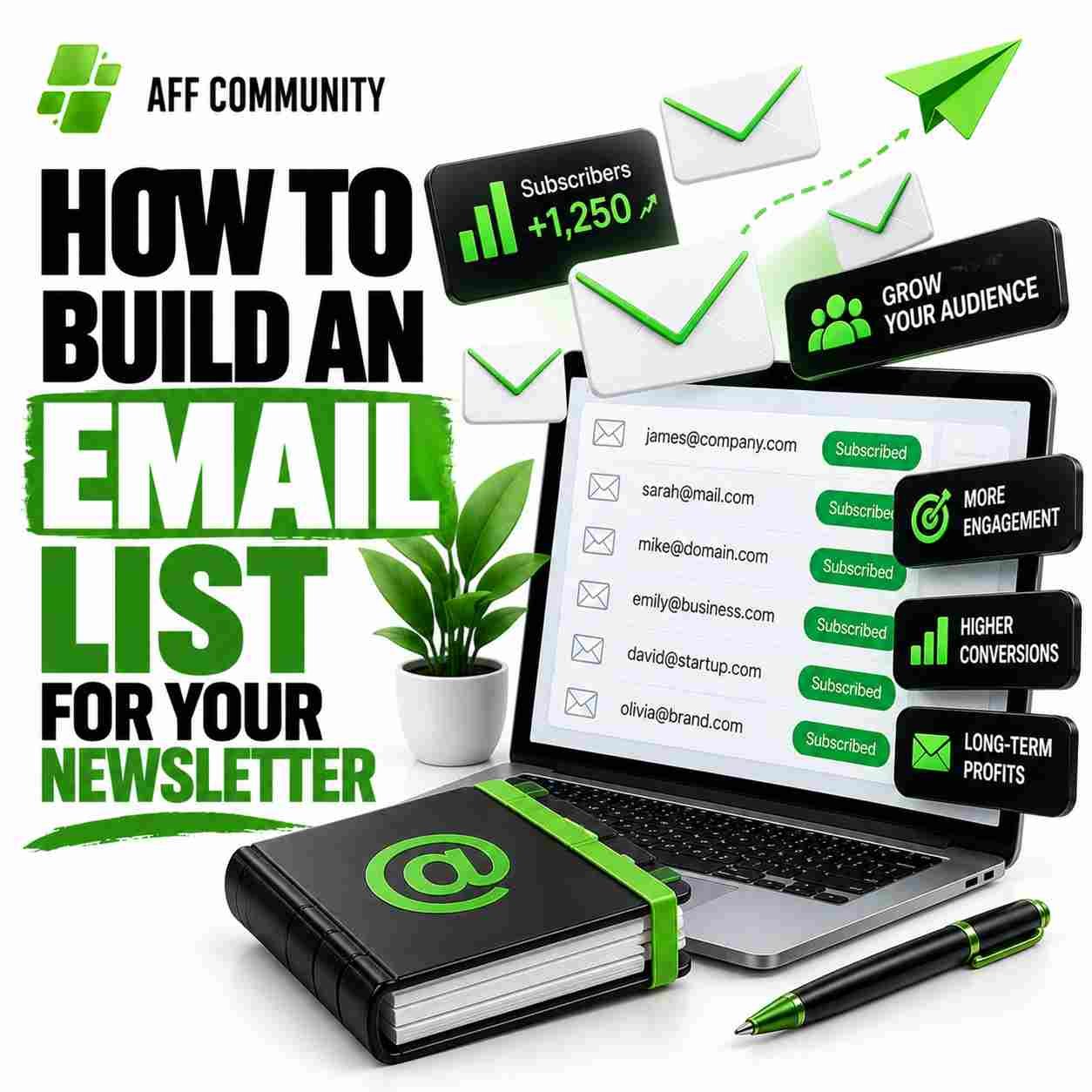
In affiliate marketing, email is often seen as an outdated channel that’s a thing of the past. We disagree. Your own email list is an asset that can be reused: to run campaigns, re-engage users, promote offers, and maintain ongoing contact with your audience.
But there’s one important point: the list must be built organically and on a transparent basis. Buying a few million email addresses and launching a mass mailing campaign is more likely to result in complaints and deliverability issues than it is a viable strategy.
Where to Build Your Email List
The simplest option is your own website. You can offer users the chance to provide their email address in exchange for specific value:


- a helpful guide;
- a checklist;
- a discount or bonus;
- access to exclusive content;
- notifications about new content;
- a selection of tools;
- participation in a promotion.
The key is not to include a form just for the sake of it. Users must understand why they should provide their email address.
Another option is registration. If the product includes a personal account, an email subscription can be part of the registration process. But here, it’s important not to turn a required field into a hidden subscription: it’s better to explain right away what kind of emails people will receive.
A lead magnet must be tailored to the audience
If we’re building a database of webmasters, it’s pointless to offer them an abstract “collection of useful resources.”
A specific offer works much better: a list of tools, a launch checklist, a GEO selection, an analysis of a link profile, or access to new research.
The more precisely the lead magnet matches the user’s query, the higher the likelihood of getting not just an email address, but a genuinely interested subscriber.
That’s exactly why it’s better to build your list from the start with future use in mind. The email address of someone who came looking for a Meta Ads guide has a different commercial value than the contact information of a user who downloaded an SEO resource.

Don’t build one large, faceless database
One of the biggest mistakes is to lump all email addresses into a single spreadsheet and send identical emails to everyone.
We recommend at least minimal segmentation:
- traffic source;
- relevant industry;
- geo;
- content type;
- funnel stage;
- user activity.
For example, you can send more content related to Telegram to users who regularly read articles about it, and provide relevant case studies and tools to audiences interested in Meta Ads.
This way, the database gradually transforms from just an email list into a full-fledged traffic channel.
How to Build a Database Through Content
For an affiliate marketing project, this is one of the most natural approaches.
We attract users with an article, case study, or guide, and then within the content itself, we offer them the option to subscribe to updates or receive additional material.
This approach is particularly useful for projects that are building organic traffic. At the same time, email allows you to bring a user back to the site a week or a month after their first visit.
We’ve discussed in detail why SEO traffic remains a stable source for affiliate marketing projects. The combination of SEO and email makes sense in this case: search engines bring in new users, and subscriptions allow you to engage with them again.
What to Send After Subscription
Once you’ve collected an email address, don’t send a promotional offer right away. It’s better to build a short sequence: subscription → useful content → run the nurturing process → relevant offer → follow-ups.
The first email should confirm the subscription and deliver the promised value. Then you can gradually introduce the person to the product, case studies, and tools, and only after that move on to the commercial part.
We’ve previously discussed why email traffic in affiliate marketing continues to work in 2026. The main idea there is simple: email today functions as a full-fledged channel, not just as a “buy a list → send an email” mechanism.
Which service to use
For a small list, a simple email marketing service is sufficient. But as your list grows, you’ll need automation, segmentation, A/B testing, analytics, and integrations.
Before choosing a platform, it’s worth determining exactly what your project needs: mass emails, automated sequences, running the list, lead generation, or a combination of several scenarios.
How to Tell If Your List Is Actually Working
The number of email addresses is far from the most important metric. We look at:
- open rate;
- CTR;
- unsubscribes;
- spam complaints;
- clicks;
- conversion rate;
- revenue per subscriber.
If your database has 100,000 email addresses but only a small portion of the audience opens your emails and almost no one clicks, that volume is useless.
What matters more is the quality of the contacts and how well they match the offer. And ultimate effectiveness should be evaluated specifically based on user actions. For example, conversion in advertising and ways to measure it help you properly assess the transition from traffic to a target action.
The Bottom Line
We consider our own email list to be one way to reduce our reliance on paid traffic. Once a user is acquired, they can return again and again through email newsletters.
But a working email list is built gradually: relevant lead magnet → voluntary subscription → segmentation → useful content → running campaigns → offer → analysis of results.
It is precisely this approach that transforms email from a routine newsletter into an additional source of traffic and conversions.