Creative analysis: what works in affiliate marketing right now

One of the most common mistakes in affiliate marketing is launching ads almost blindly. You make a few creativities, upload them to your ad account, and wait for results. If it doesn't work, you make new ones and repeat the same thing.
The problem is that without proper analysis of creativity, this turns into a waste of budget. In 2026, creativity determines half of the result of a campaign. Sometimes the offer and landing page may be average, but strong creativity can pull the campaign through.
But it's important to understand that what works now is not at all what worked a couple of years ago.

Aggressive creativity has become much less effective
Previously, the most provocative creativities worked well in affiliate marketing: loud promises, strong emotional pressure, and harsh clickbait. The CTR was high, and traffic flowed quickly.
Now, advertising platform moderation is much stricter about such things. This is especially true for Google and Meta systems.
Even if an ad passes moderation, it can quickly receive complaints from users. As a result, the quality of the account drops and the link begins to die.
Therefore, the market has gradually shifted towards more native forms of creativity.
Find the best creativity creation services follow the link.
Native formats last longer
Currently, the most successful forms of creativity are those that look like regular content rather than advertising.
These can be short videos similar to user-generated content or simple images without obvious advertising elements.
The main goal is to generate interest, not to sell immediately. The user should go to the landing page out of curiosity, not because of pressure.
Such creativity sometimes gives a slightly lower CTR, but it lasts much longer and attracts less attention from moderators.
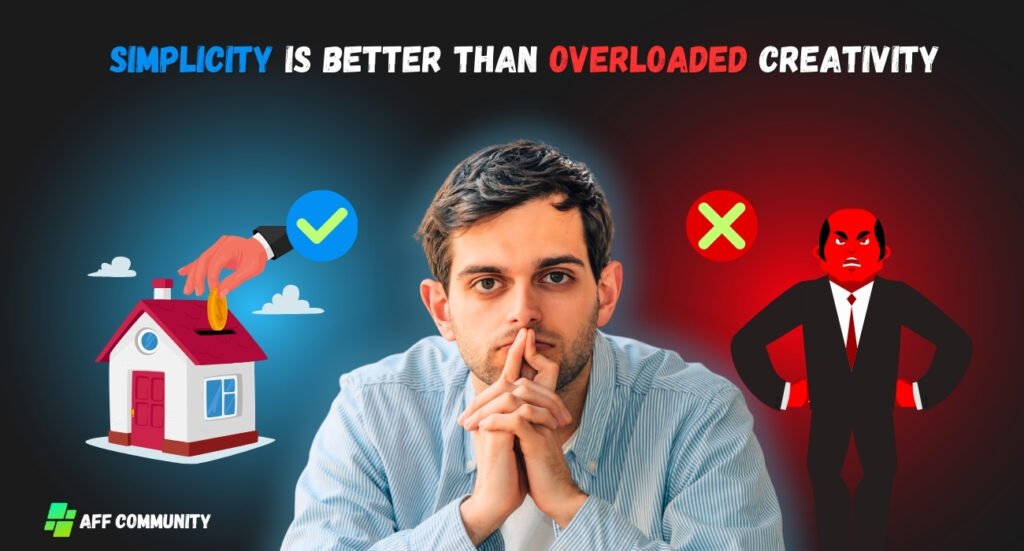
Simplicity is better than overloaded creativity
Another trend in recent years is the simplification of creativity.
Overloaded banners with lots of text, arrows, circles, and highlights are gradually disappearing. They immediately look like advertisements and inspire less trust.
Simple visuals work much better: one image, short text, and a clear message.
This is especially noticeable in mobile traffic, where users make decisions in a fraction of a second.
Competitor analysis remains the foundation
Before launching a campaign, it is useful to see what ads are already running in the niche. This helps to understand which approaches are currently effective.
For example, in the Meta ad library, you can see active ads and understand what formats other advertisers are using.
If creativity has been running for a long time, it is likely to be effective.
This does not mean that you should copy other people's ideas. But market analysis helps you avoid starting tests from scratch.
Why tests are still necessary
Even good creativity does not guarantee results. Different audiences react differently. What works well in one country may fail completely in another.
That's why testing remains a key part of affiliate marketing. Usually, several options of creativity with different approaches are launched to see which ones start getting clicks and conversions.
It's important to analyze more than just CTR. Sometimes an ad gets a lot of clicks, but users don't convert well on the landing page.
Conclusion
In 2026, good creativity is not necessarily the brightest or most aggressive. On the contrary, calm and native formats that do not look like advertising often win.
Affiliate marketing has long ceased to be a game of chance. Combinations that consistently bring in money usually appear after normal market analysis and careful testing of creativity.