How to Lower CPM in Competitive Niches
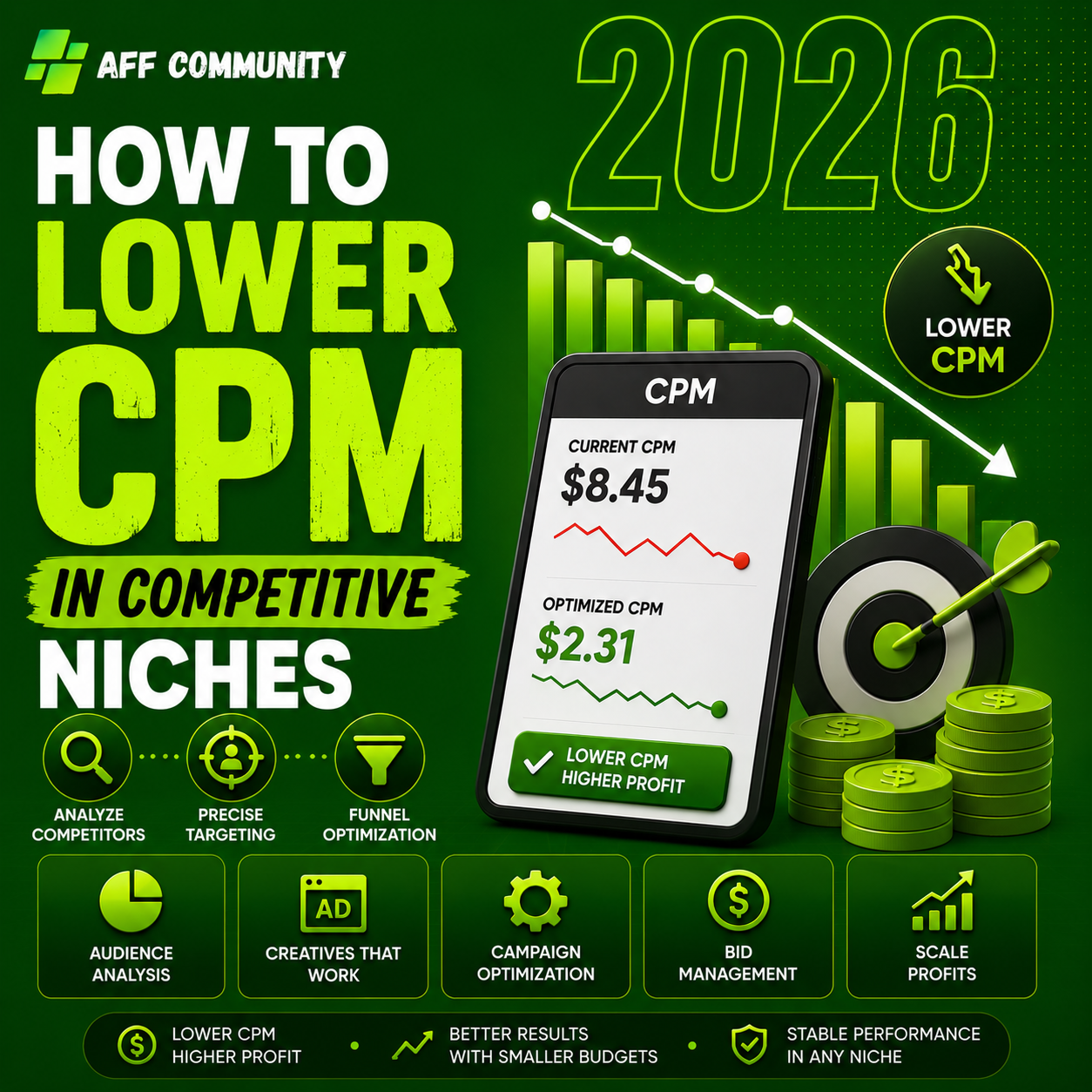
High CPM is one of the main challenges for webmasters working in gambling, crypto, adult content, and other overheated verticals.
When the cost per thousand impressions starts to rise, many immediately look for new accounts, switch payment providers, or try to find a different GEO.
But our team and I constantly see the same mistake: most advertisers try to address the symptoms rather than the root cause.


In practice, a high CPM isn’t always related to the niche itself. Very often, the problem lies within the ad campaign.
Algorithms look at more than just the bid
Many beginners believe that CPM is determined solely by competition in the auction. In reality, ad platforms evaluate dozens of additional factors:
- Creativity quality.
- Audience engagement.
- CTR.
- Account history.
- User behavior after interacting with the ad.
If the algorithm deems an ad useful to the audience, the cost per impression is often significantly lower than the market average.
This is precisely why the quality of ad creativity directly impacts the overall cost-effectiveness of the campaign. We’ve analyzed the impact of creativity on ad performance in detail in this article.
Targeting the wrong audience almost always increases CPM
One of the most costly mistakes is using targeting that’s too broad or too obvious. Virtually all competitors use similar settings. As a result, the auction heats up, and the cost per impression begins to rise. This happens particularly often in the gambling and finance sectors.
Strong teams try to find less competitive audience segments and test additional interests.
Sometimes even a small change in the audience can significantly lower CPM without sacrificing traffic quality.
Creativity directly influences the cost per impression
In many verticals, it’s not the one who pays the most who wins, but the one who best holds the user’s attention. If a user pauses their feed, interacts with the ad, and shows interest, the algorithms begin to view the ad more positively.
This allows you to get more impressions for the same amount of money. This is precisely why experienced webmasters constantly update their ad creatives and test new approaches.
By the way, the specifics of adapting creativities to the modern requirements of advertising platforms were discussed in detail in this article.
Don’t ignore the new algorithms
In 2026, advertising algorithms are increasingly relying on machine learning. Old methods of setting up campaigns are becoming less effective.
Many approaches that delivered results a couple of years ago may now only increase the cost of traffic. This is especially noticeable on Meta.
Algorithm changes directly affect auction costs, ad distribution, and ad performance.
Ignoring such changes often leads to a rise in CPM, even with good creativity and a high-quality audience.
Testing Is Cheaper Than Constant Scaling
Another common mistake is trying to solve the problem with money. If CPM is rising, many simply increase their budget. This might work in the short term.
But in the long run, this approach rarely proves effective. It’s much more beneficial to regularly test new angles, audiences, creativity formats, and approaches to presenting the offer.
It’s no coincidence that many teams achieve the best results precisely through optimization, rather than by constantly increasing spending. This process is discussed in detail at this link.
Conclusion
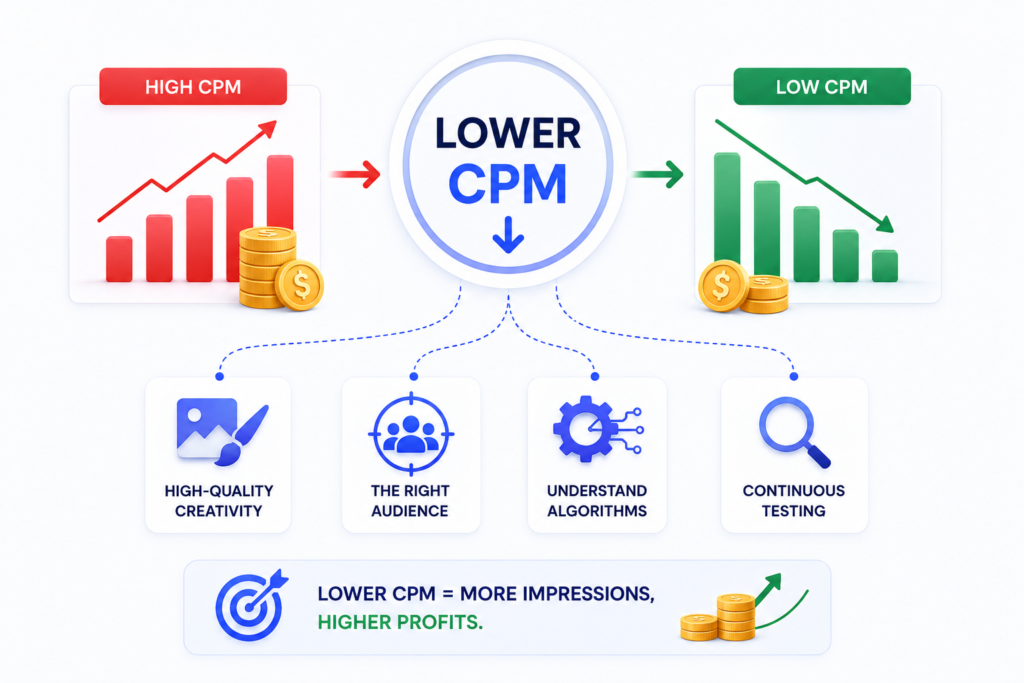
It’s possible to lower CPM in a competitive niche even without changing the vertical or traffic source.
Most often, four factors yield results:
- high-quality creativity;
- the right audience;
- an understanding of the platform’s algorithms;
- and continuous testing of new hypotheses.
That is precisely why strong affiliate marketing teams focus not only on increasing their budget but also on the effectiveness of every impression. In the long run, this approach almost always proves more profitable than simply increasing spending.