Tier-1, Tier-2, and Tier-3: A Current Comparison
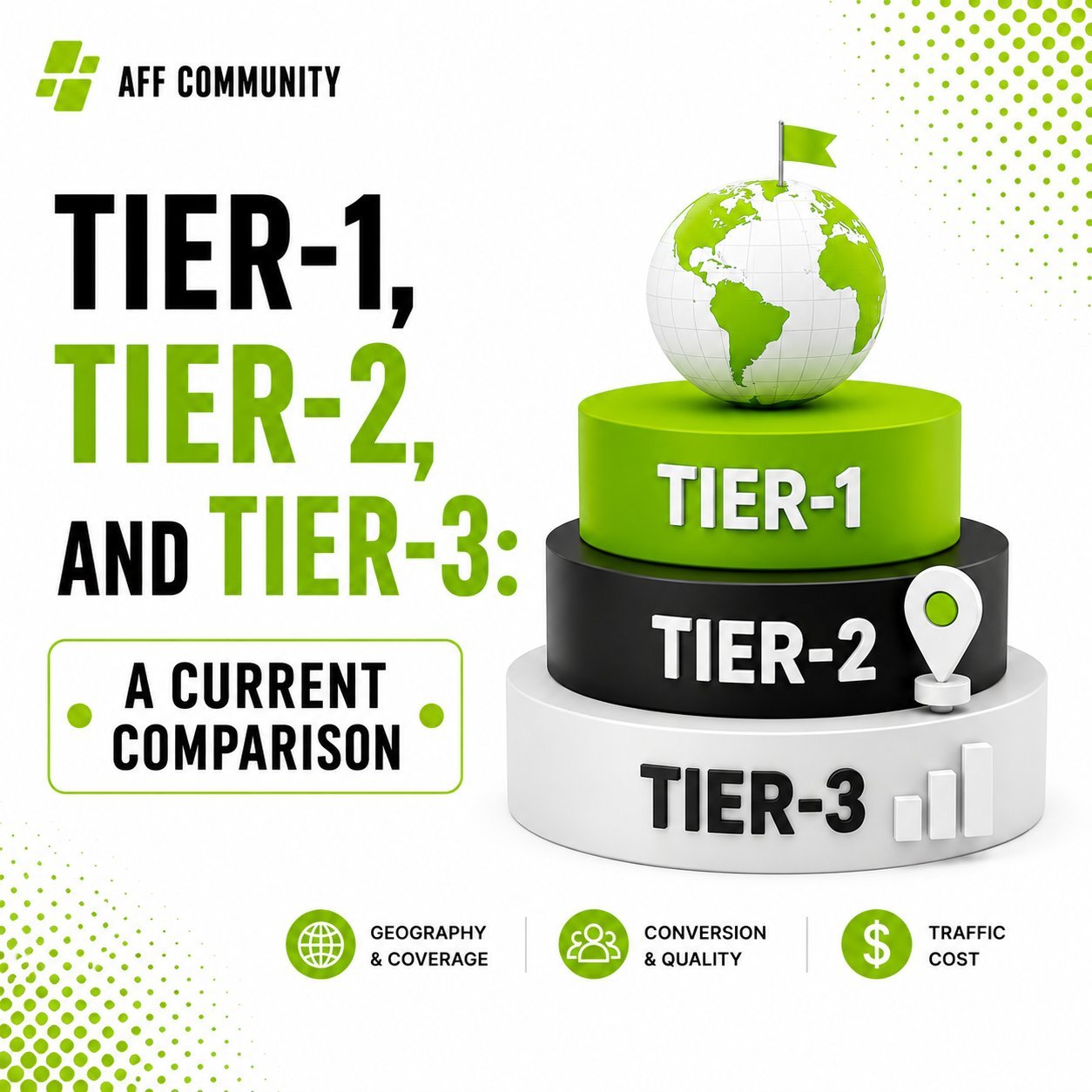
Virtually every buyer has heard of the division of GEOs into Tier-1, Tier-2, and Tier-3. However, many still view this classification in overly simplistic terms: Tier-1 is expensive, Tier-3 is cheap. In practice, it’s much more complicated.
We regularly analyze case studies from webmasters across various verticals and can confirm that, as of 2026, GEO selection has become one of the key factors in a campaign’s profitability. The same offer can yield completely different results depending on the country, the audience’s purchasing power, the level of competition, and the requirements of advertising platforms.
Therefore, you should choose a GEO not based on popularity, but based on the characteristics of a specific vertical and traffic source.


Tier-1 is expensive, but the most stable market
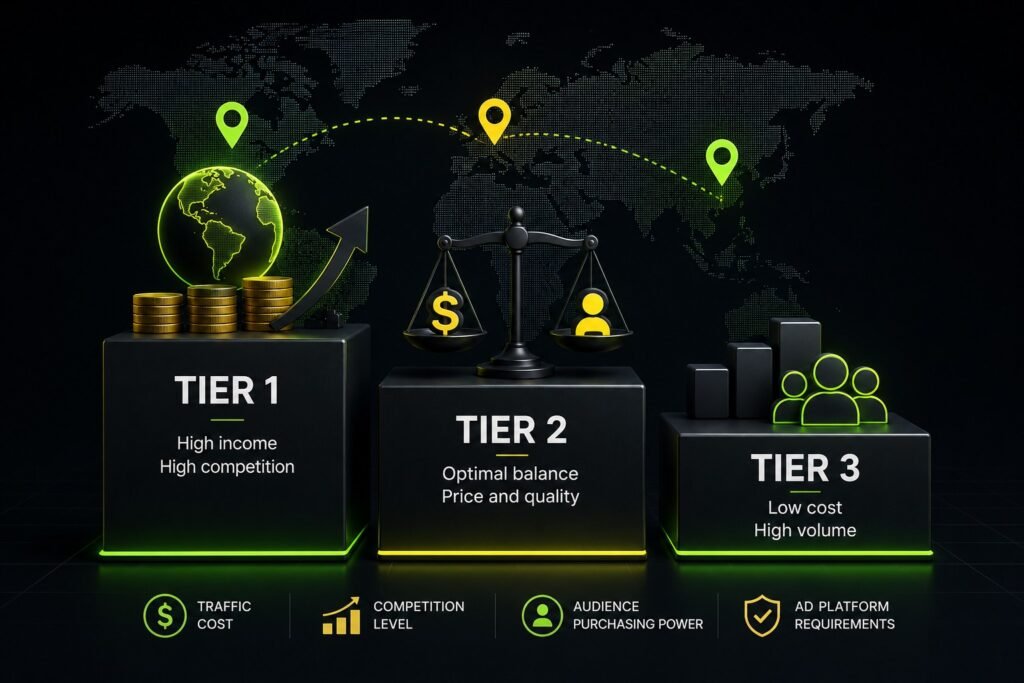
Tier-1 traditionally includes the U.S., Canada, the U.K., Australia, New Zealand, and most Western European countries. The main advantage of these GEOs is the high purchasing power of users.
Here, the average order value is higher, and subscription models, SaaS services, financial products, and premium offers perform better.
However, you have to pay a high price for a high-quality audience. Advertising costs on Meta and Google are significantly higher here than in other regions.
In addition, competition is at its peak, making it increasingly difficult for newcomers to turn a profit quickly.
For this very reason, many teams place great emphasis on the quality of their creativity and on constantly testing new approaches. We discussed in detail how modern algorithms evaluate ad creatives in this article.
Tier-2 - The Happy Medium
In recent years, Tier-2 has become the primary focus for most affiliate marketing teams.
This category typically includes Poland, the Czech Republic, Romania, Hungary, Portugal, Greece, Latin American countries, and parts of Asia. The cost of traffic here is significantly lower than in Tier-1.
At the same time, the audience’s purchasing power remains quite high. This is precisely why many successful case studies in recent years have emerged from these countries.
Tier-2 performs particularly well in iGaming, betting, nutra, and financial verticals.
Tier-3 - Volume Over High Average Spend
Tier-3 includes most countries in Africa, South Asia, the Middle East, and some CIS states. The main advantage of these GEOs is the low cost of advertising.
In many cases, CPM and CPC are several times cheaper than in Tier-1. However, this also comes with challenges:
- lower average user revenue.
- poorer infrastructure quality.
- more frequent restrictions on payment systems.
- significantly lower total LTV in many niches.
Nevertheless, it is precisely Tier-3 that allows you to quickly test new ad combinations and generate large volumes of low-cost traffic.
These GEOs are used particularly actively in gambling, sports betting, and mobile apps.
There is no longer a “one-size-fits-all” Tier
Just a few years ago, you might have heard the advice: “Run only on Tier-1.” Today, that approach no longer works.
Modern affiliate marketing is built around the economics of the traffic mix. Sometimes Tier-3 delivers a higher ROI thanks to its low user acquisition cost.
In other cases, it’s Tier-1 that allows you to maximize profit per customer.
That’s why professional teams always analyze several factors at once:
- traffic cost;
- level of competition;
- audience purchasing power;
- legal considerations;
- ad platform requirements.
By the way, the impact of audience segmentation on ad campaign effectiveness is discussed in detail at this link.
Don’t forget about localization
One of the most common mistakes is launching identical creativities across multiple GEOs at once. Even within a single Tier, user behavior can vary significantly.
What works perfectly in Poland might fail completely in Brazil. And a successful combination for Germany won’t necessarily yield the same results in the UK.
That’s why strong teams adapt:
- ad copy;
- creativity;
- landing pages;
- offers;
- payment methods.
Localization is now one of the most important factors for scaling.
How to Choose the Right Tier
When choosing a geographic target, we recommend basing your decision on your own resources rather than on current trends. If your budget is limited, it’s wiser to start with Tier 2 or select Tier 3 countries, where the cost of testing is significantly lower.
If your team has a strong infrastructure, high-quality accounts, and extensive experience working with ad networks, you can target Tier 1, where potential profits are significantly higher.
At the same time, it’s important to remember that regardless of the region you choose, you must take into account the requirements of advertising platforms, as moderation rules are constantly changing. That’s exactly why you should use white pages to launch your ads. The market leader is the Money Safe service. It’s a powerful tool in the affiliate marketing market; they develop each white page manually, which allows them to pass moderation in 99% of cases. You can learn more about the service by clicking this link.
Conclusion
In 2026, the division into Tier-1, Tier-2, and Tier-3 remains relevant, but it is no longer the main guideline when selecting a GEO.
It is much more important to understand the economics of a specific combination, the characteristics of the audience, and the level of competition.
It is precisely this approach that allows you to find profitable markets before others, reduce testing costs, and scale successful ad campaigns more effectively.