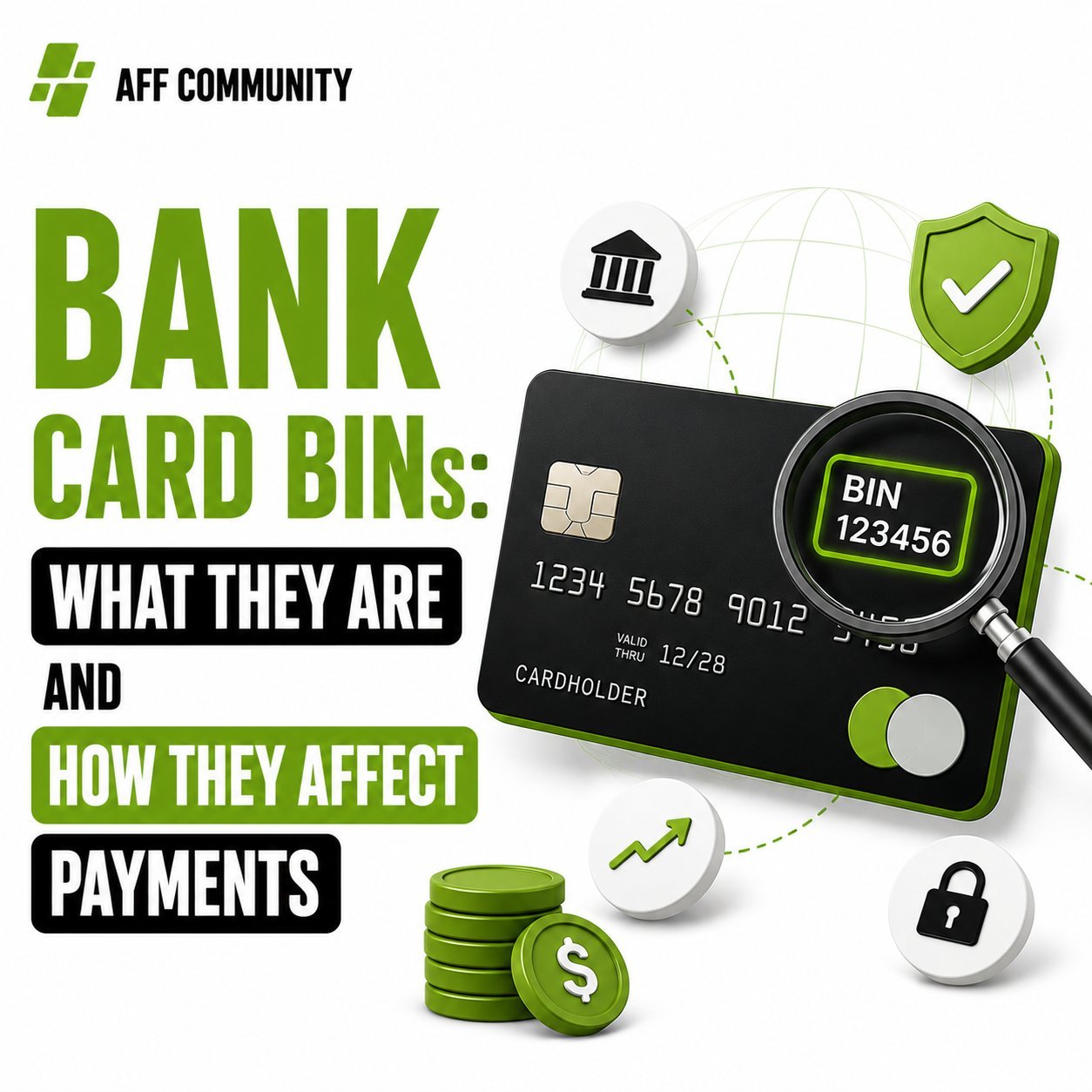
Bank Card BINs: What They Are and How They Affect Payments
Virtually every publisher has encountered a situation at least once where one bank card successfully processes a payment for an advertising account, while another receives an error, is declined, or is subject to additional verification. Many attribute this solely to the card’s balance or the issuing bank.
But in practice, it all starts much earlier—with the BIN.
Our team regularly receives questions about why cards of the same type behave completely differently when paying for Facebook Ads, Google Ads, or other advertising platforms. This is largely due to BINs, which have long been one of the factors used to evaluate payment transactions.


What Is a BIN
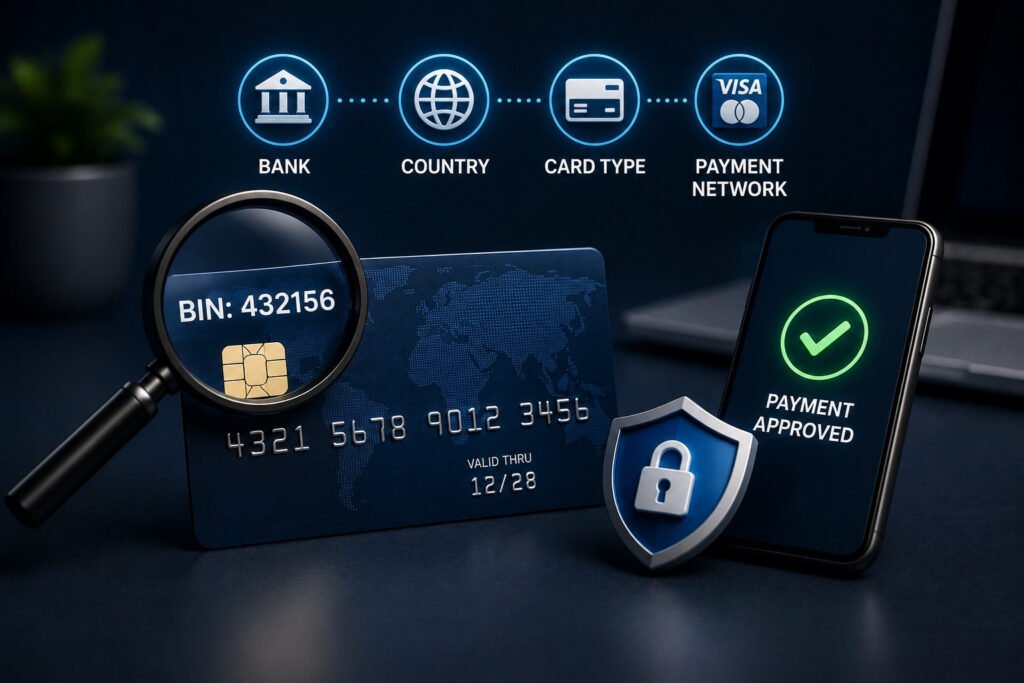
A BIN (Bank Identification Number) is the first few digits of a bank card, which the payment system uses to determine key information about the card.
It is the BIN that reveals:
- which bank issued the card;
- the payment system (Visa, Mastercard, and others);
- the country of issue;
- the card type (Debit, Credit, Business, Prepaid);
- and sometimes the product category.
When an advertising platform receives a payment request, it analyzes not only the transaction itself but also the BIN’s characteristics. Essentially, even before the funds are debited, the system already has a basic understanding of the card.
Why is the BIN important for publishers?
Many believe that Meta or Google check only whether the payment was successful. In reality, modern anti-fraud systems analyze significantly more parameters.
If a BIN regularly appears in suspicious transactions, mass account registrations, or a large number of declined payments, the trust level for such cards gradually decreases.
This does not mean automatic blocking. But the likelihood of additional checks increases. This is especially noticeable when working with a large number of ad accounts.
BUTTON - We recommend reading the article “Running an Ad Account Step by Step: How to Prepare Your Account”
Not all BINs are equally suitable for advertising
There is a huge variety of banking products on the market. Some cards are designed for everyday purchases. Others are intended for corporate expenses. Still others are issued as virtual or prepaid cards.
Advertising platforms treat these categories differently. For example, widespread use of the same type of virtual BINs can attract additional attention from anti-fraud systems.
This is precisely why professional teams take a meticulous approach to selecting payment infrastructure and regularly test various options.
The BIN is just one part of the bigger picture
A common mistake among beginners is trying to attribute all problems solely to the card’s BIN. In practice, the platform analyzes many more factors:
- Business Manager history.
- Ad account age.
- User behavior.
- IP address.
- Device.
- Payment history.
- Ad campaign quality.
All these signals are evaluated simultaneously. That’s why even a good BIN can’t compensate for errors in the rest of the infrastructure.
We discussed the factors affecting Business Manager trust in detail in this article.
Why You Shouldn’t Constantly Switch Cards
At the first sign of trouble, many people start endlessly switching payment methods. This approach rarely yields results. Frequent card changes can, in and of themselves, appear suspicious to the advertising platform’s algorithms.
It’s much more important to find a stable payment infrastructure and use it consistently.
It is precisely this consistency that more often than not has a positive impact on the overall trust score.
How to Reduce the Risk of Rejections
It’s impossible to completely eliminate payment issues. But you can significantly reduce the likelihood of errors.
To do this, it’s important to:
- use high-quality banking products;
- avoid changing cards unnecessarily;
- maintain a stable infrastructure;
- avoid a large number of failed payments;
- monitor your Business Manager’s reputation.
Additionally, it’s important to remember that the payment aspect is closely linked to the quality of the entire advertising infrastructure.
Even a perfectly selected BIN won’t save a campaign if the advertising account regularly violates the platform’s rules.
BIN and Modern Anti-Fraud Algorithms
Every year, advertising platforms are increasingly using machine learning to analyze financial transactions. The algorithms don’t evaluate a single card, but rather a combination of dozens of signals.
The BIN has become one element of the overall risk assessment system. That’s precisely why it’s no longer enough to simply select the “right” card.
You need to build your entire infrastructure in such a way that it appears as natural as possible to the platform’s algorithms.
The article at this link provides a detailed explanation of how Meta’s modern algorithms analyze advertiser behavior and make decisions.
Conclusion
A bank card’s BIN does indeed affect how you work with advertising platforms, but it cannot be considered in isolation from the entire infrastructure.
Successful affiliate marketing teams take a comprehensive approach: they use high-quality payment solutions, maintain a good Business Manager trust score, comply with platform rules, and minimize suspicious activity.
It is precisely this approach that allows them to encounter payment restrictions much less frequently and scale their ad campaigns with confidence.