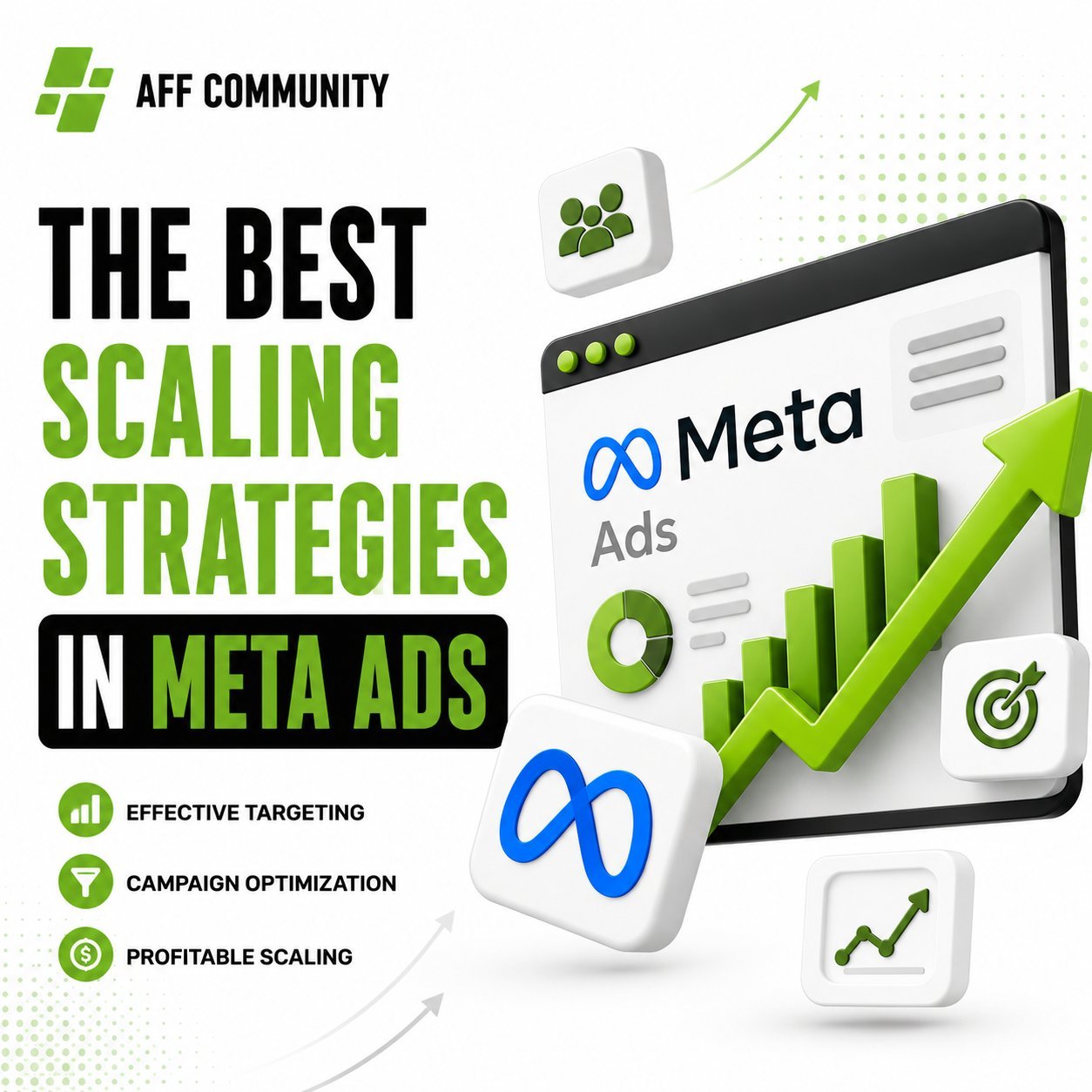
The Best Scaling Strategies in Meta Ads
Virtually every publisher has faced the same situation. A campaign shows excellent ROI on a test budget, passes the initial learning phases, and starts generating a steady profit—but as soon as the budget is increased, the campaign’s performance begins to deteriorate rapidly.
Our team regularly encounters cases like this. Scaling in Meta Ads has long since ceased to be a simple matter of increasing the daily budget. The algorithms have become significantly more complex, and mistakes at this stage are much more costly than failed tests.
That’s why successful scaling today is a distinct skill that requires no less attention than finding new audience segments.


Don’t scale your campaign too early
The most common mistake is trying to increase the budget immediately after receiving the first conversions. Even if the campaign is showing a good ROI, that doesn’t mean the algorithm has fully trained itself yet.
Facebook requires a sufficient volume of high-quality events to consistently find the right audience.
If you start sharply increasing the budget prematurely, the algorithm reverts to the learning phase, and the cost per lead can increase severalfold.
This is precisely why experienced advertisers first achieve stability and only then begin scaling.
Vertical scaling doesn’t always work
The simplest way to increase traffic volume is to gradually raise the daily budget. However, this approach most often leads to a rise in CPM and a decline in results.
It’s much safer to increase the budget in small increments, typically by 15–20% per day. This approach allows the algorithm to adapt without significantly disrupting the auction.
If you need to increase volume sharply, it’s better to use other methods.
Horizontal scaling is often more effective
In many cases, creating multiple active campaign groups works significantly better than increasing the budget of a single campaign. Teams launch duplicate campaigns with different audiences, creativities, or placements.
This approach reduces the load on a single ad algorithm and allows you to generate additional traffic without a sharp increase in traffic costs.
Horizontal scaling performs particularly well in competitive verticals such as Gambling, Nutra, and Finance.
At the same time, it’s important to regularly update ad creativity, since creativity is most often the cause of declining performance when traffic volumes are high. This issue was discussed in detail in this article.
Watch for signs of ad set burnout
Even a perfectly scaled campaign won’t work indefinitely. Over time, the audience begins to burn out, CTR drops, CPM rises, and conversion rates gradually fall.
If you don’t notice these changes in time, you could lose a significant portion of your profit.
That’s exactly why strong teams analyze key metrics daily and prepare new creativity, audiences, and advertising approaches in advance.
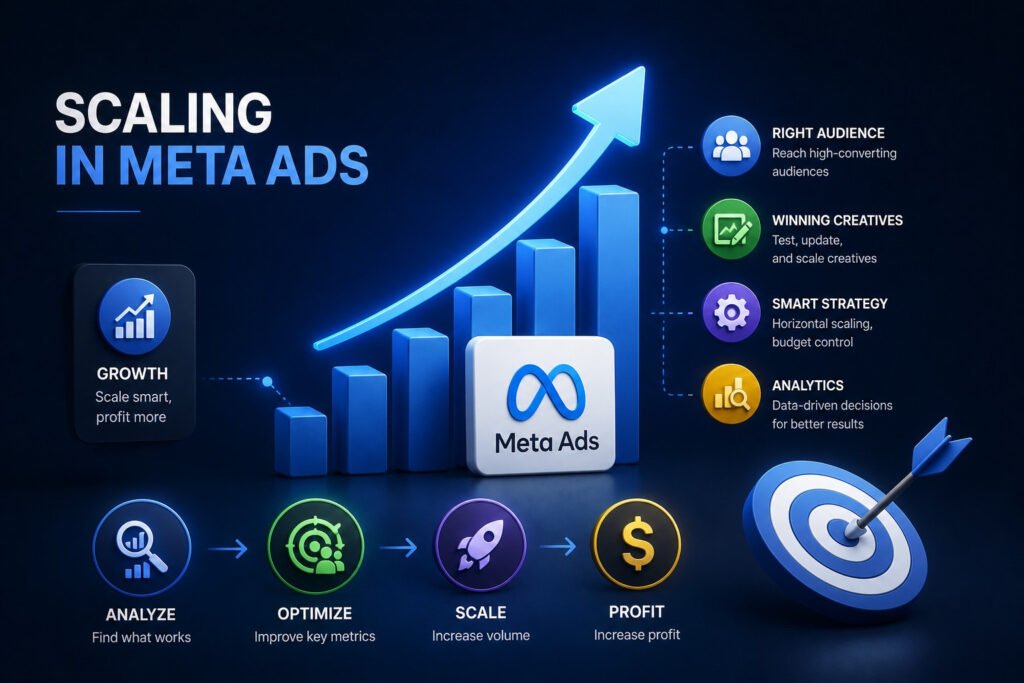
Scaling Starts with Analytics
One of the most underrated parts of the process is working with data. Many webmasters make decisions based on intuition. But with large budgets, the cost of a mistake becomes too high.
Before each scaling stage, you need to understand:
- which audience delivers the best CPA;
- which creativity maintains a high CTR;
- which placements yield the cheapest conversions;
- which ad combinations are already starting to lose effectiveness.
It is precisely detailed analytics that allows you to scale profits, not expenses.
It’s no coincidence that many teams build their processes around systematic data analysis. This approach is discussed in detail in the article at this link.
Meta’s algorithms continue to evolve
Many scaling tips that worked two or three years ago no longer deliver the same results today.
Meta is increasingly using machine learning. The system automatically redistributes the budget among audiences, tests new user segments, and makes decisions faster than a human.
Because of this, manual intervention in campaigns should be kept to a minimum. The advertiser’s task today is not constant manual tweaking, but rather the proper preparation of high-quality input data for the algorithm.
Conclusion
By 2026, scaling in Meta Ads will no longer be a matter of increasing the budget. Successful teams scale the system, not the campaigns.
They prepare new creativity in advance, regularly update their audiences, analyze every metric, and give the algorithms enough time to learn.
It is precisely this approach that allows them to increase traffic volumes without a sharp rise in CPA and maintain profitability even in highly competitive environments.