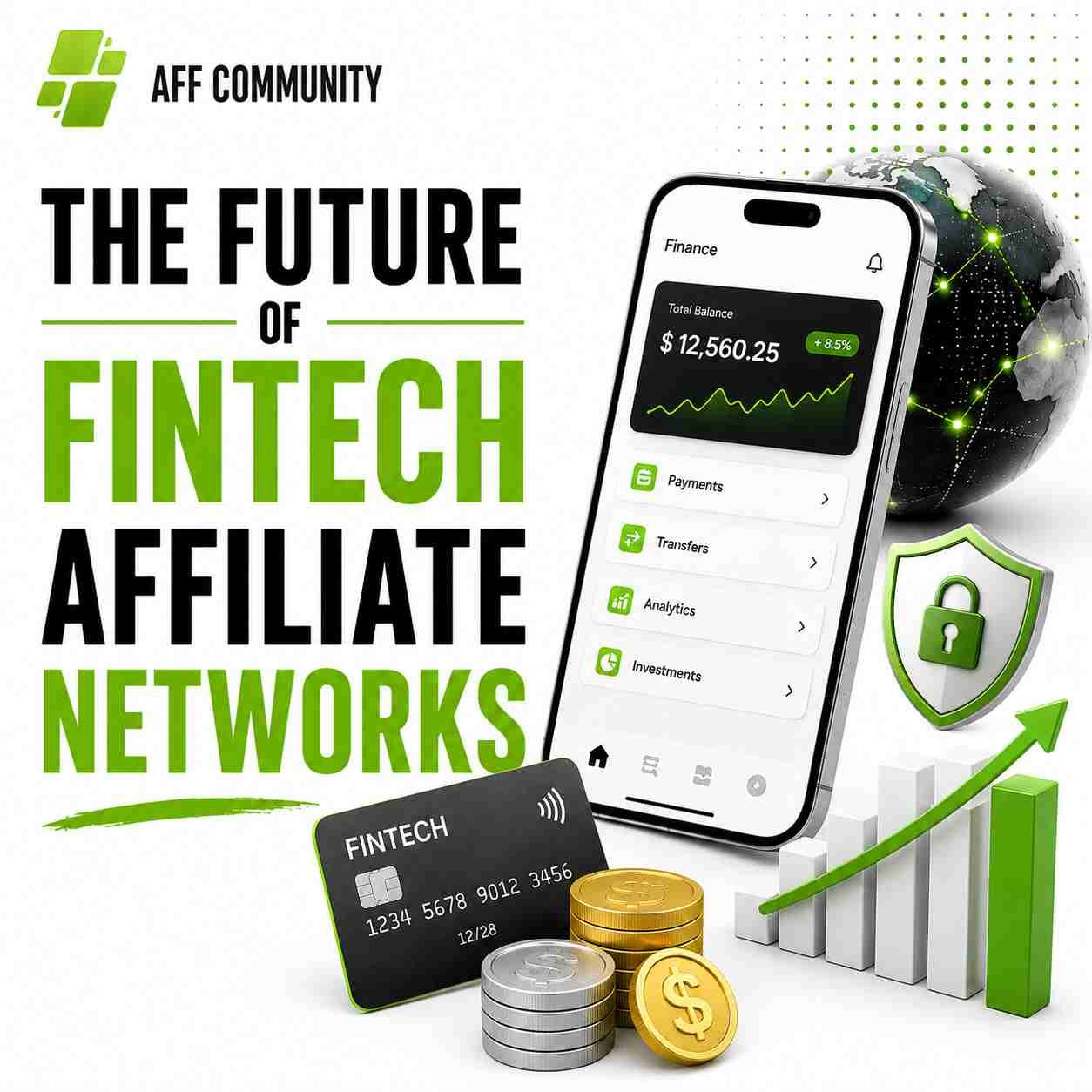
The Future of Fintech Affiliate Networks
The financial sector has long held a special place in affiliate marketing. Banks, microfinance organizations, payment services, investment products, and new fintech platforms are willing to pay for high-quality customers, so competition among buyers remains fierce.
But fintech is changing faster than many other verticals. We believe that in the coming years, affiliate networks will compete not so much for traffic volume as for user quality and long-term value.
Why Fintech Will Continue to Grow
Financial products are gradually becoming digital. Users no longer need to visit a bank branch to open an account, apply for a card, get a loan, or start using an investment service.


For publishers, this creates more opportunities. Offers are becoming more diverse, and target actions can be performed directly from a smartphone.
At the same time, the financial vertical remains challenging. Here, the requirements for lead quality, moderation, and traffic sources are higher. Therefore, it’s important for beginners to consider not only the payout amount but also the terms of a specific affiliate network.
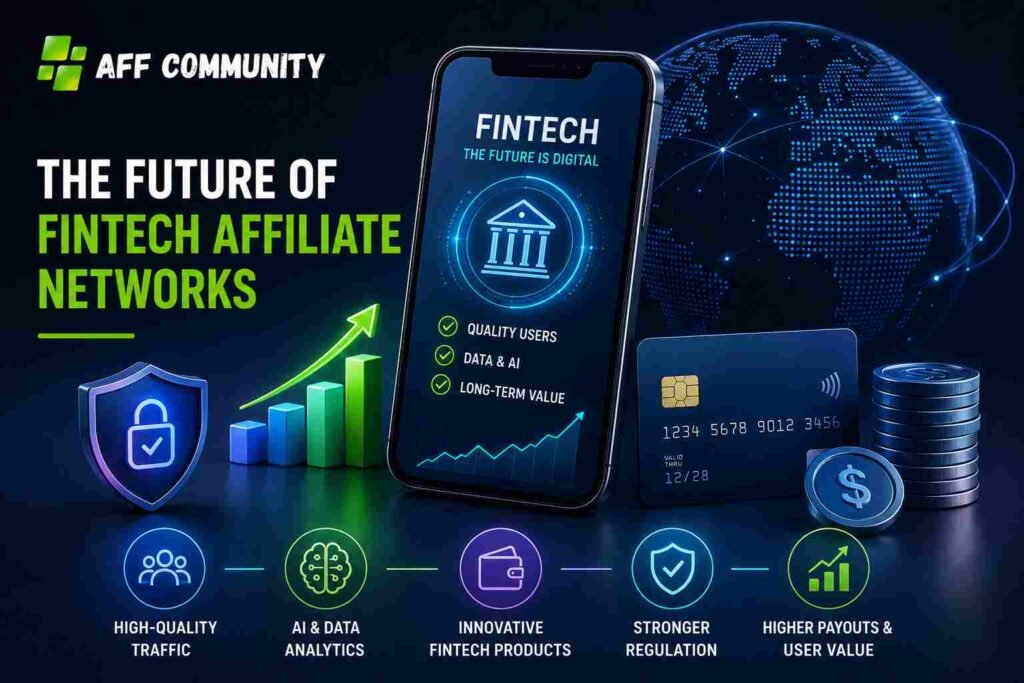
Traffic quality will become the key metric
In the past, affiliate networks might have been interested in maximizing the number of sign-ups. Now, that’s not enough.
A financial advertiser needs users who will actually use the product: apply for a card, activate an account, make a payment, or complete another target action.
This is precisely why anti-fraud measures will continue to evolve. In the financial vertical, significant attention is already being paid to traffic quality and the fight against fraud. For webmasters, this means one simple thing: artificially inflating the volume of leads is becoming less and less profitable.
AI Will Transform How Financial Offers Are Handled
Artificial intelligence is gradually becoming part of the advertising infrastructure. Algorithms help analyze audiences, predict conversion probability, create creativity, and identify patterns in large datasets.
This is particularly interesting for fintech, since financial products generate a huge number of behavioral signals.
But AI does not negate the basic economics of affiliate marketing. If a source brings in expensive or low-quality users, automatization in affiliate marketing won’t make the campaign profitable.
That’s why data is becoming one of the webmaster’s key tools. We’ve covered the use of data for scaling in affiliate marketing separately.
More non-standard fintech products will emerge
Fintech has long since moved beyond bank cards and loans. The market is evolving toward digital wallets, payment platforms, neobanks, investment services, and products that combine multiple financial functions.
For webmasters, this means the emergence of new offers and new audiences.
The intersection of fintech and cryptocurrencies remains particularly interesting. Users are increasingly viewing digital assets not as a separate market, but as part of the broader financial ecosystem. Therefore, cryptocurrency traffic and ways to monetize it will also remain a relevant area for testing.
Regulation Will Become Stricter
The growth of affiliate networks is inevitably accompanied by stricter advertising requirements.
Platforms and advertisers will pay closer attention to promises, creativity, landing pages, and traffic sources. For webmasters, this means that aggressive advertising approaches may become less sustainable.
In the long run, the teams that succeed will be those that know how to build transparent partnerships and work with high-quality traffic, rather than seeking short-term ways to circumvent restrictions.
How the Affiliate Networks Economy Will Change
We expect more and more affiliate networks to shift toward models where not only the initial conversion but also the customer’s lifetime value is important.
This could lead to a wider adoption of hybrid payment models, higher payouts for high-quality users, and customized terms for webmasters with strong performance metrics.
Therefore, a publisher’s reputation will become an asset in its own right. An affiliate network that sees a steady stream of high-quality customers will be interested in maintaining a long-term partnership with such a traffic source.
What This Means for Webmasters
In the future, fintech will be of particular interest to those who know how to work not only with advertising but also with analytics.
You need to understand the economics of the offer, the quality of the audience, GEO restrictions, the requirements of advertising platforms, and user behavior after conversion.
We would not recommend choosing a financial affiliate network based solely on the CPA amount. It’s much more important to evaluate the entire offer: allowed traffic sources, hold periods, approval processes, product quality, and scalability potential.
Conclusion
The future of fintech affiliate networks looks quite promising. Financial services continue to shift to digital formats, new products are emerging, and along with them, the demand for high-quality performance traffic is growing.
At the same time, the vertical itself is becoming more complex. Simply driving a lot of leads is no longer enough—you need to drive users who are truly valuable to the advertiser.
That is precisely why we expect that in the coming years, the key advantages of a publisher will be analytics, traffic quality, data management, and the ability to quickly adapt to the new demands of the fintech market.