Why the Same Creativity Passes Moderation on Meta but Gets Banned on TikTok
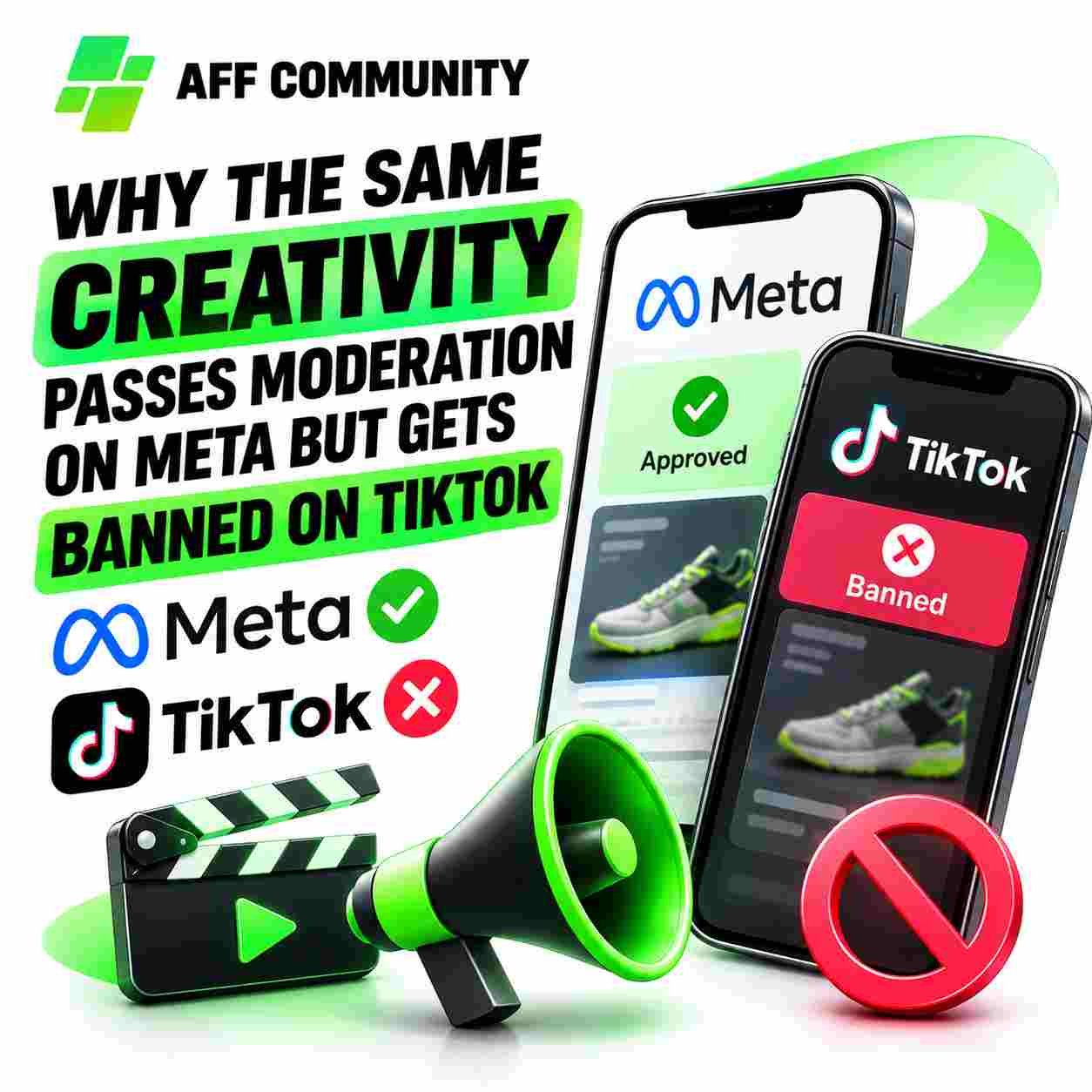
Ad buyers often encounter this situation: the same creativity passes moderation on Facebook or Instagram without issue, but TikTok rejects it almost immediately. This raises a logical question: if an ad has already been approved by one major platform, why does another consider it a violation?
We do not view Meta’s approval as a guarantee of acceptance on TikTok. Each advertising platform has its own rules, review algorithms, and user experience requirements. Therefore, identical creativity can receive completely different outcomes.
Meta and TikTok evaluate ads differently
The main misconception is assuming that advertising platforms have roughly the same moderation criteria. In practice, not only do the lists of restrictions differ, but so does how platforms perceive the presentation of advertising material.

Meta reviews ads within the context of the advertising ecosystem: it considers the text, image, or video; targeting settings; the landing page; and the characteristics of the promoted product.
TikTok also evaluates the entire advertising chain, but the format of the content itself is of great importance. The platform is geared toward short vertical videos, so a video must meet not only advertising requirements but also users’ expectations for in-app content.
We compared the platforms’ approaches in more detail in an article about how Meta, TikTok, and Google evaluate ad creativities.
Why TikTok Might Reject a Creative Approved by Meta
1. An overly aggressive advertising approach
On Meta, ads with a fairly direct commercial message may be approved if they comply with the rules for a specific category. On TikTok, such an approach sometimes leads to rejection.
For example, a video with bold promises, pushy calls to action, and an emphasis on instant results may come across as manipulative advertising. You should be especially careful when working with financial, medical, and other sensitive verticals.
The problem isn’t necessarily the product itself. The cause could be the wording, the visual demonstration of the result, or the overall impression the ad leaves.
2. Incompatibility with the platform’s format
Creativity that looks good in a Facebook or Instagram feed isn’t always suitable for TikTok. Static elements, videos overloaded with text, low image quality, and unnatural editing can raise red flags during review.
It’s also important to consider technical requirements. For example, TikTok has specific requirements for video length and audio quality. A video with no sound or with speech that’s hard to make out may not pass review.
Therefore, simply copying and pasting a finished ad across platforms isn’t enough. We recommend adapting your content separately for each platform. Practical guidelines for this process are outlined in the article on adapting creativity to meet Meta and TikTok requirements.
3. Issues with Claims and Visual Evidence
One of the most common reasons for rejection is claims that cannot be substantiated. These may include earnings guarantees, promises of quick results, exaggerated product features, or demonstrations of results that create a false impression.
The “before and after” format poses a particular risk. Even if this approach has been used in other ad campaigns, that doesn’t mean it’s allowed on TikTok.
The platform specifically restricts misleading claims and visual techniques. Therefore, before launching a campaign, we recommend reviewing not only the text but also every frame of the video.
4. The creativity doesn’t match the landing page
Sometimes, the video itself doesn’t contain any obvious violations, but the ad is still rejected. The reason becomes clear after visiting the website.
For example:
- the video showcases one product, while the landing page features another;
- the promotional promise is missing from the landing page;
- the terms of the promotion in the ad differ from those on the website;
- the landing page contains unverified claims or incorrect information.
TikTok checks for consistency between the ad and the landing page. Therefore, we recommend analyzing the entire campaign as a whole, rather than a single video.
The changes to the platform’s requirements are discussed in more detail in our article on TikTok’s new moderation rules.
5. GEO and Restrictions on Advertised Categories
The same creativity may pass review in one country and be rejected in another. This is due to regional restrictions, local laws, age requirements, and the specifics of the advertised category.
This is particularly noticeable in gambling, finance, cryptocurrency, and nutra content. Even if a product is permitted for promotion in a specific GEO, the advertiser must take into account the additional conditions of the specific platform.
When choosing a country for a launch, we recommend checking not only audience availability and traffic costs but also advertising requirements. In some GEOs, the restrictions are so severe that they affect the entire launch strategy. We analyzed such markets in our article on countries with the strictest rules for launching ads.
How to Adapt Your Creativity Before Launching on TikTok
We recommend not submitting an exact copy of an ad that has already been approved by Meta to TikTok. It’s better to conduct a separate review:
- Review the text. Remove unverified promises, guarantees of results, and wording that could mislead users.
- Check the visuals. Make sure the video doesn’t contain prohibited scenes, questionable comparisons, or third-party logos used without permission.
- Adapt the format. Prepare a vertical video with high-quality visuals and clear audio.
- Verify the landing page. All specifications, prices, terms, and promises must match the page’s content.
- Check the GEO settings. Clarify restrictions regarding the product, audience age, and ad category.
If TikTok rejects an ad, don’t immediately upload dozens of nearly identical variations. First, review the reason for rejection in Ads Manager and identify which element caused the issue. If the decision seems incorrect, you can request a review using the platform’s available tools.
BUTTON - Read also: “How to Prepare Smartphones for Conditional Free Traffic from TikTok”
Conclusion
Passing moderation on Meta does not guarantee automatic approval on TikTok. The platforms have different requirements for ad content, formats, categories, and user experience.
We recommend treating each traffic source as a separate advertising environment. Don’t simply copy a working ad set from one account to another—creativity, copy, and landing pages should be reviewed in accordance with each platform’s specific rules.
This approach doesn’t guarantee approval for every ad, but it helps reduce the number of unjustified rejections, identify problematic elements more quickly, and avoid wasting your budget on endlessly resubmitting the same content.