Adapting affiliate marketing strategies to changes in native advertising
Native advertising is widely used in affiliate marketing. It differs from pop-ups and regular banners in that it is less intrusive and more effective. But as technology evolves, the needs of the audience are changing, which leads to changes in advertising standards. Because of this, webmasters have to constantly adapt to new requirements and formats.
What should webmasters do in the new conditions, what new trends and nuances should they consider when creating advertising campaigns?
The main features
This type of advertising in its form and appearance resembles the content of a mobile application or an Internet browser page. The category of native advertising includes promotional posts in social networks, sponsored articles, etc.

Unlike regular ads, native ads are not like promotional materials. It does not distract the user from the content, but, on the contrary, arouses his interest and at the same time is not characterized by intrusiveness, so it does not cause aggression.
What is the importance of native advertising for webmasters?
- High engagement. Due to less intrusiveness compared to conventional banners, native ads are more interesting to the audience and elicit a greater response from them. While viewing native ads, users do not notice their advertising orientation, which leads to more clicks and increases conversion rates.
- Blocked less often. Because native ads are similar to regular content, ad blocker filters usually skip them.
- Large choice of formats. This type of advertising can be used in a variety of formats. They can be text articles, infographics, videos, etc. Thanks to the large selection, a webmaster can always choose the format that will best suit a particular target audience.
How to properly adapt to new requirements and formats?
The dynamism of digital advertising is constantly increasing. In the new environment, webmasters will need to take into account a number of key factors that will make working with native advertising as successful and productive as possible.
Use of multimedia formats
Familiar text formats are gradually being replaced by other formats that are more multimedia and interactive. When creating advertising materials actively used animations, videos, various GIF-images, they are often integrated elements of augmented and virtual reality. The use of video content is becoming increasingly popular, primarily on smartphones and tablets. Using these formats, you can attract the attention of your audience and improve interaction with them.
What do you need to do to adapt?
- Use multimedia content and video formats, experiment with them;
- optimize your content for smartphones, through which most users consume it;
- increase the interactivity of your advertising campaigns by using innovative technologies.
Increased requirements for content quality and transparency
Recently, Facebook and Google have become much more demanding about the quality of advertising, including native advertising. In the new realities, it is important to pay great attention to the transparency of content, to use clearly labeled advertising that does not go against ethical norms. In this case, the level of trust in it by the target audience will be higher, and the risk of sanctions will be minimized.
What do I need to do to adapt?
- Label the advertisement, indicate that the publication is sponsored.
- Use quality content, don't make false promises to users, don't try to manipulate them.
- Keep your campaigns ethical and transparent.
Personalization and customization
The ability of campaigns to identify audience interests and analyze their behavior is constantly improving. To respond to audience demands, you should personalize your ads as much as possible.
What do you need to do to adapt?
- Analyze audience behavior and interests to create personalized ad offers;
- Use algorithms to dynamically tailor ad messages to user activity in the app and on the website.
Use mobile gadgets as the main distribution channel
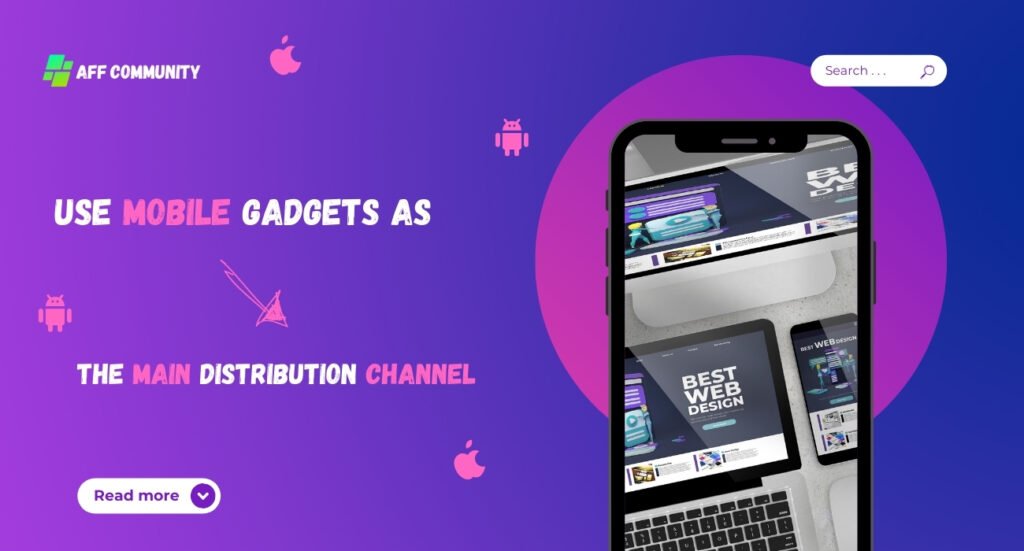
Modern users are increasingly using mobile traffic, so advertising on smartphones begins to fulfill a defining function in affiliate marketing. It is important to optimize the ad format for mobile screens, as users perform different actions on smartphones and computers.
What should be done for adaptation?
- Prepare mobile versions of advertising messages that load faster and are easier to interact with.
- Optimize native campaigns according to user behavior on smartphones, use vertical video.
Introduce artificial intelligence technologies and capabilities into advertising campaigns
AI has now become one of the most effective affiliate marketing tools. It can be used to automate the processes of creating ads, analyzing the audience, etc. In the future, the process of its introduction into native advertising will be even more active. It will provide invaluable assistance in analyzing user behavior, adapting advertising content to their needs.
What should be done for adaptation?
Read the article that describes the basic principles of AI and machine learning.
- When creating creativity and analyzing the effectiveness of campaigns, actively use artificial intelligence;
- optimize bids with AI, predict possible conversions, select the best target audiences.
Conclusion
The development of native advertising forces webmasters to be flexible in their approach, requiring them to be able to adapt to current requirements, technologies and formats. To work effectively, it is now necessary to take into account the tightened requirements for transparency and multi-format content, use artificial intelligence and personalized advertising. If you are able to properly customize and adapt your advertising campaigns to the new realities, you will succeed in affiliate marketing.