How to Keep Viewers Engaged for the First 30 Seconds: Video Tips
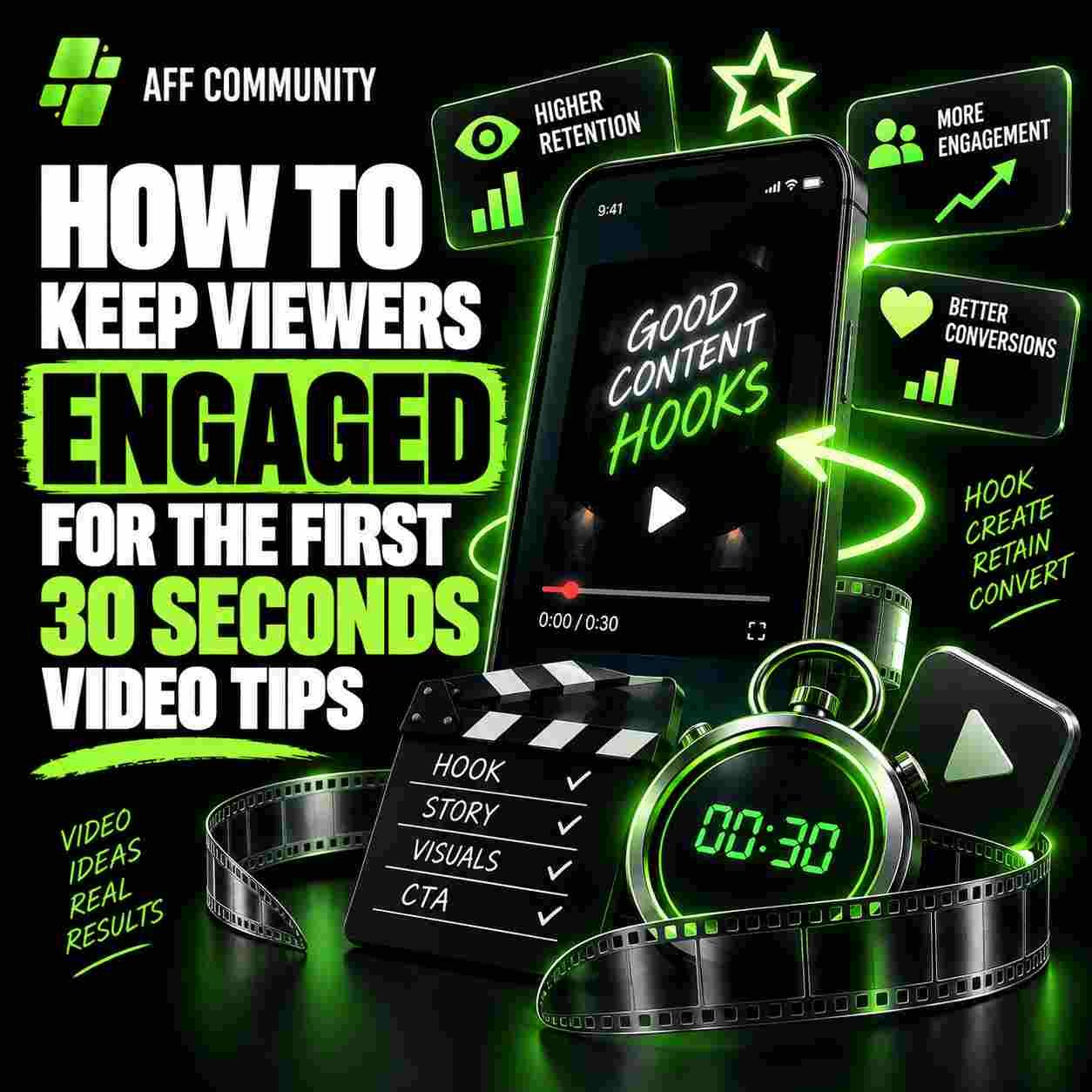
In short videos, the first few seconds are practically everything. Users scroll through their feeds quickly and aren’t going to wait for the creator to finish a long introduction. If the video doesn’t give viewers a reason to keep watching within the first few seconds, they’ll simply move on.
We constantly see the same mistake: a marketer invests in editing, graphics, and the script, but starts the video too slowly. As a result, a good creative loses its audience before it even gets a chance to present the offer.
Let’s break down how to use the first 30 seconds so that the viewer doesn’t scroll past the video.


The First 2–3 Seconds Are the Most Important
Starting a video with a greeting, a logo, or the phrase “Today I’m going to tell you…” is almost always a bad idea.
You need to immediately give the viewer a reason to stop and watch. This could be a problem, an unexpected result, a controversial statement, a question, or a visual scene that sparks curiosity.
For example, instead of a long explanation, you can show the result right away and then explain how you arrived at it.
In a short video, the logic is simple: first, grab attention; then, spark interest; and only then provide the details.
This technique works especially well in the vertical format. We’ve already discussed how TikTok’s algorithms work and what influences reach - retention and views are directly linked to the video’s further distribution.
Don’t reveal everything right away
One effective technique is to leave a small information gap.
The viewer should get part of the answer but understand that the most interesting part is yet to come. For example, you can show an unusual result and only explain how it was achieved a few seconds later.
This doesn’t mean you should deliberately mislead your audience. On the contrary, if the video’s promise doesn’t match its content, trust quickly plummets.
Therefore, the intrigue should lead to a genuine continuation, rather than being mere clickbait.
Use dynamics
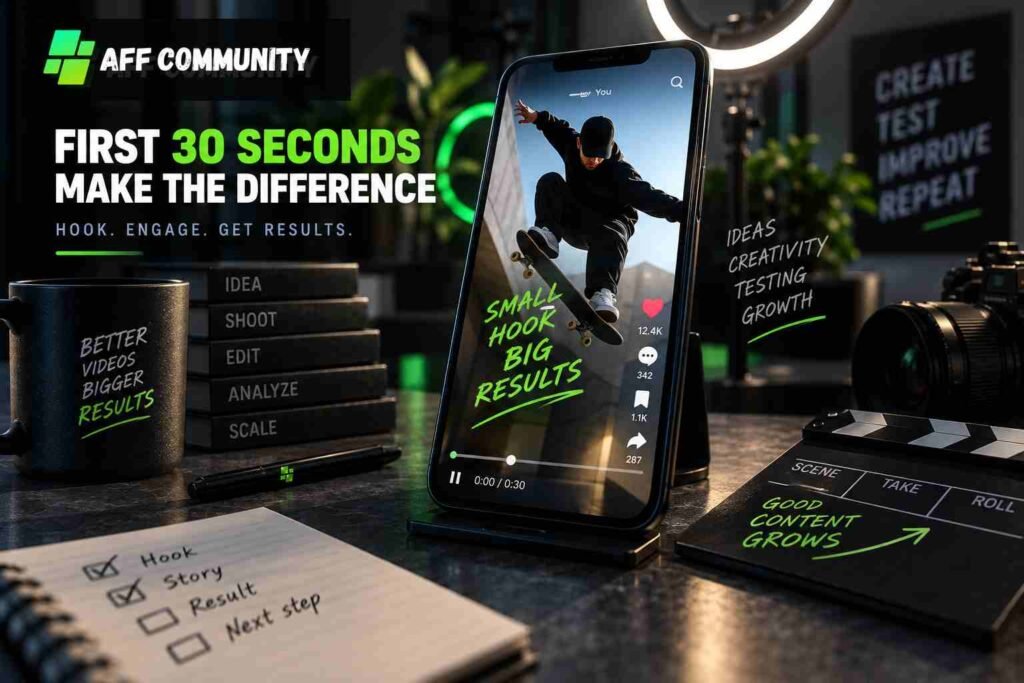
The first 30 seconds shouldn’t look like one long, static scene. Changing shots, angles, on-screen text, and visual details helps maintain attention.
At the same time, don’t turn the video into a chaotic jumble of effects. Every shot change should serve a purpose: to highlight a detail, amplify an emotion, explain an action, or guide the viewer to the next stage of the story.
In modern advertising formats, short vertical videos, UGC, and videos demonstrating results work particularly well. You can learn more about these approaches in the analysis of video formats used in traffic arbitrage.
Build your video around a single idea
Another common problem is trying to cram absolutely everything into a single video.
If a video simultaneously explains the product, highlights several benefits, tells the creator’s story, and also tries to include multiple calls to action, the viewer’s attention will wander. We recommend choosing one main idea.
The first few seconds spark interest, the next 10–20 seconds reveal the problem or solution, and the final part guides the user toward the desired action.
This structure is especially useful for large-scale creative testing: you can change a specific element rather than the entire video.
Check retention by stage
It’s not enough to evaluate a video based solely on the number of views.
You need to see at what point the audience starts to drop off. If most users drop off at the 3-second mark, the problem lies at the beginning of the video. If the drop-off occurs at the 10–15-second mark, the narrative may have stopped providing new information.
This way, you can gradually identify weak spots and modify specific segments rather than reshoot the entire video.
It’s also worth noting that the audience gradually grows tired of repetitive approaches. Therefore, even successful creative content can’t be shown indefinitely without changes. In our article on mistakes in creating ad creatives and their impact on ROI, we discussed in detail why the effectiveness of ad content can decline over time.
What to Do in the First 30 Seconds
If we were to simplify the entire process into a practical algorithm, we would use the following sequence:
- 0–3 seconds: a strong hook and a reason to stop;
- 3–10 seconds: developing the problem, intrigue, or story;
- 10–20 seconds: specifics, demonstrating the solution or result;
- 20–30 seconds: building interest and transitioning to the next step.
That said, there’s no one-size-fits-all script that works equally well for every geographic region (GEO) and industry vertical. One approach might work great on TikTok, while another might be more effective on Reels or in-app.
We recommend not guessing which hook will be more effective, but rather testing several variations of the same script. For example, you can leave the main part of the video unchanged and replace only the first 3 seconds.
The Bottom Line
Holding the viewer’s attention for the first 30 seconds doesn’t start with fancy editing. It starts with understanding why someone should keep watching.
A strong hook, a fast-paced presentation, a single clear idea, continuous plot development, and analysis of drop-off points yield far better results than dozens of visual effects.
That’s exactly why we recommend treating the first few seconds of a video as a separate element of the funnel. If the user doesn’t pause and become interested, they simply won’t make it to the offer.