Google Ads vs. Facebook Ads: Comparison of Traffic Sources
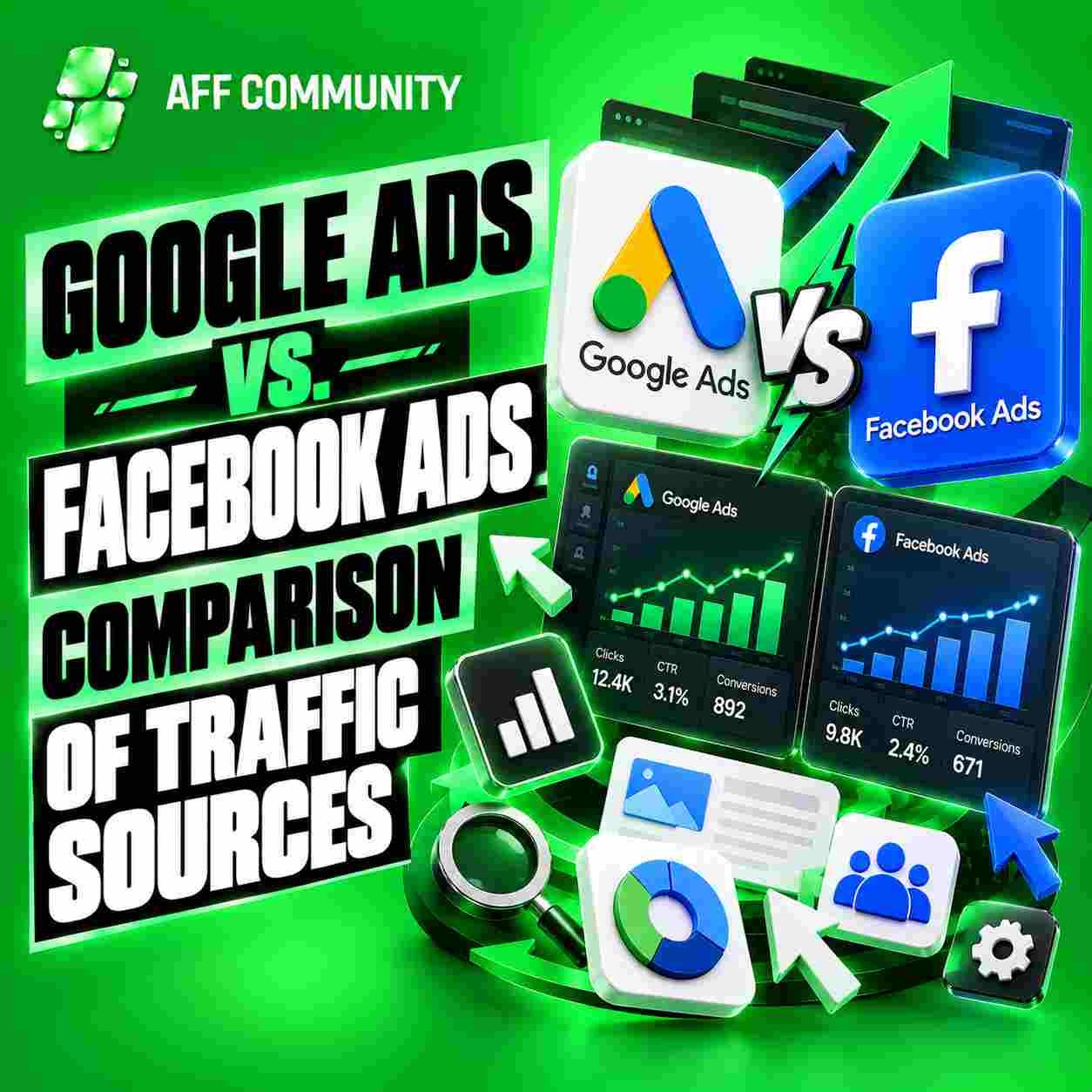
In affiliate marketing, there’s no one-size-fits-all answer to the debate over whether Google Ads or Facebook Ads is better. In some cases, profit comes from search demand; in others, from strong creativity and precise targeting of the audience. If you choose a source based solely on cost per click or others’ case studies, you can quickly blow through your test budget.
We’ll compare both platforms from a webmaster’s perspective: where the audience comes from, how to build ad campaigns, what challenges to consider, and when to launch each source.
Google Ads: Capturing Established Demand
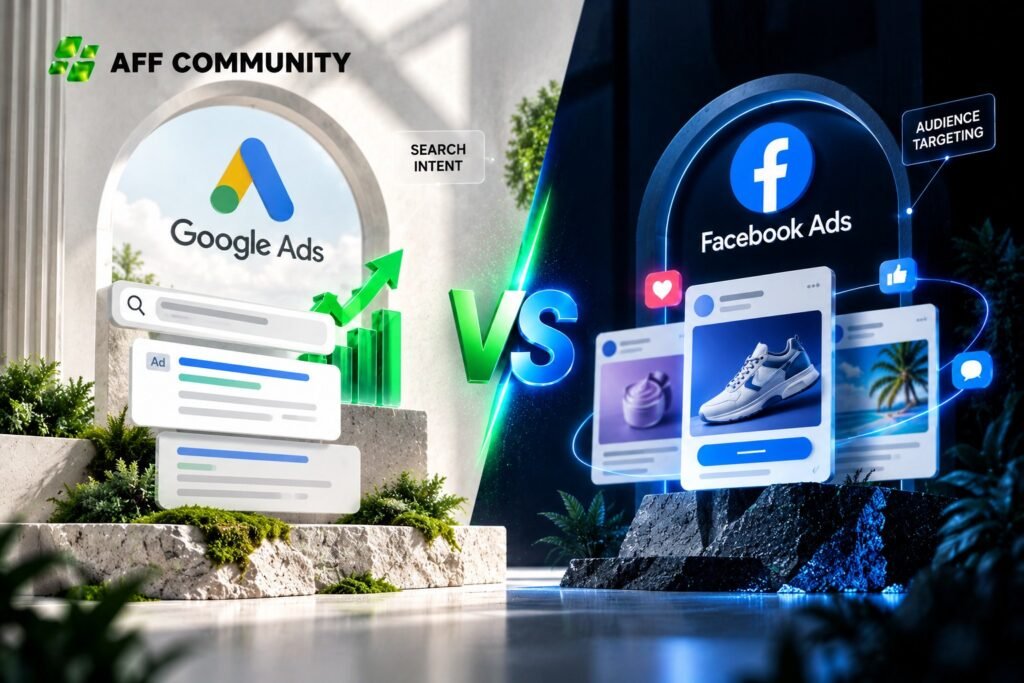
The main feature of Google Ads is the ability to show ads to users who are already searching for a solution to their problem. In search campaigns, a user enters a query, and the advertiser competes for their attention at the exact moment they show interest.

Pros of Google Ads:
- You can work with search queries and segment traffic based on user intent.
- You can test different campaign types and approaches to attracting an audience.
- When the search query, ad, and landing page align perfectly, traffic can convert well into the desired action.
But you have to compete for a high-quality audience. In commercial niches, clicks can be expensive, and configuration errors quickly drive up the cost per lead. In addition, you need to closely monitor the platform’s rules, your website’s quality, and the alignment between your ad and landing page.
The practical nuances of launching a campaign and the associated risks are discussed in detail in the article on affiliate marketing via Google Ads in 2026.
Facebook Ads: Driving Demand Through Creativity
Facebook Ads works differently. Instead of waiting for a search query, the advertiser shows ads to users in their News Feed and other available Meta placements. Creativity, the offer, the selected audience, and people’s reactions to the ad all play an important role.
For publishers, this is an opportunity to test different angles, visual concepts, and audiences. This approach is especially useful when a product can be showcased through a video, a story, a results demonstration, or a clear user scenario.
Advantages of Facebook Ads:
- ample room to test images, videos, and various ad messages;
- the ability to work with interests, custom audiences, and available optimization tools;
- a suitable format for finding new user segments who aren’t yet actively searching for the product.
There are downsides, too: creativity can burn out quickly, results depend on the quality of the tests, and the cost per action changes as the audience becomes saturated. You also need to take into account ad moderation and the technical stability of the advertising infrastructure.
When working with Facebook, it’s helpful to figure out in advance which tools help manage campaigns and control technical settings. This is covered in the guide to extensions for affiliate marketing on Facebook.
Google Ads vs. Facebook Ads: Key Differences
| Criterion | Google Ads | Facebook Ads |
| The main Approach | Capturing Existing Demand | Fostering Interest |
| What Often Affects the Outcome | Queries, bids, relevance | Creativity, audience, offer |
| The main objective of the test | Find conversion-driven search terms and segments | Find the right balance between creativity and the audience |
| Typical risk | High cost per click and irrelevant search queries | Creativity Burnout and Inconsistent Results |
| What to Analyze | Search Queries, CPA, Conversions | CPA, CTR, conversions, and creativity performance |
This doesn’t mean that Google is always more expensive and Facebook is always cheaper. Cost depends on the geographic region (GEO), industry vertical, competition, ad quality, and call-to-action. It’s more accurate to compare platforms based on the cost per confirmed conversion and net profit, rather than just CPC.
When working with “gray” verticals, we recommend always using high-quality White Pages to successfully pass moderation across all traffic sources.
What to Consider When Choosing a Traffic Source
First, determine whether there is established search demand for the offer. If the audience is actively searching for a specific product or solution, Google Ads can be a logical starting point. If the product needs to be showcased through visual presentation or if you need to generate interest from scratch, it’s worth testing Facebook Ads.
Next, evaluate your audience. Geography, age restrictions, interests, and behavior can significantly impact the effectiveness of your ad campaign. The methodology for selecting segments is discussed in detail in the article on target audience segmentation in online advertising.
Don’t forget about the platforms’ rules. In Google Ads, it’s critical to ensure the relevance of your ad and landing page, while on Facebook, you must ensure your creativity complies with advertising requirements. Common Google Ads mistakes which cause advertisers to lose their budgets and accounts are analyzed in a separate article on campaign launch errors.
Can you run both sources at the same time?
Yes, if your budget and analytics allow you to accurately evaluate the results of each channel. Google Ads can drive users with a clear intent to purchase, while Facebook Ads can expand your reach and introduce your offering to new audience segments.
But don’t split your budget evenly just for the sake of being present on both platforms. It’s better to run separate tests, set a target conversion cost, configure event tracking, and compare results at the same stage of the funnel. Also, take into account audience overlap and possible delays between the first touchpoint and conversion.
Conclusion
Google Ads and Facebook Ads serve different purposes, so it makes no sense to choose a winner based solely on average CPC. The former helps you capitalize on existing demand, while the latter offers more opportunities to generate interest through creativity and targeting.
We recommend basing your strategy on the offer, geographic targeting, audience, and campaign economics. Run tests with clear KPIs, evaluate conversion quality, and scale the source that delivers proven profit. If the numbers don’t add up, the problem may lie not only with the ad platform but also with the creativity, the landing page, or the funnel itself.

