How to Run Telegram Ads
Telegram has long since ceased to be just a messaging app. In 2026, it is one of the fastest-growing advertising platforms, allowing you to attract a high-quality audience for virtually any digital vertical. Telegram Ads are used particularly actively by publishers, SaaS service owners, crypto projects, educational platforms, and affiliate media.
Our team believes that Telegram Ads isn’t a replacement for Facebook or TikTok, but rather a separate traffic source with its own rules. Those who try to run ads using the same strategies they’re used to from Meta often burn through their budget quickly.
How to Launch a Successful Campaign
The main mistake beginners make is directing users straight to an offer. On Telegram, this model rarely yields maximum effectiveness.


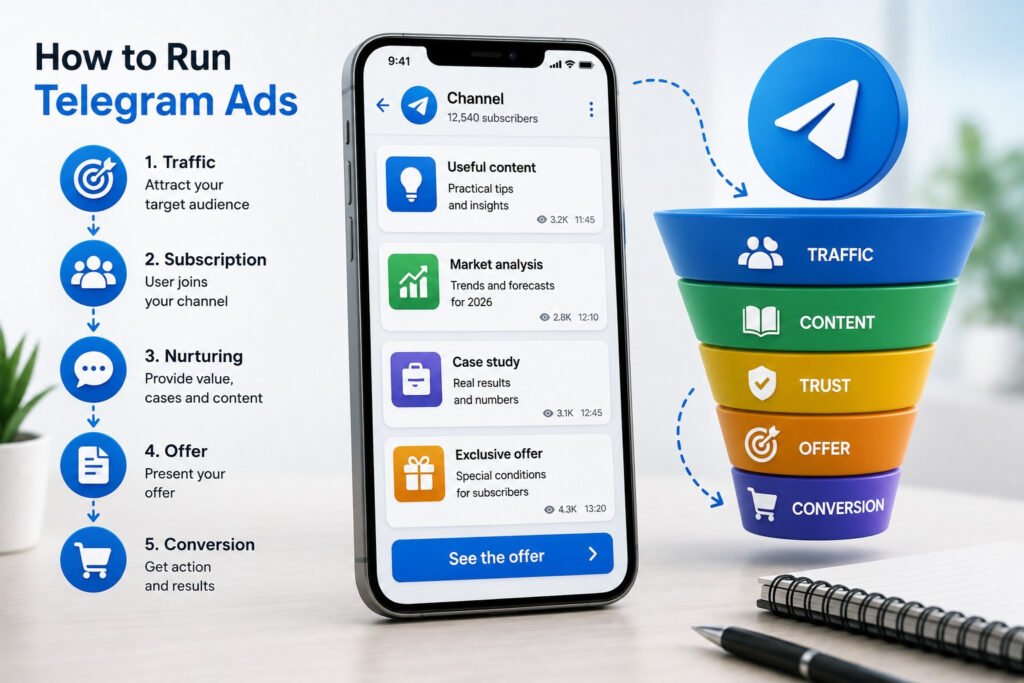
A much more effective approach is a sequence where the ad first directs the user to a channel or a mini-funnel, and only then does the user gradually become familiar with the content, case studies, and the offer.
This builds trust, and as trust grows, so does the final conversion rate. Essentially, Telegram Ads is a tool for attracting an audience, not for making instant sales.
Choosing the Right Channel
Many people focus all their attention on the ad itself, forgetting where the user ends up after clicking.
If the channel looks empty, posts are published irregularly, and the content consists solely of ads, most new subscribers will quickly leave.
That’s why it’s important to prepare the channel itself before launching a campaign. The channel should already contain useful materials, analyses, case studies, and posts that can retain the new audience.
It is precisely this approach that allows you to gradually turn subscribers into customers.
Don’t copy ads from Facebook
One of the most common mistakes is using the same ad copy as on Meta. The Telegram audience behaves differently.
Aggressive sales tactics and grandiose promises don’t work as well here. Instead, expertise, practical value, and concrete numbers resonate much better.
Users need to understand why they should subscribe right now. That’s why good ads often sell not the product itself, but interest in the content.
Analytics Are More Important Than Cost Per Click
Many people evaluate Telegram Ads solely based on CPC. But experience shows that it’s much more important to analyze audience retention:
- How many people are still in the channel after a week?
- What percentage reads the posts?
- How many subscribers click through to the offer?
- It is precisely these metrics that reveal the true effectiveness of a campaign.
It’s no coincidence that top-performing teams analyze the entire funnel rather than individual metrics. The approach to optimizing traffic and increasing conversions is discussed in detail in this article.
Telegram Ads as a Long-Term Asset
The main advantage of Telegram is that subscribers remain within your ecosystem.
While interaction in traditional advertising often ends with a single click, here users continue to see new posts, case studies, and useful content.
Each new post becomes an additional touchpoint with your audience. That’s why the cost of acquiring a subscriber begins to pay off significantly better over time than the cost of a typical ad click.
Why Telegram Ads Will Grow
Competition on Facebook and Google continues to intensify, the cost of traffic is rising, and moderation is becoming increasingly strict.
Against this backdrop, Telegram remains a platform with high user engagement and a high-quality audience.
With the right strategy, Telegram Ads can bring in not only subscribers but also a long-term stream of leads.
We’ve covered in detail how to use Telegram’s new advertising features at this link.
Conclusion
Telegram Ads isn’t a tool for quick sales, but an effective way to build your own audience.
The higher the quality of the content within the channel, the greater the likelihood that the subscribers you attract will eventually become regular readers and customers.
That is precisely why, in 2026, Telegram is becoming one of the most promising platforms for affiliate marketing teams that focus on long-term growth rather than just one-time conversions.