How to Avoid a Risk Payment in Meta Ads
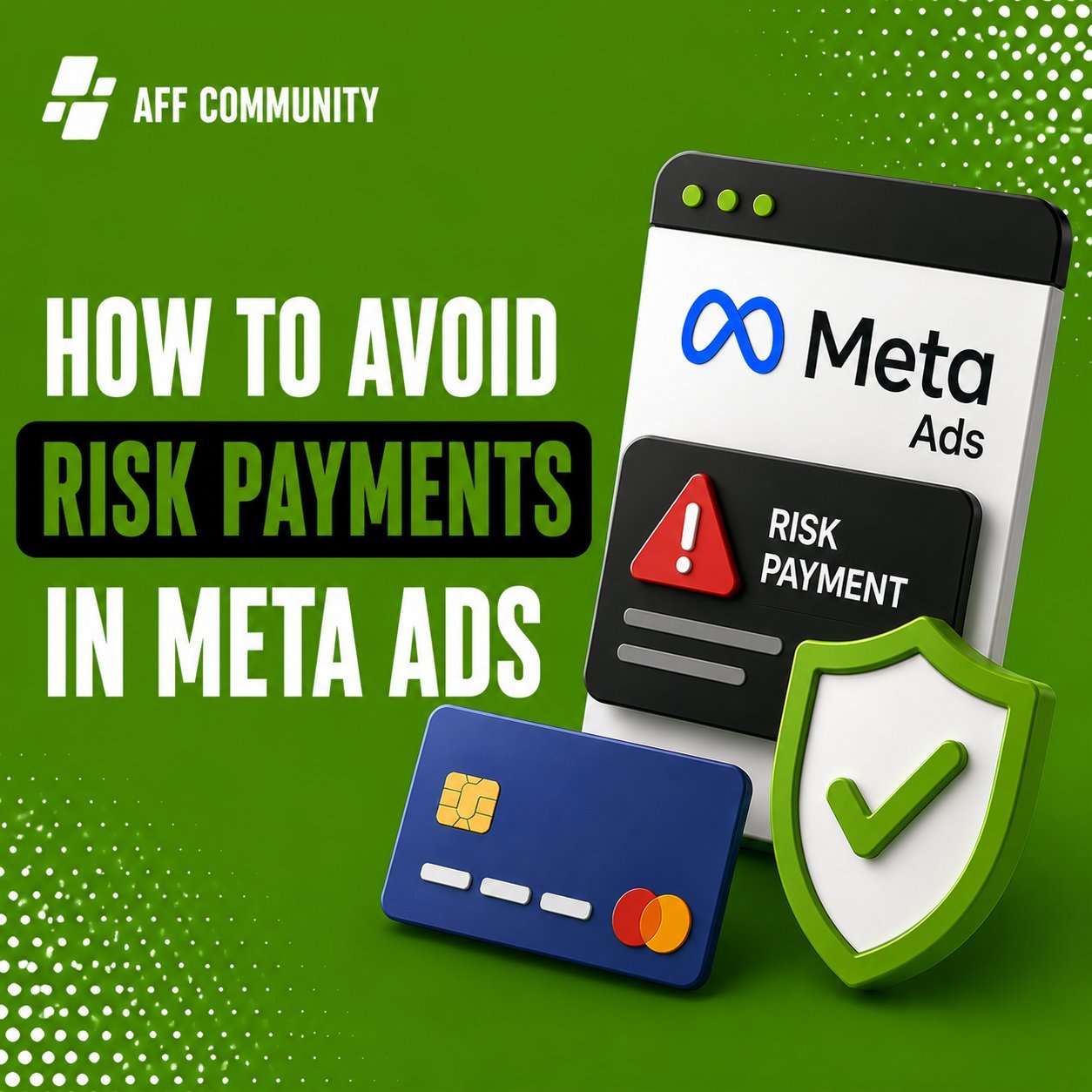
One of the most unpleasant notifications any webmaster can see in Meta Ads is Risk Payment. It usually appears out of the blue: payments stop going through, ad campaigns are paused, and the ad account is flagged for further review.
Our team regularly encounters these situations, and we can say one thing for certain: in most cases, a “Risk Payment” doesn’t happen by accident. It’s the result of Meta’s anti-fraud system flagging your payment activity or infrastructure as potentially risky.
It’s important to understand that the problem is rarely related solely to your credit card. Meta analyzes dozens of factors simultaneously, so you need to address the entire system, not just a single issue.


Why “Risk Payment” Appears
Meta uses its own algorithms to assess the risk of each financial transaction. When a payment is attempted, the system analyzes:
- Business Manager history;
- card payment history;
- the device used to log in;
- the IP address;
- advertising activity;
- the number of previous rejections;
- and the account’s behavior since creation.
If several of these indicators appear suspicious at once, the likelihood of triggering a “Risk Payment” significantly increases. Therefore, an error doesn’t always mean the problem is specifically with the card.
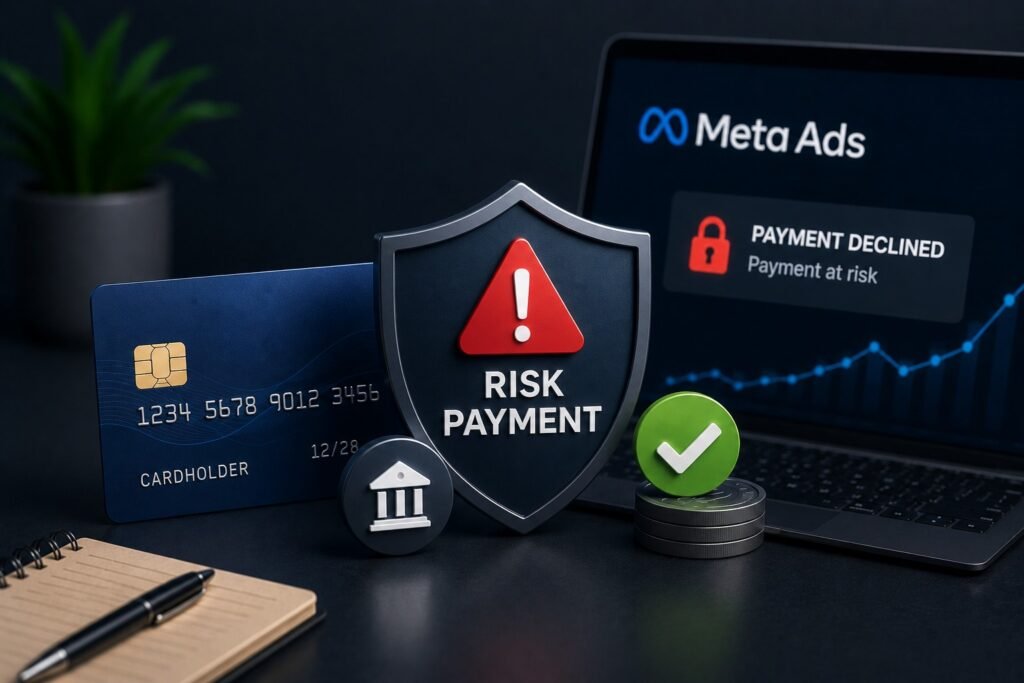
Don’t Switch Cards After the First Error
The most common reaction is to immediately remove the card and add a new one. In practice, this approach often only makes the situation worse.
Meta can clearly see when an advertiser is constantly changing payment methods. If, within a short period, several cards from different banks, countries, or with different BINs are linked to a single Business Manager account, it looks like an attempt to bypass internal checks.
It’s much safer to figure out the cause of the error than to endlessly change your payment details.
By the way, we discussed in detail in this article how bank card BINs affect the operation of advertising platforms and why different cards go through moderation differently.
Business Manager Trust Plays a Huge Role
Many people underestimate the impact of Business Manager itself. Even a high-quality bank card doesn’t guarantee a successful payment if the Business Manager regularly violates the platform’s rules.
Meta evaluates the history of ad campaigns, the number of blocked accounts, the quality of ad creatives, payment discipline, and many other factors.
The more consistently Business Manager operates, the less likely you are to face additional reviews.
That’s exactly why strong teams devote just as much attention to developing their infrastructure as they do to finding profitable ad combinations.
BUTTON - We recommend reading the article “What Affects Business Manager Trust”
Don’t ignore the importance of running your infrastructure
Another reason for a “Risk Payment” flag is attempting to work with large budgets right away.
A new ad account, a Business Manager account that’s just been created, and the very first campaign worth several thousand dollars look suspicious. Meta’s algorithms expect more natural behavior.
That’s why experienced advertisers first gradually run their infrastructure:
- They add employees.
- Verify the domain.
- Run small ad campaigns.
- Build a positive payment history.
Only then do they begin scaling up. It is precisely this approach that significantly reduces the likelihood of a Risk Payment.
We discussed in detail how to properly run your ad infrastructure in the article at this link.
Monitor the quality of your ad campaigns
Many people believe that Meta’s payment system has nothing to do with ad quality. In practice, the opposite is true.
If Business Manager regularly has ads rejected, runs questionable creativity, or violates advertising policies, the trust level gradually decreases.
As a result, additional reviews begin to affect not only the ads but also the payment side of the account.
That’s exactly why high-quality White Pages, proper ad creatives, and careful handling of moderation become an important part of the overall strategy.
Stability is more important than constant change
The more chaos there is within the infrastructure, the higher the likelihood of triggering internal reviews:
- frequent device changes;
- new IP addresses;
- logging in from different countries;
- constantly switching payment methods;
- creating a large number of ad accounts.
All of this generates additional risk signals. Professional teams, on the other hand, strive to stabilize their operations as much as possible.
They use a consistent infrastructure, avoid sudden changes, and gradually increase their ad budgets. It is precisely this behavior pattern that appears most natural to Meta’s algorithms.
It’s no coincidence that modern Facebook algorithms are increasingly focused on a comprehensive assessment of the advertiser rather than on individual actions. This process was discussed in detail here.
What to Do If a “Risk Payment” Flag Has Already Appeared
If the error has already appeared, don’t panic. Don’t immediately link five new cards or create dozens of new Business Manager accounts.
It’s much more effective to check your entire infrastructure:
- payment history;
- Business Manager status;
- ad campaign quality;
- device and IP stability;
- and whether the card is linked to the right ad account.
Most often, the problem lies in a combination of factors, not in any single element.
Conclusion
A “Risk Payment” is not a random error, but a signal that Meta has detected an elevated level of risk.
You can only avoid such restrictions by taking a comprehensive approach: use a high-quality payment infrastructure, gradually run your Business Manager, follow the platform’s rules, and avoid triggering unnecessary red flags.
It is precisely stability, consistency, and careful management of the infrastructure that allow strong affiliate marketing teams to operate for months without serious payment issues and to scale their ad campaigns with confidence.