SEO Strategies for 2027: What You Need to Know
SEO continues to evolve. In 2027, it won’t be enough to simply gather semantic data, write articles optimized for keywords, and wait for rankings to improve. Search results are shifting toward AI-powered answers, competition for attention is intensifying, and the value of organic traffic is increasingly measured not only by the number of clicks but also by their quality.
We’ve identified several areas worth focusing on now so you don’t fall behind your competitors next year.
Keep AI search in mind, but don’t forget classic SEO
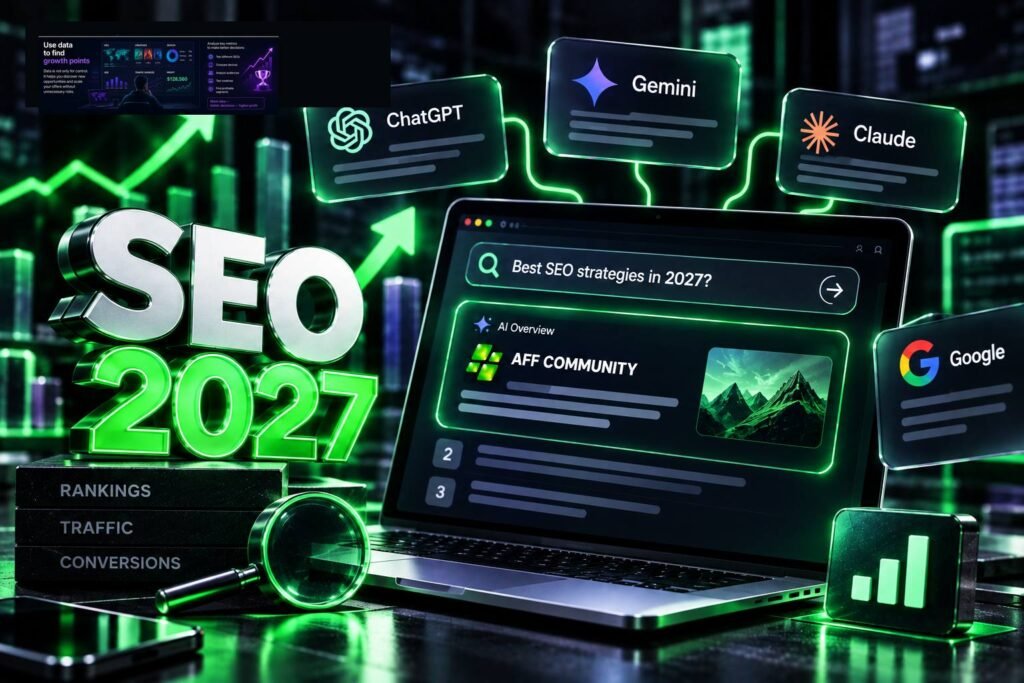
Google is developing AI Overviews and AI Mode, and users are increasingly turning to ChatGPT and other neural networks to find information. This is changing the user journey: some queries are resolved directly in the answer, without visiting the website.


Therefore, we recommend adapting your content for both scenarios. A page should be well-indexed in regular search results while also containing clear definitions, specific facts, and self-contained answers to questions.
There is no special, guaranteed formula for appearing in AI answers. The basic principles remain the same: useful content, technical accessibility of the site, and relevance of the content to the user’s query.
Prioritize queries that generate revenue
High search traffic doesn’t always mean profit. An informational article may attract thousands of visits but generate almost no leads or purchases. At the same time, a comparison review or a page with a commercial offer may generate fewer clicks but a higher conversion rate.
We recommend categorizing search queries by funnel stage:
- Informational queries. These help attract a new audience and establish expertise.
- Comparison queries. These help users choose between different solutions.
- Commercial queries. Focused on making a purchase, signing up, or ordering a service.
For media projects and affiliate marketing sites, it’s important to strike a balance among all three groups. Useful recommendations for planning your work are compiled in the article on building an SEO strategy to grow organic traffic.
Focus on Original Content
Thanks to neural networks, it’s becoming easier and easier to publish dozens of similar articles. But volume alone doesn’t provide a competitive advantage. If the content merely restates well-known facts, users have little reason to choose it over others.
We recommend adding what your competitors don’t have: results from your own tests, practical case studies, comparison tables, expert commentary, and up-to-date data. If an article is about a tool, highlight not only its capabilities but also its limitations, cost, and real-world use cases.
Content that other authors can cite as a source is particularly valuable. This approach is discussed in more detail in the article about content that naturally attracts backlinks.
Strengthen Your Site’s Topic Authority
A single article rarely covers all of a user’s needs. If you’re developing a niche—such as SEO, advertising channels, or analytics—it’s worth exploring related topics and connecting your content with logical internal linking.
This is how a topic cluster is formed: the main page covers a broad topic, while additional articles explore specific aspects. Users can explore the topic step by step, and search engines can more easily understand the site’s structure.
External links are also important, but you shouldn’t chase quantity. It’s better to get mentions on relevant resources, publish expert content, and create content that truly deserves to be cited.
We covered practical principles for building a backlink profile in our article on how to build a website’s backlink authority.
Don’t Ignore Technical Optimization
Even strong content won’t reach its full potential if pages aren’t indexed properly, the site loads slowly, or the mobile version is difficult to use.
In 2027, we recommend regularly checking:
- the indexing of important pages and the correctness of canonical tags;
- page load speed and the usability of the mobile version;
- duplicate content, broken links, and redirect errors;
- the structure of headings and internal linking;
- the relevance of information and the correctness of microdata.
BUTTON - We recommend reading the article “How to Reduce Financial Risks in Affiliate Marketing”
Markup must correspond to the visible content of the page. Don’t implement questionable technical solutions just because they’re touted as mandatory for AI search.
Develop SEO Beyond Search Results
Organic promotion should not exist in isolation from other channels. You can distribute your content via Telegram, niche communities, videos, and partner platforms. This helps attract an audience from various sources and increase the project’s visibility.
We recommend viewing SEO as part of an overall traffic acquisition strategy. It’s important not only to rank in search results but also to give users a reason to return to the site or discover the brand on another platform.
Additional ways to attract an audience are outlined in the article on 7 ways to increase website traffic.
Review Your Performance Metrics
Search rankings and organic traffic remain important, but they don’t tell the whole story. Depending on the project, we recommend also tracking conversions, revenue from organic channels, the share of branded search queries, and audience engagement.
For AI search, it’s helpful to check separately whether the brand is mentioned in the answers to key queries and which pages are used as sources. However, don’t assume that every mention guarantees a click: visibility and traffic are different metrics.
Regular analysis will help you understand which pages actually impact results and which ones need to be updated or reworked.
If you’re just getting started in the field of affiliate marketing, we recommend checking out the comprehensive affiliate marketing glossary.
Conclusion
SEO in 2027 is a combination of technical reliability, expert content, smart internal linking, and a focus on commercial results. AI search is changing the way users interact with search engines, but it doesn’t eliminate the need to create useful pages and ensure they’re accessible to search engines.
We recommend not chasing every new trend. It’s better to strengthen your foundation, update priority content, develop topic clusters, and regularly evaluate the actual return on investment from organic traffic.