Why Telegram Channel Stopped Growing
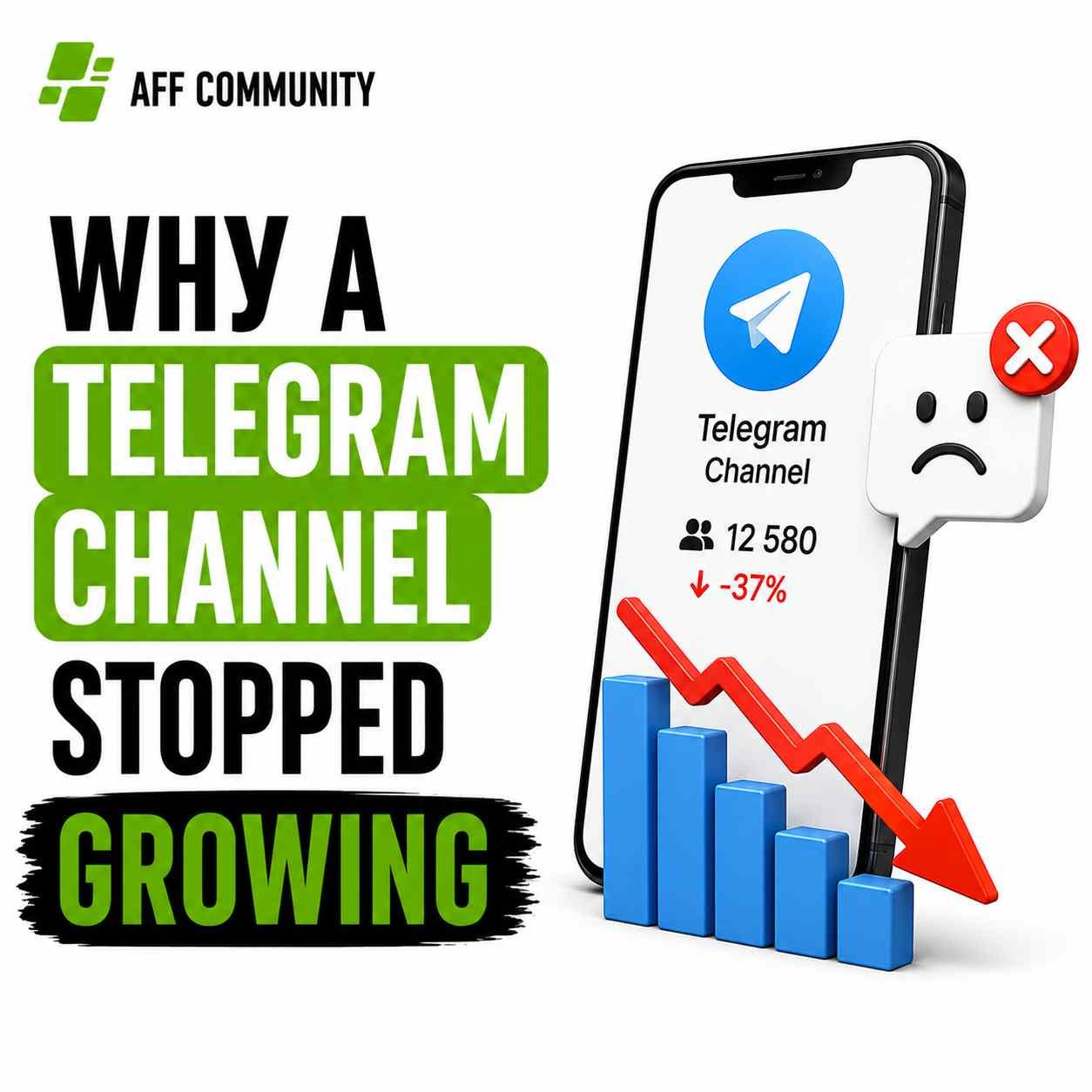
Telegram channel may steadily gain subscribers for several months and then suddenly stop. New subscribers hardly come in, post views decline, and the usual promotion methods no longer yield the same results.
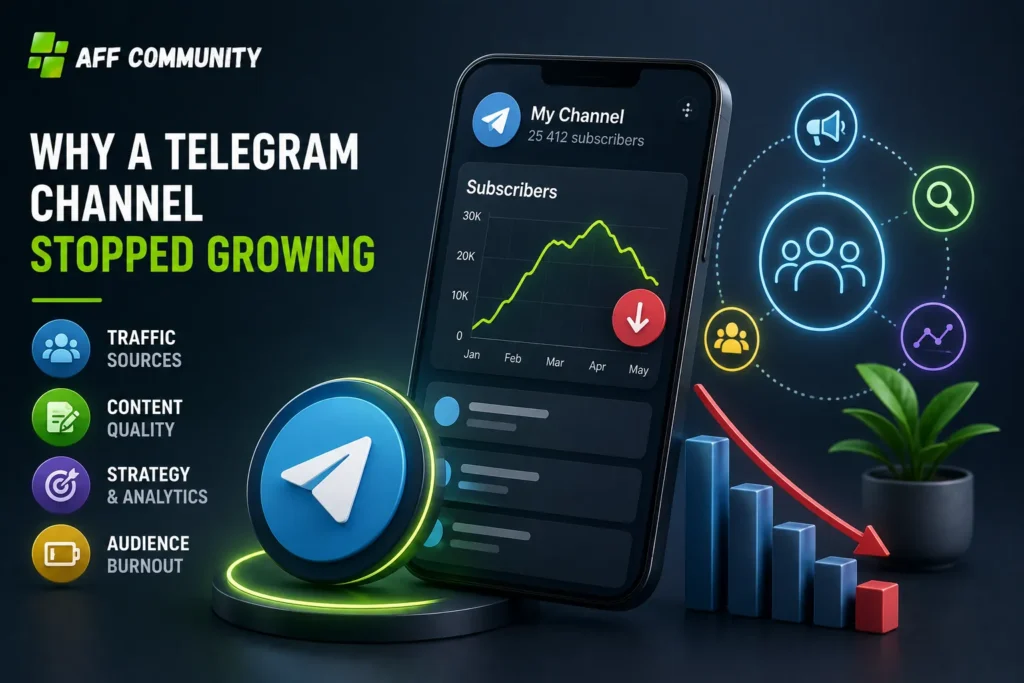
Many people face this situation quite often. And in most cases, the problem isn’t with Telegram itself. Usually, the channel hits a wall due to one of several factors: the wrong traffic source, weak content, a lack of a clear strategy, or simply audience burnout.
The channel has stopped growing—it’s not always a content problem
The first mistake is to immediately start changing your posts. In fact, you should first look at where new subscribers are actually coming from.


If your main audience used to come from recommendations by other channels, and then that source stopped working, your posts alone won’t be able to make up for the loss of traffic.
Today, there are many ways to attract users to Telegram. These include advertising on other channels, Telegram Ads, social media, search engine traffic, and audience overflow from your own platforms.
We’ve covered the main sources of traffic for Telegram separately, and the main takeaway here remains simple: don’t base your channel’s growth on a single source.
Audience Comes, But Doesn’t Subscribe
Another common problem is low conversion of visitors into subscribers. A person visits the channel, looks at a few posts, and leaves. Why?
Perhaps the channel description doesn’t explain its value. Perhaps the latest posts all look the same. Or the user simply doesn’t understand why they should stick around a week from now.
In this situation, increasing your advertising budget won’t solve the problem. First, you need to address the funnel itself. For example, in our article on sales funnels via Telegram, we discussed in detail why the user’s journey from first contact to the desired action is so crucial.
Content has stopped driving reach
Even a loyal audience gradually stops responding to repetitive content.
If every post follows the same template, uses the same topics, and introduces virtually no new formats, engagement begins to decline.
We recommend periodically analyzing:
- which posts get the most views;
- which topics attract new subscribers;
- which posts are forwarded;
- where the audience stops reading;
- which formats elicit reactions.
It’s important to look not only at the number of subscribers but also at activity within the channel.
The channel is growing, but the audience is low-quality
Another reason for growth to stall is trying to increase the number of subscribers at any cost.
You can buy cheap traffic and quickly gain several thousand new users. But if they don’t read your posts, don’t engage, and don’t return to the channel, there’s no real growth.
That’s why we recommend evaluating not only the cost per subscriber but also their subsequent behavior.
It’s especially helpful to compare different sources and see which ones bring in the most active audience. This approach aligns with analyzing traffic quality before scaling.
Telegram shouldn’t be viewed in isolation
In 2026, channels are increasingly becoming part of a broader content ecosystem.
A user might first see a post in search results, then go to Telegram, and only later explore other content from the project. Meanwhile, Google is increasingly displaying Telegram pages in search results, so search traffic from Telegram is also becoming an interesting avenue.
Another option is to use Telegram as an intermediary platform between advertising and the offer. In such scenarios, the channel helps run the user and increase the likelihood of further action.
What to Do If Growth Has Stalled
We wouldn’t recommend buying more ads right away. First, you need to conduct a small audit:
- determine where subscribers used to come from;
- compare old and current sources;
- check the conversion rate of visitors to subscribers;
- analyze the best and worst posts;
- assess the activity of new subscribers;
- test several new acquisition sources.
After that, it becomes much clearer where the problem lies.
A Telegram channel rarely stops growing for no reason. Usually, either the quality of incoming traffic, the audience’s behavior, or the content itself changes. Therefore, instead of simply trying to increase the number of subscribers, we recommend first identifying the weak point in the system.
In 2026, the channels that succeed won’t be the ones that simply publish more posts, but those that understand where the audience comes from, why they subscribe, and what keeps them coming back.