What are spy services in arbitration and why are they needed?

In traffic arbitrage, there is a strict axiom: “He who tests everything from scratch pays for mistakes with his own wallet. He who analyzes the market pays for a spy service subscription.” In 2026, as ad network algorithms have grown smarter and competition for users more aggressive, Spy services have evolved from auxiliary software into a mandatory element of a media buyer’s tech stack.

In this article, we will break down how “spies” work, why they are worth the money, and how to squeeze the maximum value out of them without becoming a “copy-paster.”

1. Anatomy of a Spy Service: How They See the Invisible

A spy service is a complex software suite operating at the intersection of Big Data and anti-fraud bypass technologies. To provide you with a library of millions of ads, the service solves three tasks:

  • Data Collection: The service maintains massive account farms or rents residential proxies worldwide. Bots mimic real human behavior: they “scroll” Facebook feeds, watch TikTok videos, and visit publisher sites looking for native ads. To an ad network, this bot looks like a regular user from, say, Italy or Vietnam, which is why it is shown relevant ads.
  • Bypassing Cloaking: Affiliates often use cloaking—a technology that shows moderators a “white” (compliant) site while showing real users the actual offer (e.g., gambling or nutra). Advanced spy services can pierce through these filters, saving the final landing page seen by the customer for you.
  • Indexing and Search: All collected information—images, videos, texts, links, buttons—is indexed. This allows you to search for ads by keywords, advertiser domain, or even image hash.

2. Why an Affiliate Needs a Spy: 5 Levels of Depth

Most beginners use a spy service at 10% capacity. Let’s break down the utility you can extract at different stages of work.

  • Level 1: Finding “Hot” Offers. Instead of interrogating an affiliate manager with “What’s converting right now?”, you open the spy and set filters for a specific vertical (e.g., E-commerce or Finance). If you see 500 unique ads for the same product launched in the last 3 days, the offer is trending.
  • Level 2: Analyzing Approaches. An “approach” is a marketing angle. For example, a weight loss product can be advertised through:
    • Medical approach: An interview with a doctor.
    • Relatable approach: “A neighbor lost 10 kg in a week.”
    • Shock content: Strange ingredients that spark curiosity. A spy service shows which “angle” is currently resonating most with the audience.
  • Level 3: Technical Funnel Breakdown. Professionals don’t just look at the image; they look at the “bundle”: Creative + Pre-landing + Landing page. A spy allows you to download the code of a competitor’s pre-lander. You can study the scripts they use: countdown timers, wheels of fortune, or fake comments.
  • Level 4: Volume Assessment. If an ad is running on 15 different accounts by the same buyer (visible through similar creatives and domains), it means the bundle is scaling. This is a signal that there is significant traffic volume and profit in this niche.
  • Level 5: Saving on Tests. The average test for a single hypothesis on Facebook costs $50–$200. By using a spy, you cut out obviously losing options (which no one runs for long) and focus on those that have already proven their viability.

3. Classification of Tools by Traffic Sources

The arbitrage market is segmented, and spy services follow this logic.

  • Social Networks (Facebook): While many popular services have existed here for a long time, the market has been replenished with local and faster solutions like Spy.house. These services are critical for Nutra, Gambling, and E-commerce. They show not just the ad itself, but also engagement levels (likes, shares), helping evaluate “virality.”
  • TikTok: The specificity of TikTok lies in the short lifecycle of a creative. Almost all services monitor ads in real-time. In TikTok, it’s vital to see which audio tracks and visual effects are currently at the top, as the platform’s algorithms reward trendy content.
  • Native Advertising (Taboola, Outbrain, MGID): Native ads are the “teasers” on news portals. There is a wide selection of services here; it all depends on user preference. They allow you to see exactly which publisher sites an ad is running on, enabling you to immediately compile Black- or White-lists.
  • Push Notifications: The push market is unique. In almost every service, you can track push chains and how headlines change depending on the time of day or the user’s GEO.

4. How to Distinguish “Gold” from “Junk”: Working with Filters

If you simply click “Search,” you will drown in a sea of test launches that are burning budgets. A proper filtering strategy looks like this:

  1. Sorting by Lifespan: The most important parameter. Set the filter to see ads that have been running for at least 7–10 days. If an ad is active that long, it’s profitable.
  2. Sorting by Traffic Volume/Impressions: Allows you to find the “heavy hitters.”
  3. Excluding Brands: To avoid seeing ads from major corporations (Nike, Amazon), filter by keywords or categories. Arbitrage creatives are usually more aggressive and direct.
  4. Domain Search: If you find one competitor landing page, enter their domain into the search. You will often discover a dozen other bundles from the same buyer.

5. Ethical and Practical Side: Copy or Adapt?

This is the ultimate question in arbitrage. There are two approaches:

The “Copy-Paste” Approach You download someone else’s creative and landing page and launch them on your account.

  • Pro: Speed.
  • Con: Ad platforms (especially Facebook and Google) have “fingerprinting” systems. A copy of someone else’s creative can lead to an instant ban or suppressed reach. Additionally, the audience might already be “burnt out” (tired of seeing that specific image).

The “Uniquization” Approach (Recommended) You take the idea from the spy service but recreate the content.

  • Change the color scheme and fonts.
  • Record new voiceovers or change the music.
  • Use different triggers in the text.
  • Clean file metadata. This allows you to enter the auction with a “clean” creative that the system views as original, but which is based on already proven mechanics.

6. The Cost Factor: Is the Investment Worth It?

Prices for high-quality spy services start at $100 and can go up to $500 per month. For a solo affiliate, this may seem like a significant sum. However:

  • One failed “shot in the dark” test costs $100.
  • A spy service allows you to see the test results of thousands of other people for that same $100.
  • To save money, many use “Group Buys,” though services actively fight this by blocking accounts.
  • Alternatively, you can use a service like Spy.house, which offers plans starting from $29 and provides a 7-day free trial.

7. 2026 Trends in Spy Technologies

The tools are not standing still. Today we see:

  • AI Integration: Spies are starting to analyze creative effectiveness using neural networks, suggesting which design elements work best.
  • Comment Analysis: Automatic collection of negative feedback under competitors’ ads so you can make your product “better” in the eyes of the user.
  • Deep Mobile App Analysis: Tracking not just the ads, but also app store rankings and internal funnels (in-app events).

Summary

Spy services in 2026 are not just a way to peek at your neighbor. They are a tool for professional market analysis that significantly shortens the path from idea to first profit.

Main Advice: Use the spy as an inspiration library and an analytical database, not as your sole source of creatives. In arbitrage, the winner is the one who takes a working model and adds 20% uniqueness to it.

Top GEOs for Financial Vertical in 2026

The financial vertical remains one of the most competitive and profitable segments in affiliate marketing. From personal loans and credit cards to fintech apps and investment platforms, the demand for financial services continues to grow globally. However, one of the most important factors in campaign success is choosing the right GEO.

In this article, we analyze some of the most promising GEOs for financial offers in 2026 and explain why they perform well for affiliates.

Why GEO Selection Matters in Financial Offers

Financial products are highly dependent on local market conditions. Performance can vary significantly depending on:

  • Local financial regulations
  • Purchasing power of users
  • Banking and fintech penetration
  • Trust in digital payments
  • Economic stability

A strong GEO can deliver higher approval rates, stronger EPC, and scalable traffic volume. On the other hand, a poorly chosen GEO can lead to compliance issues or low conversion rates.

Tier 1 GEOs: Premium Markets With High Payouts

Tier 1 markets typically offer the highest payouts but also come with stronger competition and stricter compliance requirements.

Canada

Canada is one of the most stable financial markets with a strong online banking culture.

Popular financial offers include:

  • Personal loans
  • Credit cards
  • Debt consolidation services
  • Investment platforms

Advantages

  • High purchasing power
  • Reliable approval rates
  • Mature fintech ecosystem

Challenges

  • High traffic costs
  • Competitive market

Search traffic, native ads, and email marketing work particularly well in this GEO.

Singapore

Singapore is one of Asia’s leading fintech hubs and a highly digitalized financial market.

Top-performing offers include:

  • Investment platforms
  • Wealth management apps
  • Credit cards
  • Personal finance services

Advantages

  • High LTV users
  • Strong fintech adoption
  • Highly educated audience

Challenges

  • Small population size
  • Strong financial regulations

High-quality content funnels and native advertising often perform well in Singapore.

Japan

Japan has a large, sophisticated financial market with strong consumer trust in financial institutions.

Popular verticals:

  • Investment apps
  • Consumer loans
  • Credit cards
  • Trading platforms

Advantages

  • High user trust
  • High spending capacity
  • Long-term customer value

Challenges

  • Language localization required
  • Cultural differences in advertising

Localized creatives and high-quality landing pages are essential in this market.

Tier 2 GEOs: Balanced Cost 

These markets combine reasonable traffic costs with solid conversion potential.

South Korea

South Korea is one of the most digitalized countries in the world with high smartphone penetration and advanced fintech infrastructure.

Strong verticals:

  • Mobile loan applications
  • Credit cards
  • Digital payment platforms

Advantages

  • Tech-savvy population
  • High mobile usage
  • Fast-growing fintech ecosystem

Challenges

  • Strong competition
  • Strict advertising policies

Mobile-first funnels perform particularly well here.

Poland

Poland remains one of the most active financial affiliate markets in Europe.

Popular offers include:

  • Payday loans
  • Installment loans
  • Loan comparison services

Advantages

  • Large online lending market
  • Familiarity with financial comparison platforms
  • Good conversion rates

Challenges

  • Competitive local affiliates
  • Increasing regulatory oversight

Search and native traffic sources perform consistently well.

Italy

Italy has seen steady growth in fintech adoption and online financial services.

Best-performing offers:

  • Personal loans
  • Installment credit
  • Credit comparison platforms

Advantages

  • Growing online finance adoption
  • Moderate competition compared to Tier 1 markets

Challenges

  • Strong compliance requirements
  • Localized content necessary

Localized landing pages and trust signals significantly improve conversions.

Tier 3 GEOs

These markets often have lower payouts but offer cheaper traffic and strong scaling opportunities.

Czech Republic

The Czech Republic has a stable economy and increasing demand for digital financial services.

Popular offers:

  • Consumer loans
  • Loan comparison websites
  • Credit products

Advantages

  • Lower competition
  • High internet penetration

Challenges

  • Smaller population size

Targeted campaigns with localized creatives usually perform best.

Turkey

Turkey is a rapidly developing financial market with strong demand for alternative financial solutions.

Strong verticals:

  • Personal loans
  • Credit cards
  • Digital wallets
  • Investment platforms

Advantages

  • Large population
  • Growing fintech adoption
  • Strong mobile usage

Challenges

  • Economic volatility
  • Regulatory changes

Mobile-first campaigns and localized content are important for success.

Malaysia

Malaysia is an emerging fintech market with increasing adoption of digital financial services.

Popular offers:

  • Personal loans
  • Digital banking apps
  • Credit cards

Advantages

  • Growing middle class
  • Strong mobile usage
  • Expanding fintech sector

Challenges

  • Cultural and language localization

Native advertising and influencer traffic can perform well in this GEO.

Key Trends for Financial GEOs in 2026

Several trends are shaping financial affiliate marketing globally:

1. Mobile-First Finance
Most financial applications and loan services are now optimized for mobile devices.

2. Fintech Expansion
Countries like Singapore, South Korea, and Malaysia are seeing rapid growth in fintech startups.

3. Investment Platforms Growth
Demand for trading and investment apps continues to rise in developed markets like Canada and Japan.

How to Choose the Right GEO

Before launching a financial campaign, affiliates should analyze:

  • Regulatory restrictions
  • Payment methods used locally
  • Traffic costs
  • User trust in online finance
  • Approval rates and hold periods

Always start with small test budgets before scaling campaigns.

Final 

There is no universal best GEO for financial offers. The right choice depends on your:

  • Traffic source
  • Budget
  • Compliance experience
  • Localization capabilities

Markets like Canada, Singapore, and Japan offer high payouts and stability, while countries such as Turkey, Malaysia, and the Czech Republic provide opportunities for scaling and traffic arbitrage.

In 2026, affiliates who combine the right GEO selection with strong localization and compliance strategies will continue to see sustainable profits in the financial vertical.

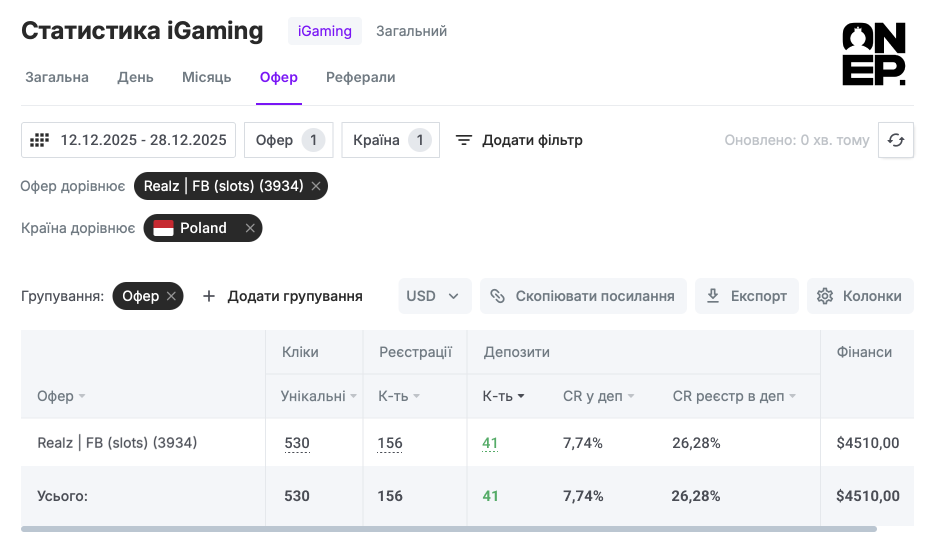
Realz Poland Traffic Drive with ROI 40.75% in 2 weeks!

4% of Poles regularly spend money on gambling — that’s one and a half million active players. The Realz offer on FB fully reveals the potential of this audience. This case is your sign to start driving gambling traffic to Tier-2 countries with us and not slow down in 2026. How exactly? Read more 🙂

Summary:

  • Offer: Realz | FB
  • Geo: Poland
  • Platform: Facebook apps
  • Test period: 12.12.2025-28.12.2025
  • Expenses: $3204.15
  • Income: $4510.00
  • Profit: $1305.85
  • ROI: 40.75%

Good conditions and payments without delays at One Partners

Case Statistics:

Choice of Geo

Poland is a member of the EU and a Tier-2 geo with a population of over 36 million, which is currently being actively discussed in the community. And for good reason: it is easy for webmasters to understand the problems of their Slavic neighbours, their mentality, which includes great patriotism and religiosity (over 90% are Catholics, of which 30-40% go to church every Sunday). Majówka — the beginning of May — is a perfect time to run traffic, since several holidays fall during this period. They speak Polish, and the currency is the zloty.

Since the country’s economy is rapidly developing, the average salary here is 2,000 USD. 96% of the population is connected to the Internet, and Poland is among the top 50 countries worldwide in terms of Internet speed. Although gambling is prohibited by law (the market is monopolized by the state-owned Totalizator Sportowy), Poles are gamblers. Of the 4% of users indicated at the beginning, 40% play in online casinos at least once a week. More than 60% of players are men, mostly aged 30-35 (66% of the target audience are gamblers aged 25-44).

Other Niches

The eternal classics — Nutra — is doing particularly well here. 60-70% of Poles use dietary supplements and actively monitor their physical and mental health. Cardiovascular diseases are common, and women are actively seeking skincare products. The average age of a Pole is 40+, so rejuvenation + joints will work with a bang. The country has many migrant students who can afford to study in Poland, so during the exam season, promote products to improve cognitive abilities.

In the finance niche, prioritize promoting loans and opening bank accounts. Be careful with investments: although they are popular, they are under the control of the Financial Supervision Commission here. Interestingly, Poland is the EU leader in the number of crypto companies (930+), so crypto is the norm. Dating is also an option, as about 30% of Poles use dating apps, but you should focus on “white” offers. This is a country where divorces are practically non-existent, and the institution of family and marriage is developed, so the majority of the target audience is set on serious relationships.

Traffic Source

The most popular social network, with 25 million users (65-66% of the population; the largest age group is 25-34), is, as expected, Facebook, so the choice for us became obvious. As for traffic groups by mobile OS, 28% belong to iOS and 72% to Android.

98% of search traffic here belongs to Google. There is a local gaming platform — Player.pl — that can also be used by webmasters working in the gambling industry.

Choice of Creative

The approaches are quite common: first, warm up the user with emotions, then offer a bonus. Recently, static creatives for Poland have been generating a lot of registrations but an extremely low reg2dep, so it’s better to use them sparingly, especially since the Internet is fast and video creatives load without problems. When working with other offers, keep in mind a few more tips: the biggest and most beloved star of Poland is the Barcelona striker Robert Lewandowski, who can be safely used in creatives. Also, take a closer look at influencer traffic: according to statistics, about 75% of users trust the recommendations they see in their FB and Instagram feeds.

The scheme can be as follows: a hook for 3-4 seconds → 10 seconds of the gaming process with an explosion of emotions at the end → 5-7 seconds of showing the payment → CTA and a list of bonuses at the end.

One Feedback

Typical Tier-2, huh? Local payments are key: BLIK, Przelewy24, PayU, Dotpay, Skrill. In general, the more “polishized” your creative is, the better: it is really difficult to overestimate Polish patriotism. Andromeda currently has an effective ABO setup with a large number of adsets (1-5-2, 1-10-3). Test with a budget of 15-20 dollars, look at installs first. Don’t rush into everything at once: people have more money in big cities. Be sure to look for Polish music for your creos: currently, at least 7 Polish songs are in the Polish TOP-10 on streaming platforms (we checked, pinky promise).

How Did We Set Up Ad Campaigns?

No matter how you look at it, the vast majority of your target audience will be men 35+ with ordinary professions and average incomes, so we set the age limit at 25+. Our case is about driving traffic to Poland, but you know what the trick is? Most of the tips here can be used when launching this offer in other geos. Yes, yes, Realz is available in HU, CZ, CA, IT, DE at One Partners!

The Basic Parameters of the Ad Campaign:

  • Paid target: FTD
  • Minimum deposit: 10 EUR
  • Cap: 20 FTD
  • Hold: 30 days
  • Postback: 30 mins delay. Set on mindep.
  • KPI: mindep + active traff

Prohibited:

  • motivated traffic;
  • specifying the amount of the minimum deposit in creatives;
  • multi-accounts, fraud, chargebacks.

Conclusions

Poland is entering the affiliate market in 2026 as one of the most profitable geos, and this case is proof of that. The more Polish colours, bank, slang are on your creo, the better. Finding a native speaker and tracking trends (influence, popular slots, music, memes) in the neighbouring country is easy, so go for it. In a pinch, there is always Lewandowski. Once you catch a wave, you will never want to return to shore 🙂

Find even more insider tips on our website

Excellence Isn’t Measured by Promises: PlayamoPartners, Tag Heuer, and the Logic of Formula 1

In iGaming, premium isn’t a promotional stunt. It’s a standard—measured in consistent payouts, high-quality traffic, and performance that earns recognition. PlayamoPartners × TAG Heuer × Formula 1.

The iGaming space has long mastered the art of noise. Hype comes easy. But increasingly, growth is being substituted with spectacle—trips, stunts, one-off “wow” events.

Helicopters, yachts, exotic getaways—they look impressive, sure. But they rarely offer what partners truly need: predictability, respect for business models, steady communication, and clear rules of engagement. The issue isn’t the price tag—it’s the absence of structure.

The question for the market is simple: is premium about the show—or about trust?

True premium doesn’t scream for attention. It selects, sustains, and rewards. Just like in Formula 1, success isn’t driven by emotion or chance—but by discipline, team coordination, and timing.

An Industry Like a Race: Speed Without System Equals Loss

iGaming often operates like a sprint—fast onboarding, fast boosts in numbers, fast pivot to the next offer. In that model, partners become disposable.

But speed only matters when paired with the right conditions: a skilled team, reliable tools, strict discipline, and transparent processes. Without them, speed breeds chaos—and every mistake comes at a cost. The faster you go, the more expensive it gets.

A premium partnership plays the long game. It’s stable, not flashy. Clear KPIs. Repeatable workflows. Predictable payouts. In this race, the winner isn’t the one who accelerates the fastest—it’s the one who handles every curve with control.

PlayamoPartners is built for this. The system favors quality traffic—PPC, SEO, media buys. Fraud and shortcuts aren’t tolerated—not as a rule, but as a principle. Partnership requires both sides to meet the same standard.

Traffic Channels at PlayamoPartners:

  • PPC
  • SEO
  • Facebook*
  • Social
  • ASO
  • UAC
  • SMS
  • Email
  • In-App & PWA

There’s one hard line: incentive traffic is strictly forbidden. Bidding on brand keywords in PPC/SEO? Fully prohibited. No shortcuts. No cheap wins. Quality over quantity.

The Payout Model: Stability as a Signal

Premium isn’t about grand gestures—it’s about reliability. At PlayAmoPartners, payouts are consistent. Hold times max out at two weeks for FB, ASO, UAC, In-App, PWA. Most sources have zero delay. In a space full of promises, predictability is the real currency of trust.

Another mark of maturity: PlayamoPartners only works with in-house products. Full control from A to Z. No external handoffs. No diluted responsibility. Just a clear decision-making chain.

That’s why premium here doesn’t feel artificial. It feels like regulation. In Formula 1, regulation is the law of the industry.

Why TAG Heuer Fits

TAG Heuer isn’t a name-drop—it’s a symbol. Of precision. Of longevity. Of performance when timing matters most. A brand historically trusted to measure time where every fraction of a second matters. In that world, status doesn’t come from loud promises. It comes from control, consistency, and discipline.

In 2025, TAG Heuer returned to Formula 1 as its official timekeeper.

That’s not coincidence. It’s a statement. That time isn’t metaphor — it’s a tool for mastering results.

Back in 1969, TAG Heuer became the first luxury brand to place its logo on a Formula 1 car. In 1971, the first to sponsor a team. That wasn’t trend-following. That was trend-setting.

And in 2025, TAG Heuer became the first-ever title sponsor of the legendary Monaco Grand Prix — a race synonymous with elite competition, invitation-only access, and status earned, not staged.

Perhaps most telling: TAG Heuer’s partnership with McLaren lasted from 1985 to 2015.

Thirty years. That’s not hype — that’s resilience. And it’s exactly the logic premium programs should operate on.

How PlayamoPartners Rewards — Without Selling

In this market, rewards often come dressed as sales tactics. At PlayamoPartners, it’s different.

Premium Rewards is a private system. Not a storefront. Not a spectacle. The rewards aren’t bait—they’re a quiet, logical endpoint in a well-run system.

Those who get rewarded are the ones who play the long game. No shiny one-hit wonders. Just consistent, qualified results.

No raffles. No promises of “everyone wins.” Just clear criteria: quality, volume, and stability.

Partner rewards include:

  • TAG Heuer timepieces
  • MacBook Air
  • iPhone 17 Air
  • AirPods Max

Not giveaways. Not clickbait. You have to earn them. In an industry that often tries to buy loyalty with noise, this approach is intentionally quiet. And all the more convincing.

What’s Really on Offer

Not gadgets. Not even rewards. What PlayamoPartners offers is a system—one built on performance and reliability. One where partners are treated as value-creators, not variables. Where execution speaks louder than emotion. Where premium is simply the default mode of operation.

Confirmed by scale: 10,000+ active partners. A decade in the game.

Geography & Growth

PlayamoPartners operates globally but focuses on Tier-1 markets. Priority geos include:
Canada, Australia, DACH, Greece, Spain, Italy, Portugal, Poland.

Restricted geos:
USA, UK, Israel, Netherlands, France (including territories), Baltics, Ukraine, Belarus, and selected African and Asian markets.

Why? Because selectivity is part of quality.

Models & Terms

Available iGaming models: CPA, RevShare, Hybrid. Deals are negotiated individually based on traffic quality, placement terms, and lead performance. Because in a mature system, numbers aren’t slogans—they’re the product.

The Portfolio

PlayAmoPartners manages 17 in-house brands:PlayAmo, Bizzo Casino, Dragon Slots, Avalon78, National Casino,
20Bet, Woo Casino, CasinoChan, Cookie Casino, Bob Casino,
Mason Slots, Spinia, Limewin, BetAmo, Spinando, Betchan, Granawin.

Again, the Formula 1 logic applies: it’s not about one star car—it’s about the strength of the whole team.

That team is held together by clear traffic policies, incentive bans, predictable payouts, and calm, respectful communication. The kind of environment where the story isn’t “how fun it was,” but “how clear it was.”

This isn’t another offer. This is real business.

Final Lap

Premium affiliate programs operate by a different logic. Rewards aren’t promotional props—they’re a mark of recognition. Built on strict discipline: vetted sources, transparent rules, proven systems, steady payouts, and deliberate decisions.

TAG Heuer stands as a symbol of precision, endurance, and results over time. In tandem with Formula 1 thinking, it shapes a clear thesis:

Premium isn’t about shine. Premium is about how well things work.

If you’re operating at that level—you’ll know it right away.

Effective affiliate marketing tools: anti-detect, proxies, and fingerprint management

Why do you need an anti-detection browser

An anti-detection browser allows you to emulate the behavior of a real user by creating separate profiles with unique characteristics: user agent, language, time zone, graphic rendering, and even device settings. This is critical for arbitrage, because working with dozens or hundreds of accounts is impossible without the correct distribution of fingerprints.

Using anti-detection makes account management more transparent: you can assign different profiles to different advertising accounts, test creatives, and control cookies. This is where the first key advantages come in when we talk about anti-detection browsers for affiliate marketing.

The role of proxies in arbitration

Even the best anti-detection tool will be useless without high-quality IP addresses. Proxies hide the real address of the device and allow you to distribute the load.

Which proxies to use

  • Residential – the best choice for long-term work. Real user IP addresses provide a high level of trust for advertising networks.
  • Mobile (4G/5G) – suitable for warming up accounts and working with mobile traffic.
  • Data centers – cheaper, but less reliable.

For correct configuration, it is worth using proven services, such as ProxyLine, which offers stable individual proxies for arbitrage traders. ProxyLine is a proxy service that offers anonymous IPv6 and IPv4 proxies in the US, Europe, and CIS countries. It provides both dedicated and shared proxies and supports HTTP and SOCKS5 protocols. Proxies are activated immediately after payment, and users can manually select the region, city, and subnet. According to reviews, ProxyLine covers more than 100 locations, has hundreds of networks, and offers an API and a personal account for managing addresses. Users note its stability, speeds of up to 100 Mbps, and a 48-hour money-back or replacement guarantee. ProxyLine is often mentioned as a reliable choice for marketing, SEO tasks, social media, and arbitrage.

Most users look for free proxy servers because they make it easy to check basic functionality and understand how they work. ProxyLine offers free options, but their speed and stability are usually lower than paid ones. If you need reliable and fast performance without interruptions, it is better to use professional paid proxies — they are suitable for social networks, games, and any tasks where connection stability is important.

Managing fingerprints and cookies

Anti-detection + proxies are just the beginning. It is important to manage digital fingerprints (canvas, WebGL, audio), cookies, and local storage wisely.

Proxy fingerprint management

If these parameters are not controlled, advertising system algorithms will quickly detect suspicious activity. Key practices:

  • Use separate profiles for each account.
  • Monitor the consistency of the IP and device fingerprint.
  • Regularly clean and update cookies.
  • Apply proxy rotation (proxy + multilogin setup).

Practical guide to stack configuration

  1. Select an anti-detection browser (e.g., Dolphin{anty}, Indigo, or Multilogin).
  2. We create profiles for each advertising account.
  3. Connect a proxy (ProxyLine or another reliable provider).
  4. Configure fingerprint: time zone, language, hardware.
  5. We test the bundle on small budgets to identify potential conflicts.

Conclusion

Modern affiliate marketing is impossible without technical flexibility. By using a combination of anti-detection browsers, high-quality proxies, and fingerprint management tools, you get a stable ecosystem for long-term work. Anti-detection browsers for affiliate marketing, competent proxy configuration with multi-account systems, and thoughtful proxy fingerprint management are the foundation of successful traffic flows. Choosing proven providers, such as ProxyLine, allows you to minimize risks and increase the profitability of arbitrage campaigns.

How AI has transformed search results: what is AEO, and can it replace SEO?

Classic SEO is undergoing a major transformation. Just a couple of years ago, getting to the top of search results required minimal effort: all you needed was an article with relevant keywords and a couple of links. Although this opportunity has partially remained, a new reality has emerged in parallel. In this reality, artificial intelligence independently decides what information to show first.

Today, users turn not only to Google Search, but also to AI Overviews, ChatGPT, Copilot, and Perplexity. This shifts the focus from SEO to AEO — a new approach to content creation. Its goal is not just to get into the search results, but to become part of the answer generated for the user.

SEO vs. AEO: the key difference

Classic SEO aims to get clicks from organic search through keywords, meta descriptions, links, and relevance. AEO optimizes content so that it becomes a source for the answer that the user sees directly in the AI assistant interface, bypassing the usual results. Examples: AI Overviews in Google (generative response + sources), Copilot in Bing (hybrid search and generation), ChatGPT with web access (answers with links). Research shows that today, about 65% of search queries end without clicks, as a brief AI response is sufficient for the user.

How AI selects sources

The success of AEO depends on the ease of processing AI content. Models use an approach that combines data from the internet with their own knowledge. The selection of sources for citation is not a random process; it is subject to specific criteria that developers build into algorithms. The most significant factors are:

  • clear structure: subheadings, formatting;
  • conciseness: preference for short answers (2-3 sentences);
  • relevance: new content has priority;
  • authority: AI more often cites sources with well-structured, understandable content.

Understanding these criteria is the first step towards creating content that AI systems will consider reliable and worthy of inclusion in their response.

New performance indicators

Whereas CTR (click-through rate) used to be the main factor, it is now critically important to get into the AI response itself. AI often does not show an explicit link, limiting itself to text and a source icon. Even being in the top 3 in organic search does not guarantee clicks. This requires a revision of success metrics. The focus is now on indicators directly related to how actively AI uses content as a source of useful information:

  • frequency of appearance in AI Overviews or Copilot responses;
  • mentions of the brand/domain in responses (even without a click);
  • position as a source.

These metrics are becoming the main indicators of visibility in the new paradigm. Specialized monitoring tools are already emerging that can analyze how successfully content is integrated into the ecosystem of generative AI responses, confirming their importance.

Creating content for AI output

Recommendations for adapting content are based on analysis of practice and research. A striking example is the work of Lauren Wells Medley (Director of Channels and SEO), who studied 3,000 citations in Google AI Overviews. Her analysis revealed key patterns to consider:

  1. 32% of citations are structured lists.
  2. AI prefers short paragraphs with clear answers.
  3. Including the year in the title increases the chances.
  4. The peak of citations is in the first 2-3 days after publication.
  5. Frequent sources: YouTube, Wikipedia, LinkedIn.

This data is not just interesting — it forms the basis for a practical strategy for creating content focused on AI citations.

Key optimization principles

Based on the identified patterns and understanding of how AI works, specific recommendations have been formulated for authors and optimizers:

  1. Answer at the very beginning. A clear, concise answer to the main query — right in the introduction, then details.
  2. Structure. Use subheadings (H2-H3), short paragraphs, clear formatting.
  3. Semantic markup. Add Schema.org for better AI understanding.
  4. Facts instead of slogans. Clear facts and examples are more valuable than marketing phrases.
  5. Relevance. Regular content updates are critical due to the peak in citations in the first few days and algorithms’ preference for fresh data.

Following these principles significantly increases the chances of content being selected by AI as an authoritative source that shapes the final answer to the user.

The symbiosis of AEO and SEO

It is important to emphasize that AEO is not a replacement, but an important addition to traditional SEO and the original concept of GEO (Generative Engine Optimization), which focuses on AI building answers based on specific content. Effectiveness depends on the type of query and the specifics of the topic. Choosing the right combination of methods is the key to maximum audience reach in modern search ecosystems.

Caution when implementing AEO

The transition to AI optimization requires a balanced approach to avoid common mistakes. Two key pitfalls are particularly dangerous:

  1. Don’t sacrifice quality. Content consisting of dry facts without depth, analysis, or unique value may be cited by AI, but it will not inspire confidence in users who decide to visit the site.
  2. Ignoring the technical foundation. Load speed, smartphone adaptation, and site security remain critical for both traditional SEO and the ability of AI crawlers to process content effectively.

Finding a balance between clarity for algorithms and genuine value for people is a new, complex, but necessary task for content marketers and SEO specialists.

Conclusion

Experts agree: AEO is not seen as a replacement for SEO, but as its natural evolution in the era of AI assistants. Content that is competently adapted to their requirements provides a unique opportunity to be noticed and cited even without direct user clicks. The battle for traffic and attention now begins not in the organic search results list, but in the text of the response generated by AI. Adapting web pages to this new reality, where AI is the main arbiter of information quality, is not a question for the future, but an urgent necessity today. The harmonious integration of AEO principles into existing SEO strategies is becoming a fundamental guarantee of online visibility.

Multilogin: a Leader Among Anti-Detect Browsers

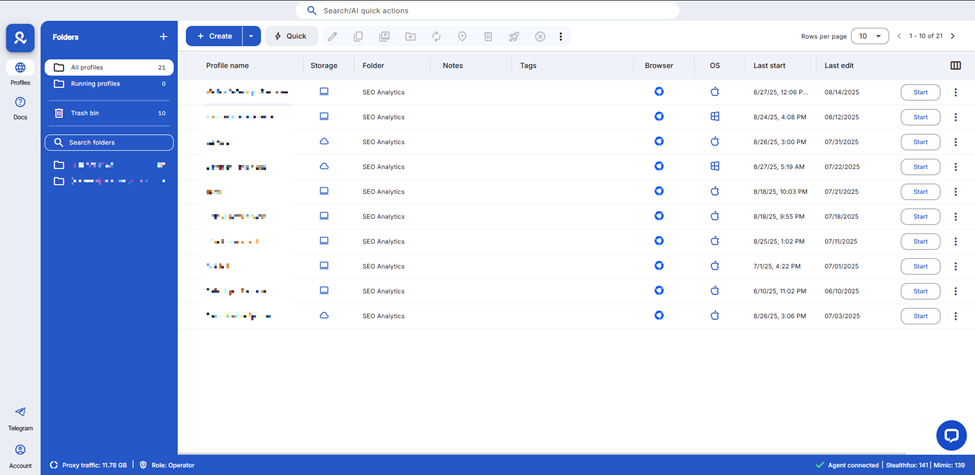
Founded in 2015, Multilogin is an anti-detect browser that sets the standard for securely managing multiple accounts. It’s ideal for traffic arbitrage, e-commerce, SMM, data parsing, crypto trading, and Web3, bypassing restrictions on platforms like Google, Instagram, TikTok, and Shopify. Its minimalist yet intuitive interface ensures ease of use for solo entrepreneurs and teams, focusing on stability and growth.

Features and Functionality

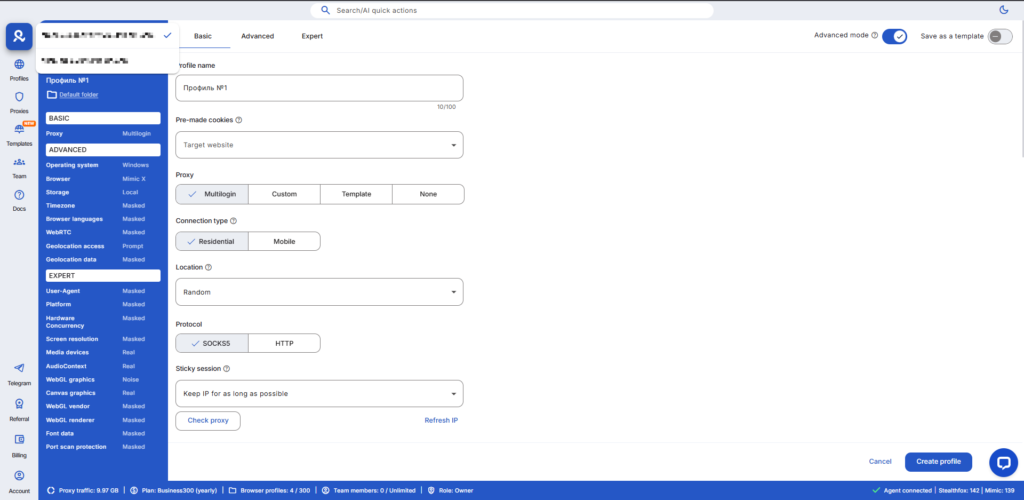
Multilogin creates unique profiles mimicking real users. Instant profile creation—just a couple of clicks without settings—ensures anonymity and security. For detailed customization, it offers over 25 parameters: cookies, geolocation, Chrome emulation on Android, with Expert mode adding WebGL, WebGPU metadata, Canvas graphics, and Screen resolution. Mimic and Stealthfox engines provide robust undetectability. Built-in residential IP addresses simplify operations, while import/export of cookies eases migration. AI-based automation speeds up processes, and integration with Selenium, Playwright, Puppeteer, and Postman suits complex tasks.

Profile setup is available in three modes: Basic, Advanced, and Expert, offering flexibility from beginner to pro-level adjustments. Teamwork is supported with role management, a sessions panel, and cloud synchronization of cookies, extensions, and bookmarks. Two-factor authentication (2FA) secures data, while 24/7 support in five languages (English, Russian, Chinese, Portuguese, Vietnamese) resolves issues promptly.

Advantages

  • Industry leader since 2015 with daily tests on 50+ platforms.
  • All-in-one: browser and IP addresses without third-party services (1 GB/month traffic included, €3/GB extra).
  • Flexible setup with Expert mode and Mimic/Stealthfox engines.
  • Automation with AI and Selenium, Playwright, Puppeteer, Postman integration.
  • Team tools: roles, cloud sync, 2FA.
  • 24/7 support in 5 languages.
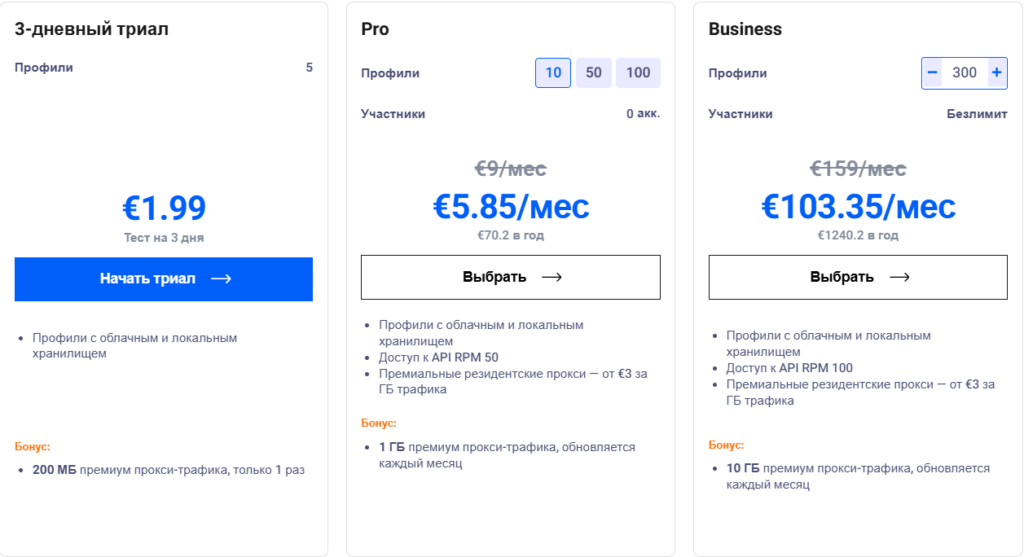
  • Affordable pricing: €1.99/3 days, Pro from €5.85/month, business from €300/month.
  • Affiliate program (15% revenue share or 50% CPS, 90-day cookie, payouts from $100).
  • Referral program: €10 per referral, exchangeable for Multipoints.
  • Promo code AFF5025 for up to 50% off, plus Webshare/AnyIP bundles for free traffic.

Pricing

  • Trial plan: €1.99 for 3 days (5 profiles, 200 MB traffic).
  • Pro 10: from €5.85/month (10 profiles, 1 GB traffic, annual subscription).
  • Business: from €300/month (unlimited, 10 GB traffic).

Use the promo code AFFCOM30 to get a 30% discount on any purchase.

All the features of using virtual numbers

With virtual numbers, users can receive SMS messages even when they don’t have their personal smartphone handy. Virtual numbers are often used when creating user profiles on social networks, registering on websites, and any online services. We have prepared an article that describes all the features of virtual numbers.

What are they and what are they for?

A virtual phone number works without being linked to a traditional SIM card. These numbers require internet access to work. Users receive SMS messages on virtual platforms, but without a personal phone number. This option works great if you need to register on an unverified website or create an account to conduct affiliate marketing.

A virtual number provides the customer with anonymity and security. This solution is suitable for business processes and creating a large number of accounts on social networks. You can also test online platforms and launch advertising campaigns.

Features of virtual numbers

The customer selects the appropriate region and then gets access to a personal virtual number. Short messages from Telegram, WhatsApp, or other platforms will be sent to this number. Detailed instructions for using the number:

  • visit the virtual number rental website;
  • select the country where the number will be used and the appropriate platform (Telegram or something else);
  • decide on the exact rental period for the number;
  • use the new number as you see fit and receive short messages.

Messages can be displayed in your personal account or on a shared page. The way SMS messages are displayed depends on the tariff and the specific service.

Ways to use virtual numbers

Virtual numbers can help you find solutions to complex issues. These numbers are suitable for bypassing restrictions in different regions. They allow you to create new profiles on social networks and popular messengers. Other ways to use virtual numbers:

  1. Creating profiles for marketing and business pages.
  2. Registration for SMM and affiliate marketing.
  3. Protecting your own phone number from fraudsters.
  4. Testing some services without purchasing a SIM card.

Choosing the right service

When choosing a service, you need to carefully look at the important features and terms of cooperation. Some sites are not available in all countries or simply do not have suitable platforms. Customers need to evaluate the pricing policy of a particular service, offers for available regions, and the level of security.

Pricing policy

Inexpensive number rental is the main request of users. The exact cost of this service depends on the platform and the pricing policy of the service. Activating a number for messengers, search engines, and social networks is inexpensive. Activation for government services and online banking is more expensive.

The price of renting a number depends on the time for which it is activated. It is necessary to pay attention to the minimum cost of 1 activation and the possibility of a refund if the activation is unsuccessful. Some services offer customers additional cashback, bonuses, and promotions.

Available regions

Verified services offer a large selection of virtual numbers from almost every country in the world. The activation code is delivered as quickly as possible and without interruption. The wide range of numbers available allows customers to bypass strict regional restrictions.

Be sure to check the number of countries available on the service. In most cases, you can rent a number for any period of time (1 hour, 1 month, or 24 hours). A big advantage of the service is support for popular countries (Ukraine, America, Kazakhstan, and other regions). Pay attention to whether you can choose the services of your main mobile operator.

Virtual number security

Confidentiality of information is very important in affiliate marketing and other verticals. Use SMS services that guarantee IP address protection for their customers. It is good if the services do not store your correspondence.

Check these key factors:

  • the ability to anonymously access the service via VPN/proxy;
  • unique numbers that are not blacklisted;
  • a secure and convenient authorization process in your personal account.

Available platforms

Some virtual number services only work with social networks, while others work with almost all platforms. The extensive list of supported platforms may include marketplaces, banking apps, and messengers.

A service can be called universal if it supports platforms from several categories. These include social networks, email, popular messengers, government services, and online banking. A nice bonus would be support for marketplaces and cryptocurrency exchanges, streaming platforms, and freelance websites.

Virtual number security

When using such numbers, possible risks cannot be completely ruled out. The main risks include blocking and personal information leaks. We provide recommendations on how to use a virtual number as safely as possible.

More about the risks

Leakage of personal information is one of the main risks. On dubious services, your messages will be seen by third parties, who may be fraudsters. If you work with financial accounts, carefully check the number rental service.

Using a fraudulent number will most likely result in financial losses. The same danger lurks if you are offered a previously used number. You are being sold a virtual number that was once registered to another customer of the service.

You cannot use phone numbers after they have been blocked. This is especially true for Google, Telegram, and Facebook services. A specialist’s account will be blocked or restricted if the work was performed using a “disposable” number.

Ways to avoid being blocked

Only work with trusted services whose numbers are not blacklisted. Avoid using repeat numbers to minimize the risk of being blocked.

Don’t forget about two-factor authentication for extra protection. After activating your number, consider backup login methods. This could be a backup number, email, or authenticator.

Do not log in to the service multiple times from the same IP address. Visit the service via VPN, use anti-detection browsers. Your account will be blocked if suspicious activity is detected.

Is a virtual number suitable for banks?

Financial platforms do not usually register new users via virtual numbers. The risk is that platforms of this type require verification, and virtual numbers are not always activated.

You cannot register on government service websites without a number provided by an official mobile operator. If you use a virtual number, your account will simply be blocked. In some countries, you can register using a virtual number, but only on semi-official platforms.

How to Use Proxies for Affiliate Marketing

Introduction

Affiliate Marketing is and industry with expected CAGR of 15.2% from 2024 – 2033. These astonishing figures are revealed in a publication in Business search insights. And it is quite natural that in the event of increasing competition, marketers are constantly looking to scale their operations. Proxies for affiliate marketing have become an essential tool in their arsenal. If we must describe the technical process behind them, proxies mask your IP address. They allow you to appear as though you’re browsing from different locations. This brings many benefits. Among them are managing campaigns, researching competitors, and accessing geo-restricted content.

What Are Proxies?

Proxies are a gateway between your device and the websites you visit. As mentioned already, they route your traffic. This process conceals your original IP address. It assigns you a new one from the proxy server’s location. Say you are an affiliate marketer – proxies will provide you with ability to implement a few important tasks. You will perform genuine tests of campaigns across different regions. You will be able to manage multiple accounts in platforms and social media. Last but not least, you will enhance your competitive intelligence potential.

Types of Proxies

Datacenter vs. Residential vs. Mobile

Datacenter proxies stem from data centers. They are not associated with ISPs or real users. They’re typically faster. In terms of pricing, they are more affordable. But lower prices come with a significant downside. Datacenter proxies are easier to detect.

Residential proxies are among our favorites. They use IP addresses assigned by Internet Service Providers to real homeowners. Thay is why if using them, you will appear as a genuine user while performing specific tasks. This type of proxies is browsing from residential locations and is harder to detect and block. Resi proxies are just perfect for tasks requiring higher anonymity. Different sources prove the increasing role of this type of proxy. Residential Proxy Server Market is projected to grow annually from 3,8% to 15% till 2033. 

Mobile proxies utilize IP addresses from mobile data providers. They mimic users browsing from mobile devices. They are excellent for testing mobile-targeted affiliate campaigns. Due to their high pricing and specific nature, their usage is about a third of the one belonging to residential proxies.

Dedicated vs. Shared vs. Rotating

One could distinguish between three more types if classification follows other criteria.

Dedicated proxies, as shown in their name, are used exclusively by one user. They offer better performance and security. This means a much higher cost and the need to have personal support available in case of tech issues.

Shared proxies, as you can guess, are used by multiple users simultaneously. They are more affordable. However, they are less reliable, and you should avoid using them as an affiliate.

Rotating (Residential) proxies automatically change your IP address at set intervals or with each new request. Using them you can enjoy enhanced anonymity for large-scale operations. The ration between cost and value here is definitely positive and you should try out how these proxies work as a part of your tech set.

Use Cases of Proxies in Affiliate Marketing

Running Multiple Ad Accounts

As part of their policies, many popular platforms like Google, Facebook, and TikTok limit the number of accounts per user. If you are a responsible affiliate marketer complying with rules and acting morally, however, you will face unnecessary obstructions. Residential proxies will allow you to create and manage multiple accounts. All this goes without triggering suspensions. It leads to enabling campaign diversification and scaling.

Tracking Competitors’ Ads or Landing Pages

Competitive intelligence is part of the game. Proxies for affiliate marketing allow viewing competitors’ geo-targeted ads and landing pages. Of course, it goes without revealing one’s research activities. For instance, Panoramata is often used with proxies to bypass geo-restrictions.

Accessing Region-Specific Affiliate Networks

Some affiliate networks only accept (or prioritize) publishers from specific countries. Using proxies, you can access these networks even if you are physically located elsewhere. This will highly expand your potential revenue streams and market accessibility. Below we will cite just a small number of such cases: Flipkart Affiliate Program – only available to Indian publishers or those with significant Indian traffic; Commission Factory is primarily focused on the Australian market; Rakuten Japan is separate from Rakuten Advertising’s global network. 

Testing Geo-Targeted Campaigns

This step can save you a ton of money. Before investing heavily in geo-targeted campaigns, you’d better test them. In your role as an affiliate, you can use proxies to view your landing pages and offers. Thus, you will have an overview just as ordinary users from specific regions.

Scaling Web Scraping Safely

Proxies facilitate gathering market data through web scraping. Rotating proxies save time and allow affiliates to collect data automatically instead of manually. It enables marketers to gather real-time data on competitor offers, pricing, and landing page strategies. The end result is obvious – optimizing their own campaigns, targeting trending products, and improving conversion rates.

Risks and Precautions

Using proxies for affiliate marketing carries certain risks that require careful management:

  • many platforms explicitly prohibit using proxies to circumvent their terms of service
  • low-quality proxies can lead to slow connections, affecting campaign performance
  • some residential proxy providers obtain IPs through questionable methods
  • legal compliance varies by jurisdiction

To minimize these risks:

  1. Understand the terms of service for platforms you’re working with
  2. Use reputable proxy provider that obtain IPs ethically
  3. Maintain consistent behaviors across accounts even when using different proxies
  4. Implement proper security measures to protect your affiliate links and data

Conclusion

Proxies for affiliate marketing are a powerful tool. They scale operations and facilitate market research and campaign optimization. Using the right residential proxy, you can appear as a local user anywhere in the world. Still, success requires balancing the benefits of proxies with ethical considerations and platform compliance.

MEDIA 24 CEO: Honest Conversation With PeakyAds about SEO, Business, and Family

Another exclusive interview was published on Peaky Ads YouTube channel. This time, Martins Lasmanis, the founder of MEDIA24, came for a deep conversation with Peaky Ads marketing agency CEO, Vasilii Gamov. To put it short, they mostly talked about business, family, SEO and even scammers in the industry.

Let’s spoil the interview for you and highlight some main milestones of the dialogue. During the convo, Martins uncovered not only how much money is actually spent on content creation, but also how his team survived the harsh time of Google updates, and why sometimes it is necessary to use not quite “white” methods in SEO. 

One of the insights Martins shares: if you really want to build a business for a long time, deceiving the market is not an option.

Watch the video till the end to gain not only expert insights, but also participate in a contest to receive an autographed T-shirt from the entire MEDIA24 team.

If you are tired of dry and boring expert interviews, this one won’t disappont you by the level of personalization and emotion!

Go ahead and eatch this interview and more expert content on the Peaky Ads YouTube channel.

The Untold Truth About Mobile Proxies: Why Smart Operators Switched Years Ago

Picture this: You’ve spent weeks perfecting your automation setup. Your scripts are flawless, your accounts are aged, and your content strategy is on point. Then, within 24 hours, everything gets flagged. Sound familiar?

Here’s what most people won’t tell you — the proxy game changed dramatically around 2022, and if you’re still running datacenter IPs or budget residential proxies, you’re essentially showing up to a gunfight with a water pistol.

The Great Proxy Evolution (Or: How We Got Here)

Let’s rewind for a moment. Remember when datacenter proxies were king? You could spin up thousands of IPs for pennies and platforms barely blinked. Those days are gone.

Then came the residential proxy boom. Everyone thought they’d cracked the code — real home IPs, what could go wrong? Turns out, plenty. Platforms got smarter. They started fingerprinting connection patterns, analyzing behavior flows, and building sophisticated trust scoring systems.

Enter mobile proxies — the solution that actually makes sense when you understand how modern platforms think.

The Mobile Advantage Nobody Talks About

Here’s the dirty little secret: platforms don’t just look at your IP anymore. They’re analyzing everything — your connection stability, the IP’s historical behavior, how many other users share it, and dozens of other signals.

Mobile IPs have a massive inherent advantage here. Think about it — when you’re on your phone using cellular data, you’re sharing that IP with potentially hundreds of other legitimate users. Your local Starbucks might have 50 people scrolling Instagram at once, all from the same mobile tower.

This creates what I call “natural camouflage.” Your automated actions blend into a sea of real human behavior. It’s not about tricking the system — it’s about operating within its expected parameters.

The Technical Deep Dive (Without the Fluff)

Let’s break down what actually happens when you use a mobile proxy:

Carrier-Grade NAT Magic Mobile carriers use something called CGNAT (Carrier-Grade Network Address Translation). This means your traffic passes through the telecom’s infrastructure, picking up all the authentication tokens and headers that scream “legitimate user” to platforms.

The Trust Score Factor Every IP has an invisible trust score. Mobile IPs consistently score 90-95% because they’re:

  • backed by real SIM cards with active service;
  • associated with genuine device fingerprints;
  • part of established carrier ASNs (Autonomous System Numbers);
  • naturally rotating without triggering red flags.

Geographic Authenticity Unlike residential proxies that might route through sketchy VPN endpoints, mobile proxies give you genuine local presence. When you connect through a Chicago mobile proxy, you’re literally using a device sitting in Chicago, connected to a local cell tower.

Real-World Applications That Actually Work

Let me share some scenarios where mobile proxies aren’t just helpful — they’re essential:

Social Media Management at Scale Managing 50+ Instagram accounts? Good luck doing that on residential IPs. Mobile proxies let you simulate authentic user behavior across multiple accounts without triggering mass action blocks.

E-commerce Intelligence Monitoring competitor pricing on Amazon or scraping product data? Mobile IPs can handle thousands of requests without hitting the dreaded “suspicious activity” wall.

Ad Verification and Testing Running localized ad campaigns? Mobile proxies show you exactly what users in specific locations see, including mobile-specific ad formats and regional variations.

AI and Automation Workflows With the rise of AI agents and automated workflows, mobile proxies provide the stability needed for long-running processes. Your bot can operate for hours without sudden IP bans disrupting the flow.

The Buyer’s Guide: Cutting Through the BS

The mobile proxy market is flooded with resellers and sketchy operators. Here’s how to separate wheat from chaff:

Red Flags to Avoid:

  1. Providers who can’t explain their infrastructure.
  2. Suspiciously cheap pricing (real mobile proxies cost money to maintain).
  3. Limited rotation options or API access.
  4. No transparency about carrier networks.
  5. Shared pools with unknown users.

Green Flags to Look For:

  • direct hardware ownership (not reselling);
  • clear documentation and responsive support;
  • granular control over rotations and locations;
  • uptime guarantees with SLA agreements;
  • transparent pricing without hidden fees.

Infrastructure Deep Dive: What Quality Looks Like

A legitimate mobile proxy operation requires serious infrastructure investment. We’re talking about:

  1. Physical devices with active SIM cards.
  2. Redundant power systems and connectivity.
  3. Sophisticated routing software.
  4. API infrastructure for programmatic access.
  5. Monitoring systems to ensure uptime.

This is why quality providers charge what they charge. Running a farm of 4G/5G modems isn’t like spinning up virtual servers — it’s physical infrastructure that requires maintenance, cooling, and constant oversight.

Coronium.io: A Case Study in Doing It Right

Since we’re being transparent here, let me break down why Coronium caught my attention in the crowded proxy space.

First, they own their hardware. Not reselling, not peer-to-peer nonsense — actual modems sitting in data centers across 30+ countries. This matters because it means consistent quality and real accountability.

Their setup includes:

  • Direct SIM Management: Real carrier SIMs, not virtual numbers;
  • Global Coverage: US, UK, Germany, France, Brazil, Australia, and growing;
  • Technical Flexibility: SOCKS5, HTTP, and even OpenVPN support;
  • Farmer Network: Unique model where individuals can contribute their own IPs;
  • Transparent Pricing: Starting around $69-129/month depending on location;

What impressed me most? The control panel actually shows real-time device status, carrier information, and usage statistics. No black box mystery — you see exactly what you’re getting.

Check them out at https://coronium.io if you want to see what proper infrastructure looks like.

The Economics of Mobile Proxies

Let’s address the elephant in the room — yes, mobile proxies cost more than other options. Here’s why that’s actually a good thing:

The True Cost Calculation

  1. Datacenter proxy: $5/month, banned in 2 days = $75/month in wasted time.
  2. Residential proxy: $50/month, works 70% of the time = productivity loss.
  3. Mobile proxy: $100/month, stable operation = actual ROI.

When you factor in the time spent dealing with bans, rebuilding accounts, and lost opportunities, quality mobile proxies are actually the budget option.

Future-Proofing Your Operations

The proxy landscape will continue evolving. Here’s what’s coming:

5G Integration As 5G networks expand, we’re seeing even better performance and lower latency. Early adopters are already leveraging 5G proxies for latency-sensitive operations.

AI-Powered Detection Platforms are deploying increasingly sophisticated AI to detect automated behavior. Mobile proxies provide the authentic foundation needed to stay ahead.

Regulatory Changes Data privacy laws are tightening globally. Using legitimate, compliant proxy infrastructure protects you from legal headaches down the road.

Practical Implementation Tips

Ready to make the switch? Here’s your roadmap:

  1. Start Small: Test with 5-10 proxies before scaling up
  2. Match Locations: Use proxies from your target audience’s geography
  3. Implement Rotation Wisely: Don’t rotate too frequently — mimic natural behavior
  4. Monitor Performance: Track success rates and adjust strategies accordingly
  5. Diversify Providers: Don’t put all eggs in one basket

The Bottom Line

If you’re serious about automation, scaling operations, or any activity requiring stable, trusted IPs, mobile proxies aren’t optional anymore — they’re essential infrastructure.

The platforms have gotten too smart, the stakes too high, and the old methods too risky. Investing in quality mobile proxy infrastructure isn’t just about avoiding bans — it’s about building sustainable, scalable operations that can grow with your ambitions.

Whether you’re managing social accounts, gathering market intelligence, or building the next generation of AI-powered tools, your proxy infrastructure is the foundation everything else builds upon. Choose wisely.

Questions about mobile proxy implementation or want to share your experiences? Drop a comment below. Always happy to discuss the technical details or help troubleshoot specific use cases.

Peaky Ads Interviews SEOBROTHERS: SEO, Scaling, and Standing Out

In its latest video, the Peaky Ads team hosts the leadership of SEOBROTHERS for a direct conversation on thriving in today’s SEO and affiliate landscape.

The episode focuses on actionable strategies for building sustainable digital businesses in a competitive, constantly changing environment.

The panel includes:

  • Evgenii Aralov, CEO of SEOBROTHERS;
  • Evgenii Ravdin, Head of PR, representing MightyTips;
  • Jekaterina Dubnicka, Head of Marketing & Communications, Slotsjudge;
  • Vasilii Gamov, CEO of Peaky Ads, serves as the interviewer.

The topics are different yet useful for anyone in marketing, from SEO experimentation and content credibility to monetization tactics and user retention models. Aralov discusses building trust through consistent product value and how his early projects laid the ground for larger success. Ravdin explains the balance between quality and ranking logic, and Dubnicka outlines the importance of gamified marketing in an overcrowded niche.

Other interesting points discussed:

  • How AI tools are integrated into daily operations.
  • Expansion strategies across multiple GEOs;
  • Affiliate branding and loyalty building in 2025;
  • Organic vs. paid reach: what’s more effective now?

Whether you’re managing an affiliate project, building a media brand, or running SEO campaigns, this conversation offers relevant and timely expertise.

The interview is now live on the Peaky Ads YouTube channel, with more content from the Latvia tour on the way!