Will AI Search Steal Your Traffic or Boost Your Profits?

Everyone is talking about “AI Search” these days: AI SEO, GEO, AEO—the names vary, but the concept is the same. Opinions are divided, however. Some are convinced that traditional SEO no longer works and should be abandoned. Others believe that nothing has changed and that we can continue using the old methods. The truth, as usual, lies somewhere between these two positions.

The search landscape is changing rapidly. The core principles of SEO are still relevant, but new traffic sources are emerging—along with new ways to waste your budget if you don’t understand how the system works. You can read more about what AI search is in this article.

Let’s break down the key misconceptions and see what really influences traffic and conversions.

Myth 1: “GEO is just SEO under a different name”

Reality: The foundation is similar, but the mechanics differ—and this directly affects ROI.

While classic SEO focuses on promoting pages in search results where the user clicks a link, AI search works differently. Here, it’s not about ranking on Google, but about appearing in the response generated by the neural network. The user may not even visit the site—they receive information directly within the ChatGPT interface or other AI services. Consequently, the goal changes. Now, the priority isn’t to rank at the top, but to ensure your offer appears in the AI’s response.

This requires a different approach:

  • a focus on information accuracy;
  • clear and understandable wording;
  • alignment with the user’s query;
  • trust in the source.

If your content makes it into the AI’s response, you gain access to a warm audience. If not, that traffic goes to your competitors.

Myth 2: “AI will figure it out on its own as it gets smarter”

Reality: AI depends on the quality of the data. If the data is poor, the result will be poor too.

Large language models do not possess “understanding” in the conventional sense. They operate on probabilities and utilize the sources available to them.

If information about an offer is scattered across different sites and contradicts itself, the system may:

  1. Display outdated terms and conditions.
  2. Confuse the product with another.
  3. Combine incompatible data.

This leads to a loss of traffic and a decrease in conversion rates. Even a single landing page with incorrect information or an outdated satellite site can influence the AI’s final response.

To avoid this, it is important to:

  • synchronize data across all platforms;
  • keep information up to date;
  • eliminate contradictions.

The cleaner the information field around the offer, the more accurately the AI will display it.

Myth 3: “Tools for analyzing AI visibility are useless”

Reality: They are still imperfect, but they provide a competitive advantage.

Services that track AI visibility help you understand:

  1. Which search queries trigger the offer.
  2. Which competitors appear most frequently in the results.
  3. Where reach is being lost.

While most continue to operate through familiar channels like Facebook and Google, there is an opportunity to test new approaches. Optimizing content for real user queries in AI provides access to low-cost traffic, as competition in this area is still low. Those who start using such tools before others will be able to secure advantageous positions before the market becomes oversaturated.

Myth 4: “External mentions are no longer important”

Reality: mentions have become even more significant than before.

AI systems rely on data from authoritative sources:

  • review sites;
  • directories and aggregators;
  • forums and discussions;
  • databases.

If information about an offer appears on such platforms and is consistent, trust in it increases. If the data is scattered or contradictory, AI gives preference to other sources. Today, a single high-quality mention on an authoritative platform can be more valuable than dozens of old-style links.

This directly impacts the results:

  1. Trust increases.
  2. The likelihood of appearing in search results grows.
  3. The cost of user acquisition decreases.

Myth 5: “Search engines will stay the same as before”

Reality: They will remain, but the way information is consumed is changing.

The classic model with link results is gradually being supplemented by new formats:

  • ready-made answers without redirecting to a website;
  • brief summaries of information;
  • automated actions without user involvement.

Now, users can get the information they need directly within the AI interface without visiting a website at all.

This changes the familiar funnel. Previously, the flow looked like this:

ad → click → landing page → action

Now it has transformed into:

query → AI response → possible click

It is no longer the click itself that matters, but the presence in the response.

Myth 6: “AI search is just a new form of spam”

Reality: Spam doesn’t last long, while high-quality content delivers consistent results.

Yes, you can quickly create a large number of template pages and temporarily drive traffic. But such approaches quickly lose their effectiveness. AI systems actively filter out low-quality content. Learn more about how AI content affects rankings: https://affcommunity.org/en/ai-content-and-google-ranking/

What works consistently:

  1. Accurate and verifiable data.
  2. Up-to-date information.
  3. Structured content (lists, tables, answers to questions).

It’s better to create fewer pages of high quality than to scale up low-quality content.

This approach delivers:

  • more stable traffic;
  • less competition;
  • better conversion rates.

Myth 7: “SEO and AI search are unrelated”

Reality: These are complementary tools.

SEO is responsible for basic visibility:

  1. Indexing.
  2. Site structure.
  3. Resource authority.

AI optimization is responsible for:

  • correct display of information;
  • citation in search results;
  • alignment with user queries.

In practice, an effective strategy includes:

  1. SEO for search engines.
  2. Optimization for AI.
  3. Monitoring all mentions of the offer.

This allows you to generate traffic from multiple sources simultaneously.

Conclusion

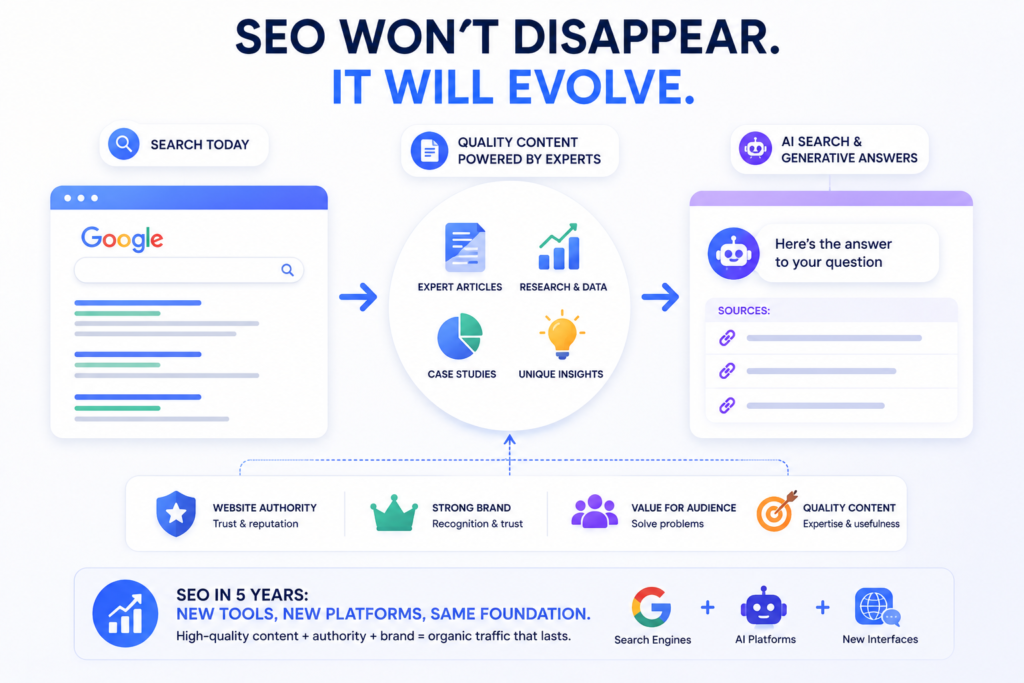
AI search does not replace SEO, but complements it. The core principles remain: high-quality content, clear structure, and reliable sources.

But new requirements are added:

  • data accuracy;
  • consistency of information;
  • presence in authoritative sources;
  • adaptation to AI responses.

For affiliate marketing, this means:

  • the emergence of a new traffic channel;
  • the opportunity to reduce acquisition costs;
  • the need to control information about the offer.

Those who adapt to the new conditions faster will gain an advantage. The rest will gradually begin to lose traffic and lose ground.

How does artificial intelligence affect search engine algorithms?

By 2027, online search will change because of AI. People will click on fewer links in search results because neural networks will immediately show the answer directly in the search engine or chat. Already today, 60% of queries do not require visiting websites, and this share will continue to grow.

What is happening?

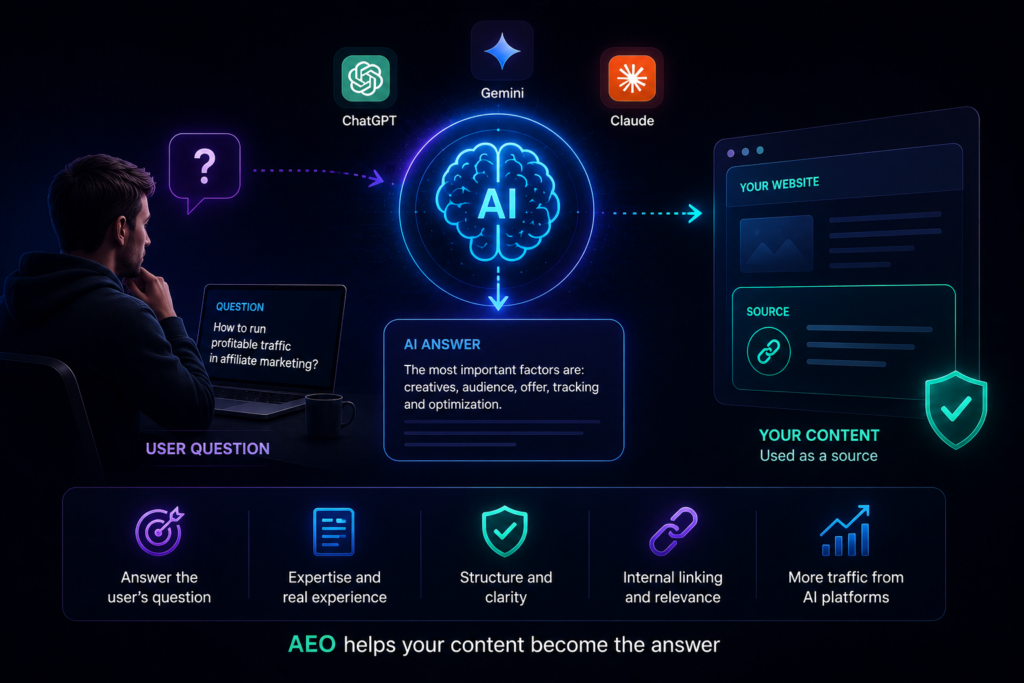
The situation in internet promotion has changed dramatically. Previously, the main goal was to get into the top 10 on Google so that the user would click on the link, but now it is important to appeal not to people, but to the AI search engine algorithm itself.

You need to create content of such high quality that AI will choose your site as a source and cite it, giving the user an instant answer. This approach—AI SEO—is already yielding impressive results: some companies are seeing a nearly sixfold increase in traffic from AI, and such investments are paying off better than the old methods.

Why is this important?

Ignoring this trend could lead to real financial losses. Experts believe that up to 25% of potential traffic, which is now generated through smart assistants such as Perplexity or Google Gemini, could be irretrievably lost. The rating system itself is also changing: the main indicator of success is no longer the number of clicks, but the citation rate — how often and for what queries AI uses content from your resource as a source. This is the new currency of the digital world. Ranking algorithms have also evolved: they give clear priority to sites with live reviews, unique research (first-party data), and expert opinion, recognizing template and useless content.

What to do? A simple action plan

There is no need to panic, but you need to take systematic action. To adapt to the new realities, you just need to consistently follow a few key steps that will rebuild your website to meet the requirements of AI search.

  1. Check visibility. The very first step is diagnosis. You need to understand whether artificial intelligence can already see you. To do this, use special services that analyze whether Google AI Overviews or ChatGPT cite content from your pages and for which specific queries.
  2. Change your approach to content. The old tactic of “filling in keywords” is useless. You need to create content that provides a comprehensive answer to the user’s question. Write in simple language, structure the information using subheadings, lists, and question-and-answer blocks. Be sure to back up your statements with verified data, statistics, and examples.
  3. Test and monitor. The world of AI SEO is changing rapidly.
  4. You can’t find one perfect formula and use it for years. Experiment with formats and headlines that sound more natural and conversational. It’s important to set up analytics (for example, in Google Analytics 4) to track traffic from AI sources separately and understand what content works best, and then scale up the successful experience.

Many teams are already building processes where AI is not a source of ready-made text, but a tool for accelerating and expanding capabilities. But in order not to lose ground and stay at the top of search results, it is important to understand not only what the neural network does, but also how to work with AI texts so that they are useful to both people and search engines. Check out the practical recommendations in the article How to work with AI texts to stay at the top — they will help you build a competent editing and optimization process.

This plan is not a one-time action, but the basis of a new long-term strategy. Implementing it will allow you not only to stay afloat, but also to actively attract a new type of target audience that trusts the answers of smart assistants.

What to avoid? Common mistakes

On the path to adaptation, many people make similar mistakes that negate all their efforts. These often arise from the desire to use old, familiar methods in new conditions. Here is a list of the main pitfalls to watch out for:

  1. Publishing raw AI text. Posting content that is entirely generated by a neural network without thorough review and editing is the fastest way to failure. Search engines are learning to recognize such material and mark it as low-value, which leads to a loss of ranking.
  2. Ignoring structure. If a page is a solid block of text without clear semantic blocks, it will be extremely difficult for an AI algorithm to extract a clear answer from it. The absence of a structure (FAQ, How-to, tables) sharply reduces the likelihood of being cited.
  3. Spamming keywords. Smart algorithms, such as BERT, analyze meaning and context rather than word density. Meaningless repetition of the same phrases no longer works and can be perceived negatively.
  4. Writing without expertise. The most valuable asset right now is unique experience, data, and opinion. Content that contains nothing but a retelling of well-known facts is of no interest to either AI or the end user.

By avoiding these mistakes, you can significantly increase the chances of your site becoming a trusted source of information for artificial intelligence, and through it, for thousands of potential customers.

How to win in the new reality

The era of passively waiting for clicks from search engines is coming to an end. The time has come for active participation in shaping the answers that AI assistants give to users – AEO. The winner is the one who thinks one step ahead and creates a content partnership with algorithms. The optimal strategy is a hybrid: use the speed and scalability of AI to create drafts and basic structure, but be sure to bring in human expertise to verify facts, add unique insights, and bring in real-world experience.

Thus, the key task for 2026 and beyond is to stop measuring success solely by the number of articles and positions. We need to start measuring it by the quality and usefulness of the information that artificial intelligence finds and approves. It is worth starting this transformation today, as it will help not only to adapt to change, but also to gain a significant competitive advantage in the new digital ecosystem, where traffic is controlled by algorithms.

SEO in media: is the format really no longer effective?

Since 2025, webmasters have been recording a significant drop in search traffic. Analytics service statistics demonstrate this trend. The key factor behind these changes has been the introduction of intelligent AI responses in search engines.

Artificial intelligence now analyzes website content and generates ready-made answers directly on the search results page. This reduces the need for users to go to the original resources, which is especially noticeable in the information segment.

The new reality requires a rethinking of approaches to content and SEO. The focus is shifting to expert materials, quality information, and adaptation to generative search algorithms. Web resources need to offer unique value that cannot be replaced by AI responses.

Media and innovation

Media resources that were mainly focused on SEO were most affected by these changes. Projects without their own community and those that relied on copywriting rather than unique content proved to be particularly vulnerable. There are not many active sites with truly original content in the affiliate marketing niche. At the same time, there is virtually no culture of open exchange of experience in the media sphere, which complicates adaptation to new realities.

As for projects with a permanent audience, the situation is somewhat better here. Thanks to the community, original content, and regular visitors who come to the site directly, the decline is noticeable but not catastrophic. Nevertheless, this does not negate the fact that investments in SEO in recent years have largely been ineffective.

What is an SEO strategy? Useful recommendations for increasing traffic from search engines can be found in this article.

It is interesting to note that AI responses appear much more frequently in mobile search results. This is probably due to the assumption that mobile users are less inclined to explore several websites and prefer to get a ready-made answer right away.

Brief conclusion

Overall, these developments pose serious challenges for webmasters. Search engines essentially use third-party content for their answers, thereby reducing the motivation to create high-quality content. In the future, there may be some kind of compromise, such as an “show AI answer” button that is optional rather than default. But for now, the situation looks worrying for those who have relied heavily on search traffic and have not managed to build a live audience.

How AI has transformed search results: what is AEO, and can it replace SEO?

Classic SEO is undergoing a major transformation. Just a couple of years ago, getting to the top of search results required minimal effort: all you needed was an article with relevant keywords and a couple of links. Although this opportunity has partially remained, a new reality has emerged in parallel. In this reality, artificial intelligence independently decides what information to show first.

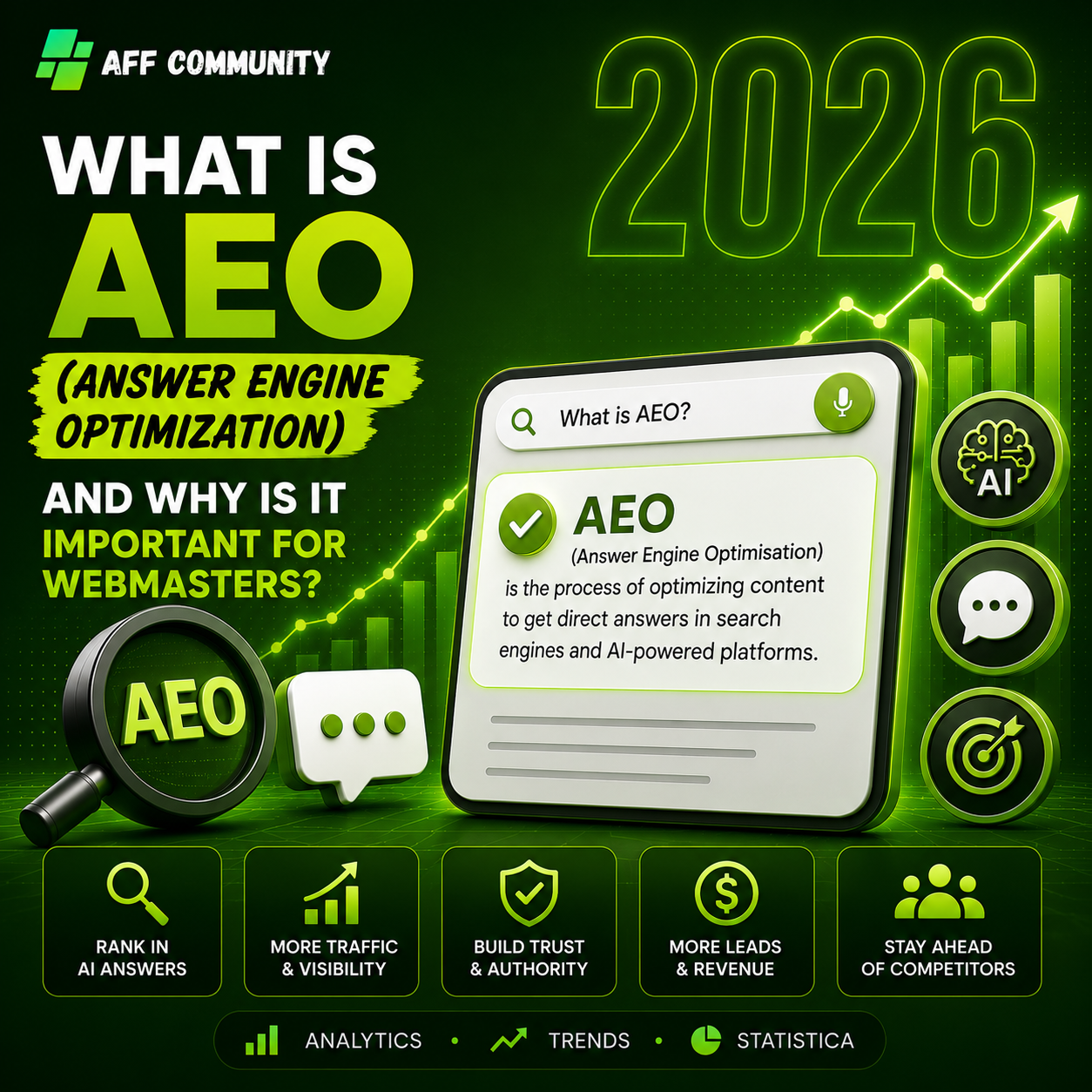
Today, users turn not only to Google Search, but also to AI Overviews, ChatGPT, Copilot, and Perplexity. This shifts the focus from SEO to AEO — a new approach to content creation. Its goal is not just to get into the search results, but to become part of the answer generated for the user.

SEO vs. AEO: the key difference

Classic SEO aims to get clicks from organic search through keywords, meta descriptions, links, and relevance. AEO optimizes content so that it becomes a source for the answer that the user sees directly in the AI assistant interface, bypassing the usual results. Examples: AI Overviews in Google (generative response + sources), Copilot in Bing (hybrid search and generation), ChatGPT with web access (answers with links). Research shows that today, about 65% of search queries end without clicks, as a brief AI response is sufficient for the user.

How AI selects sources

The success of AEO depends on the ease of processing AI content. Models use an approach that combines data from the internet with their own knowledge. The selection of sources for citation is not a random process; it is subject to specific criteria that developers build into algorithms. The most significant factors are:

  • clear structure: subheadings, formatting;
  • conciseness: preference for short answers (2-3 sentences);
  • relevance: new content has priority;
  • authority: AI more often cites sources with well-structured, understandable content.

Understanding these criteria is the first step towards creating content that AI systems will consider reliable and worthy of inclusion in their response.

New performance indicators

Whereas CTR (click-through rate) used to be the main factor, it is now critically important to get into the AI response itself. AI often does not show an explicit link, limiting itself to text and a source icon. Even being in the top 3 in organic search does not guarantee clicks. This requires a revision of success metrics. The focus is now on indicators directly related to how actively AI uses content as a source of useful information:

  • frequency of appearance in AI Overviews or Copilot responses;
  • mentions of the brand/domain in responses (even without a click);
  • position as a source.

These metrics are becoming the main indicators of visibility in the new paradigm. Specialized monitoring tools are already emerging that can analyze how successfully content is integrated into the ecosystem of generative AI responses, confirming their importance.

Creating content for AI output

Recommendations for adapting content are based on analysis of practice and research. A striking example is the work of Lauren Wells Medley (Director of Channels and SEO), who studied 3,000 citations in Google AI Overviews. Her analysis revealed key patterns to consider:

  1. 32% of citations are structured lists.
  2. AI prefers short paragraphs with clear answers.
  3. Including the year in the title increases the chances.
  4. The peak of citations is in the first 2-3 days after publication.
  5. Frequent sources: YouTube, Wikipedia, LinkedIn.

This data is not just interesting — it forms the basis for a practical strategy for creating content focused on AI citations.

Key optimization principles

Based on the identified patterns and understanding of how AI works, specific recommendations have been formulated for authors and optimizers:

  1. Answer at the very beginning. A clear, concise answer to the main query — right in the introduction, then details.
  2. Structure. Use subheadings (H2-H3), short paragraphs, clear formatting.
  3. Semantic markup. Add Schema.org for better AI understanding.
  4. Facts instead of slogans. Clear facts and examples are more valuable than marketing phrases.
  5. Relevance. Regular content updates are critical due to the peak in citations in the first few days and algorithms’ preference for fresh data.

Following these principles significantly increases the chances of content being selected by AI as an authoritative source that shapes the final answer to the user.

The symbiosis of AEO and SEO

It is important to emphasize that AEO is not a replacement, but an important addition to traditional SEO and the original concept of GEO (Generative Engine Optimization), which focuses on AI building answers based on specific content. Effectiveness depends on the type of query and the specifics of the topic. Choosing the right combination of methods is the key to maximum audience reach in modern search ecosystems.

Caution when implementing AEO

The transition to AI optimization requires a balanced approach to avoid common mistakes. Two key pitfalls are particularly dangerous:

  1. Don’t sacrifice quality. Content consisting of dry facts without depth, analysis, or unique value may be cited by AI, but it will not inspire confidence in users who decide to visit the site.
  2. Ignoring the technical foundation. Load speed, smartphone adaptation, and site security remain critical for both traditional SEO and the ability of AI crawlers to process content effectively.

Finding a balance between clarity for algorithms and genuine value for people is a new, complex, but necessary task for content marketers and SEO specialists.

Conclusion

Experts agree: AEO is not seen as a replacement for SEO, but as its natural evolution in the era of AI assistants. Content that is competently adapted to their requirements provides a unique opportunity to be noticed and cited even without direct user clicks. The battle for traffic and attention now begins not in the organic search results list, but in the text of the response generated by AI. Adapting web pages to this new reality, where AI is the main arbiter of information quality, is not a question for the future, but an urgent necessity today. The harmonious integration of AEO principles into existing SEO strategies is becoming a fundamental guarantee of online visibility.

Peaky Ads Interviews SEOBROTHERS: SEO, Scaling, and Standing Out

In its latest video, the Peaky Ads team hosts the leadership of SEOBROTHERS for a direct conversation on thriving in today’s SEO and affiliate landscape.

The episode focuses on actionable strategies for building sustainable digital businesses in a competitive, constantly changing environment.

The panel includes:

  • Evgenii Aralov, CEO of SEOBROTHERS;
  • Evgenii Ravdin, Head of PR, representing MightyTips;
  • Jekaterina Dubnicka, Head of Marketing & Communications, Slotsjudge;
  • Vasilii Gamov, CEO of Peaky Ads, serves as the interviewer.

The topics are different yet useful for anyone in marketing, from SEO experimentation and content credibility to monetization tactics and user retention models. Aralov discusses building trust through consistent product value and how his early projects laid the ground for larger success. Ravdin explains the balance between quality and ranking logic, and Dubnicka outlines the importance of gamified marketing in an overcrowded niche.

Other interesting points discussed:

  • How AI tools are integrated into daily operations.
  • Expansion strategies across multiple GEOs;
  • Affiliate branding and loyalty building in 2025;
  • Organic vs. paid reach: what’s more effective now?

Whether you’re managing an affiliate project, building a media brand, or running SEO campaigns, this conversation offers relevant and timely expertise.

The interview is now live on the Peaky Ads YouTube channel, with more content from the Latvia tour on the way!

What changes will ChatGPT bring to SEO in 2025?

Artificial intelligence, which has only recently appeared, is increasingly becoming a part of modern life. Its influence is most strongly felt in the areas of promotion, marketing, and affiliate marketing. AI has a direct impact on the rules and techniques of SEO – search engine optimization. ChatGPT is already actively involved in content automation and optimization. This saves a significant amount of time that specialists can spend on finding new, more effective ideas, optimizing existing strategies, and increasing content creativity.

What impact do AI and ChatGPT have on the SEO strategies used, what changes do they bring to content marketing, and what needs to be done to correctly and effectively adapt SEO methods to the new, changed realities?

seo

What impact does AI have on SEO?

AI is already capable of creating unique texts, making it a useful tool for marketing professionals. ChatGPT can be used to optimize the content creation process, making it more refined and effective.

Using AI SEO provides the following results:

  1. Increased amount of content generated. By automating routine processes, you can significantly speed up the process of creating and editing text materials.
  2. Reduced content preparation costs. Organizations now have the opportunity to invest their time and money in developing analytics and finding strategic solutions instead of spending it on manual text creation.
  3. Increased competitiveness. Creating high-quality content using artificial intelligence allows you to rank higher in search engine results thanks to good optimization of text material for currently used algorithms.

How does AI affect content creation?

The use of ChatGPT significantly expands the possibilities for content marketing, allowing you to optimize the process of creating relevant content and increase its volume. With its help, a skilled specialist can quickly fill blogs and websites with relevant, useful material, meeting the needs of ever-increasing demand. For this process to be as effective as possible, it is important to do everything correctly, making full use of all the possibilities offered by AI.

Saving money on content creation using this approach frees up budget for other important tasks: market analysis, advertising campaign optimization, etc.

However, it should be noted that the new opportunities available to all marketing specialists have also led to a massive increase in competition.

Therefore, to remain competitive, it is important to be able to make important decisions quickly and think more creatively than your competitors.

Will software SEO become the standard?

According to experts, in the near future, software SEO, in which tasks are automated using artificial intelligence, will become an essential part of marketing strategies.

Its use will solve the following tasks:

  • SEO automation. Tools used by artificial intelligence can analyze keywords, optimize metadata, adjust the structure of text materials, and generate targeted descriptions. All this helps simplify and significantly speed up the work of SEO specialists;
  • optimization of content. ChatGPT is capable of adapting content to changing search engine requirements, taking into account user preferences and updated ranking algorithms;
  • strategic software solutions. Using the capabilities of AI, it is possible to develop comprehensive SEO strategies that will allow artificial intelligence not only to create exclusive content, but also to make it more effective.

In the new reality, which requires higher demands on the speed and quality of information processing, the use of artificial intelligence will become critically important.

What changes will affect Google’s ranking algorithm?

The algorithms used by search engines are constantly being improved. This process has become even more intense with the advent of AI technologies. How has all this affected Google’s ranking algorithms?

  1. Content understanding. The development of semantic search methods will allow search engines to analyze both keywords and the meaning of text and its logic.
  2. Key ranking factors. Search engines will begin to attach importance to both technical parameters and the author’s expertise and depth of analysis.
  3. Google SEO. Improved algorithms will begin to monitor the quality of content, its relevance to user queries, its informational content, and other similar nuances.

What changes will occur with external SEO factors?

  • The importance of the quality of external links used will increase.
  • The significance of comments, reposts, and other social signals demonstrating the level of user trust in content and its popularity will increase.
  • Artificial intelligence systems will be able to evaluate the quality of external content, analyze its relevance and reliability, and influence ranking algorithms.

Google’s attitude towards content authorship

The authorship factor will become increasingly important in text content, especially in expert and thematic content. This will manifest itself in the following changes:

  1. Authoritative sources backed by expertise will gain an advantage in search results.
  2. Articles signed by authors contain more reliable information, so they will appear higher in search results.
  3. Due to the active use of artificial intelligence, priority will be given to materials that have been thoroughly checked by experts.

How will these changes affect SEO?

Search engines will establish new, modified standards that will determine the quality of content:

  • Priority to everything new. Search engine algorithms will give preference to original, fresh content.
  • Quality and originality of information. Against the backdrop of the huge amount of content generated by artificial intelligence, search engines will give preference to unique, expert texts. Such material is very difficult to generate automatically, so its use will become the key to success;
  • fragmentation of search results. Due to the increase in the amount of information, search results will be fragmented. Users will be able to find answers in different niche sources. As a result, competition will become fiercer in narrow topics, forcing marketers to change their strategies.

How to monetize traffic with push notifications?

Push notifications are an easy way to generate income both for webmasters with experience and for beginners who are just taking their first steps in this business. Traffic monetization with the help of push notifications is characterized by a simple setup. It does not require experience in buying Internet traffic in other, more complicated sources. To gain experience in this area is not difficult at all. A beginner in a few campaigns with the use of push notifications turns out to be in the plus. What to consider when choosing push-networks, how to customize advertising through push notifications to quickly generate income?

Pros of monetizing traffic with push notifications

One of the main advantages of push notifications is their high clickability. They appear on the screens of gadgets belonging to users directly, providing direct, instant communication. Thanks to this, webmasters quickly reach the audience, resulting in an increased number of conversions.

Push notifications provide budget savings, as it is faster and cheaper to set them up than, for example, placing ads through Facebook. Flexible customization provides instant adaptation to current needs, allows you to test new offers without spending a lot of money.

The simplicity of setting up push notifications and the absence of the need to use professional knowledge provides the opportunity to monetize even very small traffic. For beginners, the use of push notifications allows you to easily launch your first advertising campaigns.

Successful are advertising campaigns in which push notifications were used for flash sales and various urgent promotions. High clickability of such ads provides a quick transition of potential customers to landings, which guarantees a significant increase in conversions.

Monetization of push notifications provides the following advantages: communication with the target audience directly, budget savings, quick setup. These pluses make push notifications a convenient tool for people who are professionally versed in affiliate marketing, as well as for beginners.

More Advertising networks with push notifications you can find here.

How to build a base of subscribers for push notifications?

In order for monetization to be successful, you need to effectively collect subscribers for push notifications.

The following methods help to maximize audience reach:

  1. Subscription Forms. Through the use of easy-to-fill subscription forms on the site, members of the audience quickly agree to receive notifications. Subscription forms should be placed in convenient, highly visible places: in blocks with content, the header of the site, etc.
  2. Pop-up windows. Proper configuration of pop-up windows offering subscription ensures their high efficiency. They should appear not instantly, but in a couple of seconds after the user enters the site or scroll a part of the page. In this case, the probability of getting a positive response increases.
  3. Appeals on the site. To increase effectiveness, use motivating, clear appeals that will explain the benefits of subscribing.

Creating effective push notifications that monetize traffic

For push notifications for monetization to be effective, you need to think well about their texts, headlines, as well as the time of sending.

  • texts, headlines. Make headlines small and catchy. They should be no more than thirty to forty characters long. Include figures and specific data in the texts. They should complement the headlines, provide clear explanations of the benefits, and call users to action;
  • CTA (Call to Action). Increased conversions are ensured by the right CTA, which allows the ad to not only contain certain information, but to call for a specific action;
  • Sending time. The speed of sending is also important. Notifications should be sent at a time when users are most active. This happens in the evenings and during the morning hours. Test different time slots to determine when is the best time to send messages.

A proper combination of the above components ensures that push notifications are highly effective in capturing users’ attention and guaranteeing a high response rate.

Platforms for monetization through push notifications

Currently, there are many top push networks suitable for affiliate marketing. You should choose them with consideration of their characteristics. In some push networks, you can only manage push notifications, while others use several traffic sources at the same time. In this case, you can also choose options for customizing advertising with push notifications.

What are the most famous platforms with which you can customize push notifications for advertising campaigns?

  • RichAds. This platform is characterized by the convenience of the interface. It provides support for different ad formats, offers many targeting options. It provides the ability to flexibly customize advertising campaigns, so it is suitable for experienced webmasters.
  • AdProfex. An easy-to-use platform with good, high-quality analytics. It is the best option for beginner webmasters, as it provides them with convenient, simple tools that allow them to quickly create push notifications and monitor results.
  • RollerAds. This platform allows you to segment your audience, adapt advertising campaigns for different devices and GEO, which makes it easy to use for scaling traffic.

How to use parasitic SEO for affiliate marketing?

One of the most popular sources of traffic for affiliate networks is SEO. Creating a website today is a fairly simple process. To do this, you can use WordPress, constructors, a variety of services for SEO-promotion. But just create a site is not enough. For the arrival of quality, stable traffic from it requires a deep knowledge of SEO. To make the site was in the top of the search engines, you should spend a lot of time.

Is it possible to use for this purpose parasitic SEO promotion? Is it possible to be in the top of the output due to the authority of other Internet resources? How to get traffic by placing SEO texts on them? How does it work in the current year?

What is “parasitic” SEO?

Parasitic SEO is the process of posting various content on authoritative external sites in order to leverage the power of their domain. By doing this, you will be able to raise your online resource in the rendition for targeted keys. By posting content on Dzen or Vkontakte, you will be able to secure top positions in the search engine results by utilizing the power of these domains. For this purpose, you can use conditionally free or paid methods.

How does it work in practice?

When using the paid method, the webmaster purchases space for content placement on various online platforms, prepares SEO texts and then publishes them with link optimization.

Using the free method occurs similarly. However, in this case the texts are posted on social networks, forums and other free online venues.

In both of these cases, the main task is SEO-optimization of publications to get search traffic. Webmaster needs to be able to perform On-Page SEO: create SEO-texts with a logical, well-thought-out structure, correctly select and insert LSI words and keywords, use them with optimal density. To do this, it is necessary to carry out high-quality external and internal SEO-optimization, as it is done on ordinary websites.

This work includes the following processes:

  • semantics collection: using the maximum number of keys;
  • generation: creating sales content, creating sales, quality articles with images of appropriate resolution;
  • article markup: presence of style, use of external links, headings and highlights;
  • backlinks: the presence of thematic links.
What are the steps involved in the process of getting traffic

What are the steps involved in the process of getting traffic?

Selecting an offer and an affiliate program

It is recommended to choose offers that cover the widest possible GEO, as traffic should be filtered through trackers first. Offers of downloads, registrations, services or other similar actions are optimal for this purpose. If you prioritize quality content, try to use offers for goods. You can choose to work with offers of various marketplaces, which have low competition, and create reviews on the products sold on them.

Collect semantics

When choosing keywords, give preference to those that have an optimal ratio of low competition and search traffic. SEO-specialists advise simplifying this process to use special spy-services, with which you can study the semantics of competitors. Having seen the keywords of the article you need, you will be able to prepare a semantic core.

Preparation of SEO-optimized content

Prepare the text for SEO promotion with the addition of images, tags, YouTube videos. Create useful content that has a clear structure. It should include text divided into blocks, headings of different levels, images, links.

Publish on online platforms

Updating content after a couple of months for posts that have entered the index. After the first publications, it is very important to get the first traffic to demonstrate the value of the content to the users. This is of great importance to the algorithms used by search engines.

For quality affiliate marketing, it is important to work on behavioral factors. You can gain behavioral traffic by creating accounts or through advertising – leaving comments and other activity.

Pros and cons of parasitic SEO

The pros of this method are that you do not need to spend money to create a website, pay for hosting, and purchase a domain. Unlike traditional SEO, the first traffic in this case is able to start arriving in a few days. If the article is not successful enough, your financial costs will be minimal.

The minus in this case is a significant risk of content blocking and account disconnection. Also, the disadvantage can be called the difficulty in assessing the behavior of the target audience and the need to constantly create new content. One article is not able to attract traffic for more than a year.

The main conclusion

The use of parasitic SEO, according to experts, is a working method. However, when using it, it is important to carefully control the quality of content, to provide users with really useful material. It is most convenient to implement parasitic SEO with the help of special spy-services.

Google data leak reveals the ins and outs of search rankings

A document called API Content Warehouse has been leaked in Google’s search engine. This important document contained links to internal pages and private Google repositories. The voluminous document Google API (2500 pages) describes in detail the features and mechanisms of the search engine. The information obtained allowed SEO-specialists to learn a lot of interesting things.

The document contains data that the popular system uses about 14000 functions when ranking sites. Google pays special attention to the use of clicks, as well as behavioral factors. SEO-specialists claim that clicks are of great importance, and links and content are now in second place.

Basic ranking algorithms

Basic ranking algorithms

The data leak of an important document and some other factors have shown the peculiarities of ranking algorithms. As a result, the public statements of Google representatives raise a lot of doubts. It is necessary to pay attention to the key aspects that do not correspond to the company’s statements about ranking methods.

Chrome browser data

After the leak, it can be concluded that the company collects information about user behavior. The data obtained is used to evaluate website pages, domain resources. Through behavioral factors, Google can determine the most popular URL pages.

Features of user behavior

NavBoost is an important component of ranking. It is NavBoost that analyzes user clicks and takes into account several important factors. These are duration of clicks, “bad clicks” and more. Based on the results of the analysis, the search engine understands what users like and which pages of the site should be promoted.

NavBoost pays attention to the factor of Pogo-sticking, or quickly navigating to search results. Users who don’t find answers to their queries quickly return to the search. NavBoost also takes into account the length of time the visitor stays on the page. Such a parameter will help in determining the relevance and usefulness of a particular page.

Whitelisting sites

Google has whitelists dedicated to specific topics (e.g., travel). The company controls search results for problematic queries and counter-versions. Users will only see verified sources of information in their searches.

“Sandbox.”

Representatives of the company said that there is no “sandbox” and special restrictions for new resources. In the leak, experts found information about hostAge, which the search engine applies to “sandbox new spam”. The search engine uses the “sandbox” method for suspicious and new resources.

Domain authority

Google claimed that they do not apply Domain Authority in their algorithms. After the leaked document, it was revealed that the Q* system uses the siteAuthority metric. With the help of this multi-functional metric, the search engine determines the authority of a particular site.

Brand size

It is known that popular brands often occupy the first positions in ranking. To rank and identify the company, Google uses a variety of ways. The size of the brand is taken into account both by the official website and by the number of mentions of the company on the Internet.

EWOK data

The EWOK platform allows you to evaluate the quality of information search. Real users search for information, as a result of which their behavior is evaluated according to a number of criteria. The usefulness of the source and its relevance are necessarily taken into account. Google’s internal platform can directly influence the peculiarities of page ranking.

Additional nuances:

  • associating date with content. BylineDate is used to associate date and content. Additionally, Google uses semanticDate as well as syntacticDate (extracted from the title);
  • Font Size. The average font size of terms in links and documents is of particular importance when ranking sites;
  • use of keywords and original content. Search engine evaluates the originality of content, which is taken into account in ranking. Website positions improve when page titles are relevant to user queries;
  • Google skips small sites in the rendition. “Small personal sites” is one of the special flags of the popular search engine. In some cases, Google increases the ranking of sites, but more often resources are lowered in the output;
  • PageRank for all pages of the site. PageRank is necessarily displayed on the home page. PageRank of this page is taken into account for the rest of the pages until each of them gets a ranking system;
  • the value of links depends on the level of indexing. The sourceType metric will help determine the relationship between the value of a particular page and where it is indexed. Google’s index uses tiers according to which important and constantly updated content is stored in flash. For less valuable content, solid state drives are suitable. Standard hard disks store information that is not regularly updated. “Fresh” website pages are of higher quality compared to their older counterparts. Good ranking indicators are often received by news pages, as well as highly rated resources.

Lowering positions in ranking algorithms

Certain factors contribute to the lowering of page positions or demotion. Quality and relevance are strongly affected by negative factors. The latest data leak confirms that Google uses different algorithmic mechanisms to demote pages. The most popular mechanisms are:

  1. SERP Demotion – determines the potential dissatisfaction of visitors with a particular page.
  2. Anchor Mismatch – a mechanism that indicates the inconsistency of the link to the target site. In this case, the resource will be lowered in ranking.
  3. Porn Demotion – demonstration of pornography lowers positions.
  4. Nav Demotion – the tool works with pages characterized by poor user experience or inconvenient navigation.
  5. Product Review Demotion – a mechanism without specific information. The tool probably works given the recent update targeting product reviews.
  6. Other link demotions – deterioration of page positions due to links.
  7. Location Demotion – experts claim that “global” pages of a website can worsen their positions. Google starts associating web pages with location, and after that the ranking process is carried out.

The Google system ranks websites according to certain mechanisms. This should be taken into account by the professionals who are involved in page promotion. The leaked document shows the peculiarities and different ranking mechanisms of websites.

We have prepared useful recommendations for organic traffic growth in this article.

SEO or affiliate marketing: which is more effective for gambling affiliate marketing?

Today, customer flow affiliate marketing is a modern method in which affiliate marketing is purchased on one platform and redirected to another for profit. The main result is considered to be attracting customers at a lower price. This approach is more responsive and scalable, allowing you to quickly get a large volume of customer base. The main emphasis in affiliate marketing is to optimize costs and increase the number of conversions to the promoted product.

Benefits of affiliate marketing

The main positive factors of affiliate marketing are as follows:

  • getting quick results by launching an advertising campaign and instantly attracting customers;
  • campaigns are easy to scale, use flexible settings, change the budget;
  • accuracy in targeting. When to target advertising is much more productive and affect a certain segment of the audience;
  • full control over costs, payment is made only for results, such as clicks, conversions or impressions.
Negative sides of affiliate marketing

Negative sides of affiliate marketing

Among the main negative sides of affiliate marketing are high costs, short-term results, the risk of getting banned and difficulty with optimization.

Constant investment in affiliate marketing is a standard factor, and the dynamics of increasing costs can be constant. If you do not find a competent option for budget management, it is easy to get negative profits. The results of affiliate marketing are quite short-term, the traffic stops immediately in the absence of investment.

Some advertising platforms can ban accounts due to violations, as well as policies and user complaints. Difficulty with the optimization factor is based on the requirements for constant adjustments, monitoring.

Webmaster’s opinion

The main advantage of affiliate marketing is quick adaptation to market needs and changes. Thanks to affiliate marketing, it is possible to try different types of approaches to maximize income. Webmasters believe that this method is more convenient, because it is easy to quickly set up advertising to attract customers to gambling platforms, sites. Responsiveness, high speed of making changes allows you to achieve results in a shorter period. To react to market changes and requirements from advertisers in the affiliate marketing method is much more productive.

What is the reason for the constant debates with SEO expert’s?

In the short term, SEO technology may not bring the expected results. For the full realization of promotion requires a long time. Comprehensive SEO optimization is built on elaborated content and properly made settings. For webmasters, the time factor is important. In the structure of information retrieval systems, algorithms of sorting by ranks are constantly updated. As a result, the change of algorithms affects the position of the promoted site, so it is important to follow news information and adapt SEO strategies. Competition in the gambling industry is at a high level, it is necessary to apply unique ways of promotion and try to stand out from the background.

SEO expert's opinion

SEO expert’s opinion

Modern SEO-optimization is aimed at attracting customers through information search engines. Through the use of search queries, it is possible to build the ranking of certain data. Organic traffic and attracting users based on queries and interest in the product, is the most qualitative, because customers come to the gambling page with the sale of goods through the information retrieval system. It is important to analyze the information in a timely manner to generate a list of tools with the highest degree of effectiveness. If you regularly update the information for customers, content, then the effectiveness of optimization will be maintained for a long time.

According to an expert specialist, SEO optimization is focused on a long-term process that contributes to an increase in the overall ranking that affects visibility. SEO specialists specialize in the formation of a quality information field, technical improvement of the site. The main achievement is to get the organic transition of customers on requests. As a result, a stable flow of site members in the long term is formed. Affiliate marketing will be focused on the short term, when it is necessary to quickly return the investment. The main purchase of traffic is through advertising platforms. The purchased traffic is then redirected to affiliate types of offers or to your own online pages. The net monetization of traffic will not be the exact income, you need to deduct the cost of attracting a stream of customers.

Why are there so often disagreements and disputes between SEOs and webmasters?

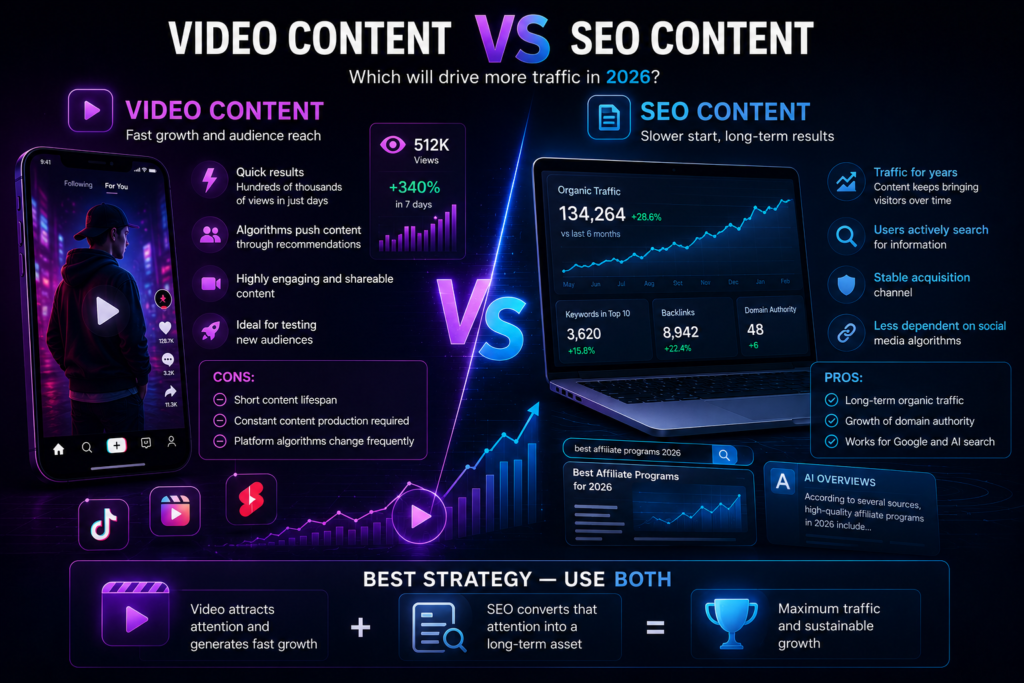
The main negative sides of SEO optimization are related to slow start, dependence on algorithms and high competition. To get significant positive results in SEO, you need to spend quite a long period of time, from several months to half a year. The duration depends on the need for constant optimization work, when content information should be adapted in a particular industry. The benefits of optimization are manifested on the manifestation of user interest in a particular product, as a result, this influx of customers is particularly productive, valuable for companies. The key benefits of optimization are:

  • economic benefit in the long term;
  • no need to constantly invest in advertising;
  • costs are recouped thanks to a steady flow of customers by organic requests;
  • improved traffic conversion due to an attractive position in the search engine;
  • long-term results with regular data updates.

SEO-specialists believe that the affiliate marketing method is unstable and risky, when most of the result depends on the budget, changes in advertising platforms, specific markets. Each method has both adherents and critics, but discussions are built on disagreements.

Results

The choice of optimization or affiliate marketing method depends on the characteristics of the company, the type of business. Both methods can be combined to get the greatest efficiency in attracting traffic. With a comprehensive method of combining optimization and affiliate marketing, it is much easier to organize a steady growth and variety of ways to get the flow of customers to a particular site.

SmartLink in affiliate networks

The level of return on paid traffic is determined by the quality of the advertising campaign setup. To increase conversion rates, it is important to show users products that interest them. Work in the affiliate will bring the webmaster income only if the target audience is segmented. However, this is not an easy task if it is done manually. Instead, you can use smart links. This is an effective tool for selecting the most appropriate offers for users.

Smartlinks in affiliate marketing – useful or not?

For many, affiliate marketing is a time-consuming, complicated process. To get income from it, it is necessary to study a large amount of data, carefully plan the business process, starting with the search for traffic sources and up to the choice of advertisers and offers.

However, there are tools that can significantly simplify the work of webmasters. One of them is SmartLinks. They allow you to intelligently direct traffic. SmartLink is based on the TDS system of traffic volume distribution. One link can contain over a hundred offers. It works as follows:

  • a user sees and clicks on an ad;
  • the data is auto-analyzed;
  • based on the results, the user is directed to the landing page that best matches their preferences.

All these operations take place in a fraction of a second. During this period, the following data is read and analyzed:

  • device type and OS;
  • geolocation;
  • the generation of the browser being used;
  • name of the provider;
  • ip address;
  • search queries.

How to use a smartlink in affiliate marketing?

A smartlink automatically selects a product or service for each user according to their requests. For example, an advertising campaign is launched to attract traffic through push notifications. Before running traffic to offer a large volume of traffic, it is worth checking its quality. However, advertising platforms, where traffic is purchased, does not allow you to enter detailed settings. For example, you can set the geo or choose the type of device. But to limit the target audience to women from 35 years of age from Moscow and the region will not work. To get the maximum benefit from such traffic, it is necessary to offer goods and services to a large audience. In this case, smartlinks come to the rescue. They automatically sort traffic according to a number of parameters, on the basis of which different offers are shown to different users.

With the help of special scripts, data from the servers of affiliate networks analyze data on each visitor. On the basis of this, the user is shown the goods or services that will interest him with a higher probability. If the limits to a given offer have already been exhausted, it is replaced by the next on the level of relevance. As a result, when clicking on the same link, users will see different offers.

What tasks of a webmaster are solved by smartlinks?

What tasks of a webmaster are solved by smartlinks?

Smartlink is a modern and effective tool, but the organization of an advertising campaign still requires some effort, in particular, it is necessary to carry out customization. The work needs to be done both at the launch of the campaign and on a regular basis. Nevertheless, smartlinks can solve a number of problems:

  • A single URL can be used for many offers. There is no need to adapt the created creativity for many users and different gadgets. As a result, smartlinks reduce the workload, allows you to increase ROI up to 25%.
  • Smartlink automatically analyzes a large amount of user data;
  • There is no need to use complex tracking functionality or pay for subscriptions;
  • No need for monitoring. If an offer becomes no longer available, smartlinks automatically redirect traffic to the next most relevant offer.

What verticals can smartlinks be used with?

Smartlinks are effective in verticals where you don’t need to create complex sales funnels or warm up your audience for a long time. If you need them, you should use traditional methods and do all the customization manually.

Some of the most suitable verticals for smartlinks are dating, adult, gambling. In these verticals, advertisers accept almost any type of traffic. Also, smartlinks can be used in:

  • Sweepstakes – traffic to them comes from push or pop-under;
  • Finance, cryptocurrencies.

Smartlinks are rarely used in verticals with commodity, nutra or info products.

If you are still searching for the perfect smartlink affiliate networks? Follow the link and choose an Affiliate Network by rating, where only true reviews are collected.

How to create smartlinks yourself?

How to create smartlinks yourself?

Smartlinks are not just standard links, but a whole program of code. You can write it yourself or have it custom-made.

Another option is affiliate marketing trackers that are able to separate streams by parameters. However, the tool built into the tracker will not be as flexible as a custom-made smartlink.

When working with iGaming affiliate networks, the tool can be requested from the manager. When working with “former” offers, you can use other ways to optimize conversion. One of them is DeepLink, i.e. smartlink, which deeply analyzes information about the user and directs him to the right page.

SmartLink may seem like a magical method that will help provide passive traffic. But just choosing a smartlink and connecting it to an affiliate networks is not enough. You also need to:

  • Create creatives – their quality will determine whether the link will be clicked;
  • Optimize processes;
  • Set the settings in the advertising cabinet – frequency of displays, targeting;
  • Create campaigns separately for each location.

Conditional free traffic in affiliate marketing

What is Conditional free traffic, what is the advantage of using it for beginners? Conditionally free traffic is a complex of various promotion techniques, the use of which does not involve monetary investments or requires them in a minimal amount. Conditional free traffic has no entry threshold. It can be used by every webmaster who has such a desire.

Beginners with the help of this method of promotion have the opportunity to engage in affiliate marketing without risking their own finances. Without investing any money in your activity, you do not risk losing it. When applying free promotion methods, you can work with any vertical and test a variety of offers. However, working in this case will require much more time and effort from the webmaster than when using paid traffic.

The list of current offers is available on the “Affiliate networks

Pros of Conditional free traffic

When working with Conditional free traffic, a webmaster gets certain advantages. That is why this niche constantly remains in high demand even among experienced webmasters. Let’s consider the pros of its use in more detail.

Increasing income without investment

When promoting traffic to a Telegram channel with the help of bytes in comments, inexperienced webmasters sometimes have the impression that this process is too slow and ineffective. It seems so only at the very beginning, before the first leads appear. After they appear, this feeling disappears.

Without spending money on traffic, you can increase the number of conversions and increase income without investing a lot of money in this process. Conditional free traffic is a way of running traffic, using which there is no need for large financial investment. For unlimited growth, the webmaster just needs to find a way to bring users to the channel for free.

Quality traffic

Quality traffic

Don’t assume that free traffic is necessarily of insufficient quality. With Conditional free traffic, the targets are quality and reliable. When using this method, the webmaster simply needs to interest the visitor in his ad or mailing, to make him want to click on it. This is especially effective if the advertising coincides with the interests of the user. This method is well suited for gambling, betting and dating. With its help, you can attract target audiences who like online gambling, betting on sporting events or new acquaintances.

Large selection of target audiences

When using paid promotion methods, a webmaster faces various restrictions set by Facebook, Telegram, YouTube, Google and other platforms. There are no restrictions when using free promotion.

Of course, this method requires the use of certain techniques and tricks that allow you to bypass the restrictions set by platforms and social networks. However, when using it, you have the opportunity to influence any audience – car enthusiasts, housewives, adult men, etc. The success of such activities will depend only on your desire and efforts.

Minimal investment

Conditional free traffic cases and paid promotion methods are not the same. Paid promotion, which requires large monetary investments, is associated with a high risk of going into the negative and losing money.

However, it is possible to conduct campaigns and bring target audiences, not only with large monetary investments. You can do the same thing using free methods of promotion. They will not require from you large sums of money and the need to maintain entire arbitration teams.

Due to the minimum entry threshold, anyone can use Conditional free traffic. Profit in this case will depend only on the webmaster himself. These working conditions are ideal. It does not require deep professional knowledge and extensive experience. Everyone has the opportunity to study the information that is available in open access on the Internet. Having done this, you will quickly be able to earn large sums, simply by placing detailed posts and targeted comments.

What does the future hold for Conditional free traffic?

What does the future hold for Conditional free traffic?

Many platforms and social networks view Conditional free traffic as unnecessary content, even spam. However, it remains in high demand. New cases describing the peculiarities of working with different platforms are constantly appearing. Conditional free traffic will exist all the time. It will not disappear as long as there will be webmasters who want to earn money, who are ready to use alternative affiliate marketing methods and use various tricks that allow them to bypass the system.

Of course, Conditional free traffic may become more complex over time, it will probably become more difficult to deal with than it is now. Even today, many pouring methods require the use of VPNs, proxies, special links, and other similar tricks. Pouring is now much more difficult than it was a few years ago. However, Conditional free traffic will not lose its relevance in any case. It will be popular for a very long time among people who want to engage in affiliate marketing and traffic optimization, but do not agree to invest a lot of money in this process, or simply do not have such an opportunity.

All the latest news about affiliate marketing you will find on the pages of our blog.