In affiliate marketing, people often take a very simplistic view of GEOs: if the CPM is $5 here and $15 there, that means the first GEO is more profitable. Or conversely: if the payout is $20 here and $100 there, that means you should run campaigns where they pay more.
We consider this approach to be one of the most common mistakes. CPM alone says nothing about profitability, just as a high payout does not guarantee a good ROI. You need to choose a GEO based on the economics of the entire funnel.
Why CPM and payout cannot be considered separately
Let’s say that in the first GEO, the CPM is $5, and the payout per conversion is $20. In the second GEO, the CPM is $15, but the payout is $100.
At first glance, the second option seems more attractive. But it all depends on the conversion rate.
If $15 per thousand impressions yields too few target actions, a high payout won’t save the campaign. Conversely, cheap traffic can be useless if users don’t convert well.
That’s why we first look at the cost per target action and only then compare it to the payout.
How to Quickly Calculate the Economics of a GEO
For an initial assessment, we only need a few metrics:
CPM;
CTR;
CPC;
Conversion Rate (CR) to the target action;
payout;
total CPA;
ROI.
For example, if CPM is $10 and CTR is 1%, then 1,000 impressions yield approximately 10 clicks. This gives us a CPC of about $1.
If one user converts out of 10 clicks, the cost per conversion is $10. With a payout of $25, the economics look promising.
But if the CR is only 2%, the cost per conversion will already be around $50. With the same $25 payout, this combination becomes unprofitable.
That’s exactly why we recommend not comparing GEOs based solely on CPM or payout. It’s much more important to understand how much a single confirmed conversion actually costs.
Tier also affects the economics
The difference between Tier 1, Tier 2, and Tier 3 isn’t just about ad costs. Competition, audience purchasing power, user behavior, and advertising platform requirements all vary.
In practice, Tier-2 often turns out to be the optimal compromise: traffic is cheaper than in the most competitive countries, but the audience can still retain a fairly high value.
Where to Find Good Geos
We don’t recommend choosing a country just because someone shared an impressive screenshot of it.
In 2026, the market is constantly changing: competition is growing, CPMs are shifting, advertising algorithms are evolving, and audience behavior is changing. Therefore, the list of promising countries needs to be reviewed regularly.
In our overview of promising GEOs for 2026, we’ve already analyzed the markets worth paying attention to right now. But even a promising GEO must be tested specifically for a particular offer.
The same country can work great for a financial offer but completely fail for e-commerce or dating.
Don’t forget about traffic quality
Another problem is attractive numbers at the start. A low CPM can generate a lot of cheap clicks, but if the audience converts poorly or the advertiser lowers the approval rate, the overall ROI will be worse than that of a more expensive GEO.
It’s especially important to review the statistics once a sufficient amount of data has been collected. The first few conversions don’t yet paint the full picture.
How to Lower the Entry Cost
If a GEO looks promising but the CPM is too high, we don’t rush to disable it right away. First, we investigate what exactly is driving the cost.
The cause could be excessive competition, weak creativity, poor targeting, or simply an inappropriate testing period.
Sometimes it’s cheaper not to look for a new geographic region but to optimize the one already selected. For example, changing the creativity or the audience can lower the cost per acquisition without having to completely relaunch the campaign.
At the same time, we always consider the overall economics rather than trying to achieve the lowest CPM at any cost.
The main rule when choosing a GEO
For us, the working formula looks something like this: CPM → CTR → CPC → CR → CPA → payout → ROI.
If a dip occurs at any stage, you need to look for the cause right there.
A high payout is only worthwhile if it can be consistently achieved. A low CPM is only useful when cheap traffic translates into decent conversions.
Therefore, when selecting a GEO, we wouldn’t start with the question “Where can we buy impressions more cheaply?” but with another: Where do the cost per action and audience quality provide the best margin relative to payout?
It is precisely this approach that allows us to find not just cheap GEOs, but truly profitable markets.
A product niche often seems like one of the most straightforward options for a beginner. There’s a specific product, a clearly defined audience, and a simple logic: attract someone interested in the product and get paid for an order or a confirmed request.
But it’s precisely this simplicity that can work against a novice webmaster. In product-based arbitrage, it’s easy to blow your budget on eye-catching creativity and get lots of clicks without making any real sales.
We recommend entering a niche not by searching for “the most profitable product,” but by understanding the entire economics of the sales funnel.
Start by Choosing a Product
The first thing you need to determine is which product actually makes sense to test.
To start, it’s best to choose products that can be explained in a few seconds. A potential buyer should have a clear problem that the product solves. You should also consider:
the product’s price;
the commission rate;
demand;
seasonality;
competition;
shipping terms;
acceptable traffic sources;
order confirmation rate.
A high payout doesn’t necessarily mean high profit. If the product is difficult to sell or most orders aren’t confirmed, the business quickly becomes unprofitable.
Beginners often look at what’s currently being heavily advertised and try to replicate others’ strategies. But a popular product also attracts a large number of competitors.
It’s much more interesting to find a balance between demand and competition. To do this, you can analyze search interest, competitors’ ads, and trends in specific GEOs.
When choosing a niche, it’s helpful to consider the general approach to selecting a vertical in affiliate marketing. This clearly illustrates why budget, traffic source, and experience must all be considered simultaneously.
Choose the Right GEO
The same product can yield completely different results in different countries.
In some places, users are accustomed to buying through landing pages and submitting a request, while in others, the requirements for trust and payment methods are much higher.
Therefore, before launching a campaign, it’s worth researching the market: audience size, ad costs, purchasing power, and the level of competition. You can also check out the current top GEOs for affiliate marketing in 2026 to understand which markets buyers are currently targeting.
Where to Get Traffic
In e-commerce, you can use various sources: Meta Ads, TikTok, Google, native, push, and other ad networks.
Beginners shouldn’t spread themselves too thin across five platforms right away. It’s better to choose one source, get a handle on its auction, formats, and moderation, and only then expand.
Special attention should be paid to creativity. In the e-commerce vertical, visual presentation often determines whether a user will stop at an ad or scroll past it.
That said, it’s not at all necessary to purchase dozens of services right away. There are plenty of free tools for webmasters that allow you to analyze demand and competitors and create your first pieces of creativity without significant costs.
Consider the Entire Funnel
The main mistake beginners make is focusing solely on the cost per click.
In product-based arbitrage, you need to track the entire chain: impressions → clicks → leads → confirmed orders → fulfillment → revenue → profit.
For example, cheap traffic may generate a lot of leads, but if a significant portion of customers don’t confirm their orders, the actual cost per customer ends up being much higher.
Therefore, before scaling up, you need to understand exactly how much revenue each confirmed order generates.
Don’t start with a huge budget
Your first launch should be a test, not an attempt to make as much money as possible right away.
You need to test several forms of creativity, audiences, and product presentation options. After that, eliminate the obvious underperformers and keep the segments where the economics look promising.
At the same time, the budget should align with the chosen traffic source and the cost of testing. We previously noted that the starting budget for affiliate marketing depends on the vertical, the traffic source, and the buyer’s level of expertise.
What to Do After the First Sales
If the first orders come in, don’t immediately increase your budget severalfold.
First, you need to understand exactly what drove the results: specific creativity, GEO, audience, placement, or a combination of several factors.
Then you can gradually increase the volume while simultaneously exploring new ad combinations. In product advertising, it’s especially important to constantly update your creatives, because successful advertising approaches are quickly copied by competitors.
Conclusion
It’s entirely possible for a beginner to enter a product niche. But product advertising isn’t just a matter of “finding a popular product and running an ad.”
You need to choose a product with decent profitability, select the right GEO, study the audience, test the traffic source, and focus on actual sales rather than clicks.
We’d start with a small, controlled test. If the numbers add up, scale up. If not, look for the weak link in the chain—don’t just increase the budget.
In affiliate marketing, the winner isn’t the one who launches ads first, but the one who understands the true economics of their traffic faster.
Google News remains one of the most promising ways to drive additional organic traffic to news and niche websites. This source is particularly attractive for projects that regularly publish timely content and are able to respond quickly to news events.
But in 2026, working with Google News looks a little different than it did a few years ago. We’re specifically highlighting this because you can still find outdated instructions online about manually submitting a site through Publisher Center.
How Google News Works Now
The main change took place back in 2025: Google switched to automatic discovery for News content. Now, publishers no longer need to manually submit their sites or create RSS feeds through Publisher Center. Google automatically detects suitable content and determines which articles to show users.
However, automatic detection does not mean automatic traffic. Algorithms evaluate relevance, recency, source authority, language, and other signals.
Therefore, the website owner’s task is not to “submit an application to Google News,” but to ensure that the content is easy to discover, understand, and classify correctly.
What Kind of Content Is More Likely to Appear in Google News
First and foremost, we would focus on truly timely publications. News stories, event analyses, timely commentary, and content that appears shortly after a news event makes much more sense for News than rewritten old articles.
That said, you shouldn’t turn your site into a stream of short texts just for the sake of quantity. High-quality content must offer intrinsic value: facts, analysis, commentary, statistics, or expert assessment.
Google must be able to easily find and index published pages. If the crawler cannot properly access an article, there’s no point in expecting consistent inclusion in News.
We recommend checking:
page accessibility for Googlebot;
proper indexing;
the absence of accidental blocks in robots.txt;
correct canonical tags;
page load speed;
the mobile version;
correct Article or NewsArticle markup;
publication date and last modified date;
images directly related to the article.
Google separately recommends using a News sitemap, which can help discover new content faster. However, a News sitemap differs from a standard XML sitemap.
We wouldn’t treat the headline as just another SEO element. In news content, it should describe the event as accurately as possible and match the page’s content.
Google recommends that the article’s headline match the HTML title and be displayed on the page itself. The publication date and time should also be clearly indicated. You shouldn’t artificially update the date of an old article without making substantial changes.
This is especially important for websites that regularly update their content. If the publication date and the last-modified date are used without a clear logic, it becomes harder for search engines to determine the relevance of the content.
How to Increase Traffic
The mere fact that an article appears in Google News does not guarantee high traffic. Users need to want to click on your specific article.
That’s why we recommend focusing on several elements at once:
relevance of the topic → a strong headline → a clear lead → unique information → high-quality images.
Articles that offer readers more than just a retelling of the news work particularly well.
For example, you can add your own analysis, explain the consequences of an event, or compile multiple sources into a single article. This approach simultaneously increases the value of the publication and boosts the likelihood of organic mentions. We wrote about similar formats in our article on content that can attract backlinks on its own.
Don’t forget about your site’s authority
Google News does not exist in isolation from the broader search ecosystem. A website with a clear focus, high-quality content, and a good reputation has a stronger foundation for growth.
Therefore, we do not recommend building a strategy solely around publishing news. At the same time, it’s worth developing expert content, earning high-quality mentions, and strengthening your subject-matter authority.
In 2026, a comprehensive approach to link building and backlink profile development is particularly relevant, where links are viewed not as a separate SEO metric but as part of the project’s overall reputation.
How to Check If Google News Is Running Traffic
After publication, don’t rely solely on the number of views within the CMS itself. For analysis, it’s better to use Search Console and specifically review the Google News report when it’s available for your project. You can also check the indexing status of specific URLs using the Page Inspection tool.
We recommend comparing not only impressions and clicks but also audience behavior after clicking through. Sometimes an article receives many impressions but has a low click-through rate. In this case, you should work on the headline and presentation. If there are enough clicks but users leave quickly, the problem may lie with the page’s content.
Is it possible to get consistent traffic from Google News?
Yes, but we wouldn’t consider Google News a guaranteed source of traffic. The algorithms automatically determine which content to display, so you can’t simply enable News and expect a steady stream of visitors.
It’s better to view Google News as an additional channel for organic reach. Publish relevant content regularly, monitor your site’s technical health, create truly useful content, and analyze the results.
In 2026, the winner won’t be the one who tries to “trick” the Google News algorithm, but the one who is able to provide users with high-quality and truly useful content on a relevant topic faster than anyone else.
Mobile apps have long since ceased to be a secondary niche in affiliate marketing. Users spend a tremendous amount of time within apps, and advertising platforms make it possible to generate large volumes of mobile traffic. In 2026, we’re seeing particularly strong interest in app offers from webmasters.
But finding an offer with a high payout doesn’t necessarily mean finding a profitable deal. In mobile affiliate marketing, it’s much more important to understand how much it actually costs to acquire a user and what value that user brings to the advertiser.
Where to Find Mobile App Offers
It’s best to start with affiliate networks. That’s where you can find offers from app developers and advertisers with various payment models: CPI, CPA, CPL, RevShare, and hybrid options.
When searching, we recommend not limiting yourself to the payout amount. For example, an offer with a high CPI may turn out to be less profitable than one with a lower payout if the former requires expensive traffic or has a low approval rate.
It’s also helpful to identify the vertical in advance. In 2026, apps in categories such as utility, VPN, finance, e-commerce, entertainment, gaming, and other sectors are actively used among mobile traffic. We analyzed the market in more detail in our article on the development of in-app traffic in 2026.
Which Metrics to Look For
Before launching an offer, we recommend gathering as much information as possible:
payout amount;
payment model;
allowed GEOs;
types of allowed traffic;
creativity requirements;
minimum conversion volume;
lead approval and quality;
hold period;
source restrictions.
It’s especially important to understand which action is being paid for. App installation and user registration are far from the same thing. The situation is even more complicated with offers where payment is made only after the first payment or another specific action. Therefore, it’s incorrect to compare offers based solely on CPA or CPI.
Geo can completely change the economics
The same app offer can yield completely different results in different countries.
In Tier-1, the potential payout is often higher, but the cost per acquisition increases accordingly. In Tier-2 and Tier-3 markets, traffic may be cheaper, but user spending power, competition, and audience behavior differ.
That’s exactly why we recommend testing several GEOs first, and only then determining the direction for scaling. If you’re just starting to work with different markets, it’s helpful to review a comparison of Tier-1, Tier-2, and Tier-3.
Focus on actual profit, not just payouts
Let’s say an app pays $4 per install. At first glance, the offer seems attractive. But if the average cost of a high-quality install is $5, the campaign will be unprofitable.
Therefore, before scaling up, you need to track at least the following:
It’s also important to account for the delay between installation and confirmed conversion. Otherwise, you might pause the campaign prematurely or, conversely, continue spending your budget on low-quality traffic.
After selecting an offer, you need to choose a traffic source. For mobile apps, In-App is particularly interesting: ads are displayed directly within mobile apps and allow you to reach a large number of users.
But this is far from the only option. Depending on the offer’s terms, you can test Meta Ads, TikTok, Google, native ads, push notifications, Conditional free traffic, and other sources.
If you plan to work with organic TikTok traffic, it’s important to consider the specifics of mobile devices and the platform itself. We’ve covered how to prepare smartphones for UBT traffic from TikTok in a separate post.
Don’t forget about creativity
Even a great offer might not work due to poor creativity. For mobile apps, the first few seconds of user interaction are especially important.
You need to test different approaches: interface demos, app usage scenarios, short videos, problem-solution formats, and other concepts.
At the same time, some of the routine work can already be automated. AI and machine learning help analyze ad campaigns, segment audiences, and identify patterns in large datasets. We wrote more about this in our article on the application of AI and machine learning in affiliate marketing.
How to Tell If an Offer Is Truly Profitable
We recommend not drawing conclusions based on just the first few conversions. Mobile app offers need to be tested against a sufficiently large data set.
First, check the traffic quality, then compare GEOs, creativity, and platforms. After that, disable underperforming segments and gradually increase the budget for those where the ROI remains positive.
The main rule is simple: don’t look for the offer with the highest payout, but rather the offer with the best ratio of user acquisition cost to revenue per user.
It is precisely this approach that allows you to find truly profitable mobile app offers and scale them without the illusion that a high cost per conversion automatically means high profits.
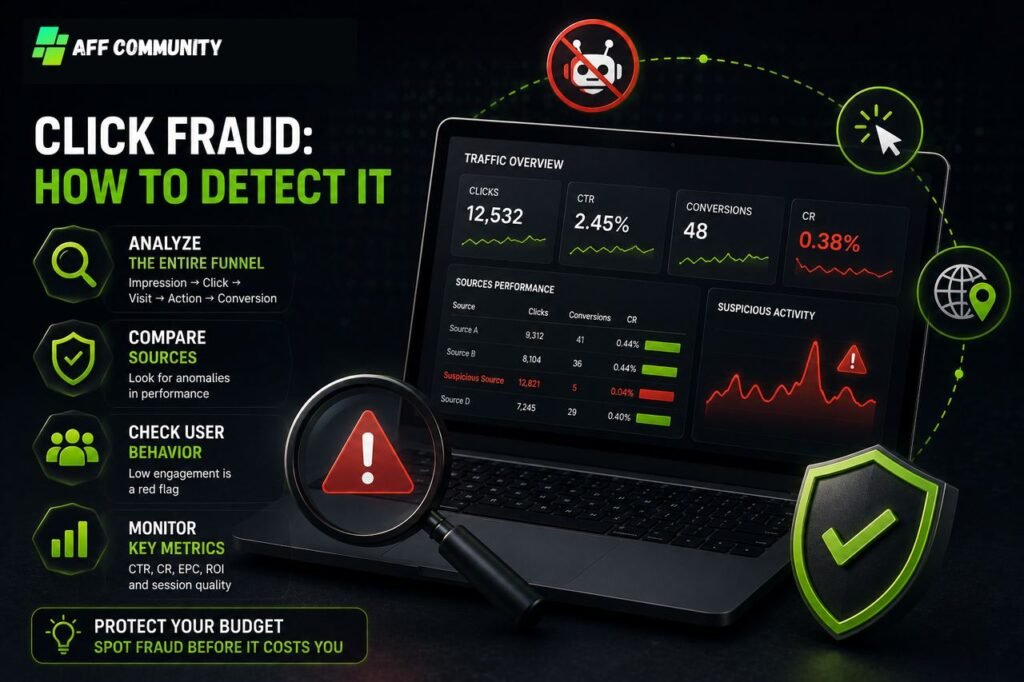
Click fraud is one of those problems in affiliate marketing that’s easy to underestimate. As long as the ad dashboard shows clicks, the CTR looks normal, and the cost per click remains reasonable, it may seem like everything is fine with the campaign.
But then things start to look strange: there are a lot of clicks but almost no conversions, users aren’t staying on the site, and the statistics differ sharply from other traffic sources.
We believe that click fraud should be investigated not when the budget has already been exhausted, but at an early stage. The sooner the advertiser notices an anomaly, the less money they’ll lose to that traffic source.
That said, click fraud isn’t necessarily caused by primitive bots that simply click on ads. Modern click fraud can be significantly more sophisticated and masquerade as normal user behavior.
What Is Click Fraud
Click fraud is the artificial generation of clicks on ads without the user having any genuine interest in the offer.
The motives can vary. Some people try to profit from the advertising model, others want to inflate a platform’s metrics, and sometimes competitors intentionally generate low-quality clicks to increase the advertiser’s costs.
One common mistake is assuming that a high CTR is a sign of good creativity and high-quality traffic. In reality, CTR only shows how often users click on an ad.
Let’s say a campaign achieved an 8% CTR. At first glance, that’s an excellent result. But if users close the page almost immediately after clicking and don’t take the desired action, there’s nothing to celebrate.
A high CTR can be due to aggressive creativity, accidental clicks, or the specifics of a particular ad placement.
That’s why we recommend looking at the entire conversion path:
If a problem arises between the click and the next stage, you need to look for the cause precisely there.
Compare traffic sources with one another
The easiest way to detect suspicious traffic is to compare it with other sources.
For example, you have three platforms. The first generates 1,000 clicks and 40 conversions. The second generates 900 clicks and 35 conversions. The third generates 1,200 clicks and only 3 conversions. At the same time, the cost per click is roughly the same across all of them.
This result doesn’t automatically mean that the third platform is engaging in click fraud.
Perhaps it has a completely different audience or an ineffective ad placement. But the source definitely warrants further investigation.
We recommend looking not only at the final conversion rate but also at user behavior after landing on the page.
That’s exactly why it’s important to conduct a thorough traffic quality check before increasing your budget, rather than focusing solely on the campaign’s profit. We’ve already covered a useful checklist for this kind of analysis in the article “How to Check Traffic Quality Before Scaling.”
Look at User Behavior
A bot can learn to click, but it’s much harder for it to mimic a normal potential customer.
Therefore, after identifying a suspicious source, you need to see what happens after the click.
Pay attention to:
time on page;
page depth;
number of pages viewed;
actions within the form;
repeat visits;
transitions between funnel stages;
conversion to the target action.
If thousands of users visit the page but virtually all of them leave within a few seconds, that’s a serious red flag.
The situation becomes even more interesting when the statistics from a suspicious source look virtually identical every hour or day.
With a real audience, behavior usually varies. There are peaks in activity, different devices, and various interaction scenarios. Statistics that are too perfect should sometimes be cause for concern.
Check IP addresses, devices, and GEO
Another level of analysis involves technical parameters.
If you have access to the relevant statistics, it’s worth looking at:
IP addresses.
Device types.
Operating systems.
Browsers.
Geolocation.
Click time.
Frequency of repeat actions.
For example, a large number of clicks from a single technical configuration does not in itself prove click fraud. But if the device, IP segment, time of activity, and subsequent behavior all match simultaneously, the likelihood of an anomaly increases.
It is especially useful to compare this data across multiple sources.
If one platform differs significantly from the others in several parameters at once, it should be flagged for further review.
Look for sharp spikes
Click fraud can often be detected by its dynamics.
Suppose a campaign receives roughly the same number of clicks for several days, and then suddenly receives several hundred clicks within 20 minutes.
At the same time:
CTR increases sharply;
the cost per conversion rises;
there’s almost no increase in leads;
users barely interact with the website.
This is already a compelling reason to pause and investigate. We advise against making decisions based solely on one hour’s worth of data. First, it’s helpful to compare the spike with historical data and check whether there was an objective reason for it.
For example, the ad platform might have launched an additional placement or changed the distribution of impressions.
Don’t confuse click fraud with a poor audience
This is a particularly important point. Not every low-quality user is a bot. The ad platform may very well be driving real people who are simply not interested in your offer.
As a result, the advertiser sees a lot of clicks, low conversion rates, and immediately concludes that it’s fraud. But the problem may lie in the targeting, creativity, or an incorrectly selected audience.
The key is not to keep automatically pouring your budget into it in the hope that the statistics will correct themselves. If a source shows clear anomalies, we recommend:
Record the time period and volume of the suspicious traffic.
Compare it with other sources.
Check technical and behavioral metrics.
Review statistics at the placement and segment levels.
Pause or limit the suspicious source.
Forward the data to the ad network or affiliate networks if further verification is required.
However, do not delete statistics or change settings before you have saved the raw data. Otherwise, it will be much more difficult later to prove exactly what happened.
How to Reduce the Risk of Click Fraud
It is impossible to completely eliminate fraudulent clicks, but the risks can be significantly reduced.
We recommend using:
tracking of all ad clicks;
separate statistics by source;
regular analysis of ad placements;
automated rules for suspicious anomalies;
anti-fraud tools;
conversion quality control.
It’s especially important not to wait for the affiliate networks or ad networks to report the problem on their own.
Modern anti-fraud systems analyze multiple factors simultaneously, including user behavior, device, GEO, and interaction patterns.
Click fraud cannot be detected by a simple rule like “lots of clicks without leads = fraud.” Real analysis is much more complex.
Our team and I look at several levels simultaneously: the source, dynamics, technical parameters, user behavior, conversion, and the bottom line.
The key is not to confuse fraud with ordinary low-quality traffic. In one scenario, the problem must be solved through anti-fraud measures and blocking the source, while in another, you need to adjust the targeting, creativity, or the campaign itself.
The sooner a webmaster begins analyzing not just the number of clicks, but the quality of each stage of the funnel, the less likely they are to waste a significant portion of their budget on click fraud.
In affiliate marketing, the term “exclusive offer” comes up quite often. But for a beginner, it might not be entirely clear. How does such an offer differ from a regular one? Why does an affiliate network sometimes offer it only to a few media buying teams? And does “exclusive” really always mean higher profits?
We believe that exclusivity alone doesn’t turn an offer into a gold mine. The main advantage lies elsewhere. A publisher gains access to an offer that most competitors don’t have.
And in overheated verticals, this can significantly change the economics of a campaign.
What Is an Exclusive Offer
An exclusive offer is one that’s available to a limited number of affiliates or a specific CPA network and isn’t widely distributed to all webmasters.
There can be various reasons for this. For example, an affiliate network may have negotiated directly with the advertiser and secured special terms. Or the company itself may have launched a new product that isn’t yet available on other networks.
Sometimes the exclusivity applies not to the entire offer, but only to a specific GEO, traffic source, or partnership model.
Therefore, “exclusive” does not always mean an absolutely unique product. Sometimes it refers specifically to exclusive terms.
How an exclusive offer differs from a regular offer
Let’s consider a scenario: The same product is available on ten CPA networks. A publisher can compare rates, choose the most favorable terms, and launch an ad campaign.
But in this case, hundreds of other webmasters are working on the same offer. They buy similar traffic, test similar creativities, and compete for the same audience.
With an exclusive offer, the situation may be different. If a product is available on only one network and the terms are truly more favorable than the market average, the affiliate gains additional room for testing.
For example, this could include:
a higher commission rate;
a new GEO;
a unique product;
a higher RevShare percentage;
a dedicated landing page;
custom terms by traffic source;
an exclusive promotion.
This is precisely why experienced webmasters closely monitor not only the payout amount but also what exactly is behind the offer.
Why Affiliate Networks Offer Exclusive Deals
Exclusivity also makes sense for a CPA network. The affiliate network gains the opportunity to attract top-tier webmasters and increase the volume of high-quality traffic for the advertiser.
At the same time, the advertiser may be interested in testing a new product without immediately connecting dozens of traffic sources:
The result is a mutually beneficial model.
The affiliate networks get a strong offer.
The publisher gets the opportunity to test a less competitive traffic mix.
The advertiser gets a controlled flow of new customers.
It’s important not to fall into this trap. The word “exclusive” alone says nothing about the actual economics.
If an offer has a high payout but converts poorly, requires expensive traffic, or targets a narrow audience, exclusivity won’t save the day.
Therefore, before launching, you need to evaluate the entire funnel:
payout → traffic cost → conversion → lead quality → confirmation → final ROI.
For example, a $100 payout may seem more attractive than a $50 payout. But if the first offer converts half as well, the actual economics may turn out to be the same.
That’s exactly why we always recommend testing offers with a small volume first, and only then deciding whether to scale up.
Where Do Truly Interesting Exclusive Offers Come From?
Such offers often appear on networks that work closely with advertisers.
Affiliate networks may negotiate special rates on their own or obtain the rights to promote a specific product in a particular region.
Exclusive terms are particularly common in verticals where the advertiser is interested in controlling traffic quality.
At the same time, some networks offer several payment models simultaneously—CPA, CPL, RevShare, or Hybrid.
Why Exclusive Deals Are Especially Attractive in Competitive GEOs
The higher the competition, the harder it is to work with standard offers. If hundreds of webmasters are using the same products and roughly the same levels of creativity, the cost per user gradually rises.
An exclusive offer can provide a slight advantage. Competitors simply don’t have it.
This doesn’t mean that advertising will automatically become cheaper. But it gives the webmaster the opportunity to test a new hypothesis before the market completely oversaturates it.
This is especially valuable when entering a new GEO. If an affiliate network has received an exclusive product for a specific country, a webmaster may be able to gather statistics before anyone else.
Exclusive terms can be personalized
Sometimes an exclusive offer doesn’t appear in the affiliate network’s general catalog at all. An affiliate manager may offer it directly to a specific webmaster.
The reason is simple—the affiliate has already demonstrated strong traffic volume and quality.
In such cases, the manager may offer:
a higher commission rate;
a dedicated landing page;
custom GEO targeting;
priority moderation;
additional promotional materials.
This is precisely why a good relationship with your affiliate manager can have direct financial implications.
If you consistently drive high-quality traffic, it’s more profitable for the affiliate networks to offer you better terms than to have you work at the standard rate.
The more exclusive the offer, the more closely the affiliate networks typically scrutinizes traffic quality. The advertiser doesn’t need a large volume of users at any cost. They need real customers.
Therefore, before receiving customized terms, a publisher often has to prove that they can consistently drive the target audience.
Here, it’s not just the number of leads that matters, but also their quality.
With large volumes, it’s especially important to monitor duplicate applications and ensure conversions are tracked correctly. This issue is discussed in more detail in the article on lead monitoring.
How to Determine Whether an Exclusive Deal Is Worth It
Before launching, we recommend asking the account manager a few simple questions.
What exactly constitutes an “exclusive” deal? Is it just the offer, or specific terms?
Which GEOs does the offer cover? Sometimes exclusivity applies to only one country.
Which traffic sources are allowed?
Then you completely change your approach and start driving users in a different way.
Even if the volume increases, the quality may change. Therefore, when scaling up, it’s better to let the manager know in advance what’s happening. For example: “We’re increasing the volume from the current source” or “We’re testing a new geographic target, so the volume will be higher than usual for the first few days.”
This kind of communication looks much more professional than a sudden increase in the number of leads by several times.
Additionally, if the quality does change, the affiliate networks will be able to link it to a specific change more quickly.
Demonstrate quality through creativity and audience behavior
Creativity directly influences which audience enters the funnel. Ads that are too aggressive may yield an excellent CTR but attract users who don’t initially match the offer.
As a result, the advertiser gets cheap clicks and impressive stats in their ad dashboard, while the affiliate networks see low-quality leads.
That’s why you shouldn’t evaluate ad creatives based solely on CTR. It’s important to look at what happens after the click.
If one creativity generates fewer clicks but leads to significantly more confirmed users, it may actually prove to be more valuable for the entire partnership.
What to Do If an Affiliate Network Suspects Poor Traffic
The worst strategy is to immediately escalate the issue into a conflict. If the affiliate networks claim that quality has deteriorated, you first need to gather data.
Compare the period when everything was working normally with the current statistics. Examine the geographic locations, traffic sources, devices, creatives, and conversion rates. If a problem has indeed arisen, try to pinpoint its source.
If, however, your data shows consistent quality, you can provide it to the manager and ask them to specify the nature of the complaint.
Another important point: don’t ignore the possibility of traffic shaving. If the advertiser’s statistics and the affiliate networks’ data begin to diverge noticeably, you need to investigate the causes rather than drawing conclusions based solely on gut feelings.
We’ve covered methods to help mitigate the risks of such situations in this article.
Reputation Matters More Than a Single Successful Month
The affiliate networks gradually form their own opinion of each webmaster.
If a webmaster consistently drives stable traffic, doesn’t hide their traffic sources, communicates effectively, and responds quickly to issues, trust in them grows.
And at some point, they no longer have to prove the obvious every time.The manager understands that this partner knows how to handle high volumes and maintains control over the quality of their audience. That’s exactly why traffic quality isn’t just a matter of statistics—it’s also a matter of reputation.ConclusionYou can only prove the quality of your traffic to an affiliate program if you have transparent analytics and a clear understanding of your own network.
We recommend not trying to convince the manager with phrases like “I have clean, high-quality traffic.” Instead, it’s better to show the numbers, trends, sources, and user behavior.A good publisher doesn’t just drive leads. They understand who these users are, where they came from, what they did after landing on the page, and why the affiliate networks should consider them valuable.When all this information is backed up by statistics, the conversation with the affiliate networks becomes much easier. And most importantly, this approach not only helps prove the quality of the traffic but also allows the webmaster to more quickly identify weaknesses in the campaign and make data-driven decisions.
In affiliate marketing, it’s not enough to simply generate a lot of leads. It’s important for the affiliate network to understand that these leads are truly high-quality, meet the terms of the offer, and have good potential for further monetization.
This issue becomes particularly pressing when an advertiser starts working with large volumes. At the beginning, the affiliate networks may be content with limited statistics, but as the number of leads grows, the manager begins to ask questions: where is the traffic coming from, what sources are being used, why has the conversion rate changed, which GEOs yield the best results, and how consistent is the audience quality?
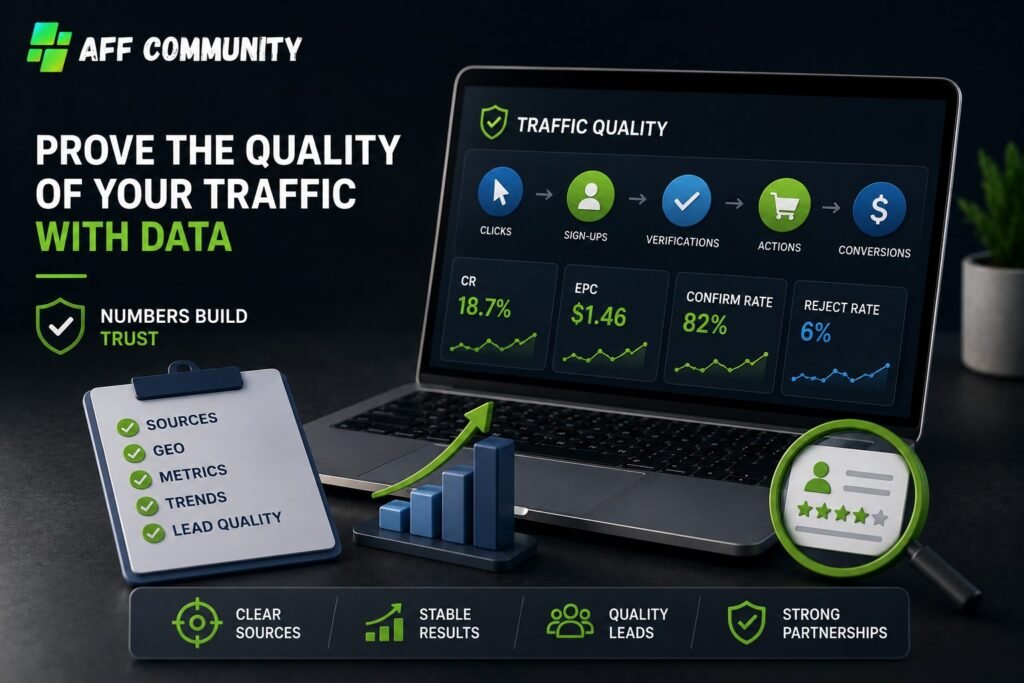
We believe that the quality of traffic should be proven not with words, but with numbers. The more transparently a publisher presents their statistics, the fewer questions the affiliate networks will have.
What affiliate networks mean by “high-quality traffic”
First and foremost, it’s important to understand that traffic quality isn’t determined by a single metric. A large number of leads doesn’t necessarily mean anything.
You could generate a thousand sign-ups, but if users don’t verify their information, don’t complete the desired action, or turn out to be invalid en masse, that volume is practically useless to the affiliate program.
Therefore, when assessing quality, they typically look at the entire chain:
The more stages a user completes, the more valuable that traffic is. At the same time, different verticals may have completely different quality criteria. In some cases, registration is important; in others, it’s a deposit, a purchase, repeat activity, or a confirmed lead.
Therefore, before launching a campaign, we recommend carefully reviewing the terms of a specific offer and understanding in advance which user actions the affiliate networks consider high-quality.
Show statistics, not promises
One of the weakest approaches when communicating with affiliate networks is to say, “I have good traffic.” To a manager, this means practically nothing.
Specific statistics are much more convincing. For example:
traffic source;
GEO;
number of clicks;
number of leads;
CR;
acquisition cost;
EPC;
lead confirmation;
rejection rate;
trend in results.
You don’t have to send the manager a huge spreadsheet with all available data. It’s much better to prepare a short and clear report that immediately shows where the audience is coming from and how it behaves after landing on the page.
At the same time, it’s important not to sacrifice quality for quantity of metrics. Sometimes five or six key metrics are enough for the manager to get a good understanding of the traffic.
We’ve covered the topic of lead tracking and how to avoid overpaying for the same traffic in a separate article. This approach is especially useful as volumes begin to grow; you can read about it in this article.
Don’t hide your traffic source
If an affiliate program asks where users are coming from, trying to give the most general answer possible usually just raises more questions.
Answering “I buy traffic from ad networks” doesn’t tell them much. It’s much better to explain in more detail: which ad platform is used, which geographic regions are targeted, what type of audience is being attracted, what ad formats are used, and where the user is taken after clicking.
This doesn’t mean you have to reveal all of your team’s inner workings or hand over every detail of your campaign to the affiliate networks.
But basic transparency is essential. This is especially important when there’s a sharp increase in volume. If the affiliate networks received 100 leads yesterday and 5,000 today, the manager will naturally want to understand what happened.
If the buyer has reliable statistics and a clear explanation for the growth, the situation looks much less stressful.
Use trackers
It’s very difficult to prove traffic quality without proper tracking. If all the statistics are scattered across several ad platforms, Excel files, and managers’ correspondence, it’s practically impossible to quickly get an objective picture.
A tracker allows you to link the source, campaign, creativity, GEO, and final conversion.
This makes it possible not just to tell the affiliate networks that the traffic is high-quality, but to show exactly which segment is delivering results.
For example, you might find that users from a specific geographic region convert significantly better than others. Or, conversely, a certain ad network might generate a lot of clicks but yield virtually no confirmed leads.
In such situations, the numbers speak louder than any explanation.
One of the most powerful things you can demonstrate to an affiliate program is consistency. Let’s say, in a single day, a publisher received 200 leads with an excellent conversion rate (CR). That’s interesting.
But it’s much more compelling to show that similar results are sustained over a week or a month. It’s precisely this consistency that helps distinguish a random spike from a normal, stable performance pattern.
Therefore, when communicating with affiliate networks, it’s helpful to present statistics broken down by time periods. For example, you can compare: the first week of the campaign, the second week, the point when the budget was increased, and the period after scaling up.
If the metrics remain relatively stable, trust in the traffic source grows. If, on the other hand, the quality fluctuates sharply up and down, it will be harder for the manager to view such traffic as predictable.
Poor conversion doesn’t always mean poor traffic. Sometimes the problem lies within the funnel itself.
A user may respond normally to ad creativity and navigate to the landing page, but then fail to complete the desired action due to an inconvenient form, slow loading times, or unmet expectations.
Therefore, when statistics are questionable, you shouldn’t immediately blame the traffic source. You need to look at the entire user journey.
We’ve repeatedly pointed out that the final result depends not only on the number of clicks but also on how well the post-click audience processing is structured; you can read more about this in this article.
This is especially important when communicating with affiliate networks. If a manager says that lead quality has declined, it’s better not to argue but to work together to identify at which stage the problem arose.
Don’t abruptly change your traffic mix without explanation
Another point that’s often underestimated is a sudden change in traffic source or creativity. Let’s say affiliate networks are used to receiving a certain volume of high-quality traffic from you. Then you completely change your approach and start driving users in a different way.
Even if the volume increases, the quality may change. Therefore, when scaling up, it’s better to let the manager know in advance what’s happening. For example: “We’re increasing the volume from the current source” or “We’re testing a new geographic target, so the volume will be higher than usual for the first few days.”
This kind of communication looks much more professional than a sudden increase in the number of leads by several times.
Additionally, if the quality does change, the affiliate networks will be able to link it to a specific change more quickly.
Demonstrate quality through creativity and audience behavior
Creativity directly influences which audience enters the funnel. Ads that are too aggressive may yield an excellent CTR but attract users who don’t initially match the offer.
As a result, the advertiser gets cheap clicks and impressive stats in their ad dashboard, while the affiliate networks see low-quality leads.
That’s why you shouldn’t evaluate ad creatives based solely on CTR. It’s important to look at what happens after the click.
If one creativity generates fewer clicks but leads to significantly more confirmed users, it may actually prove to be more valuable for the entire partnership.
What to Do If an Affiliate Network Suspects Poor Traffic
The worst strategy is to immediately escalate the issue into a conflict. If the affiliate networks claim that quality has deteriorated, you first need to gather data.
Compare the period when everything was working normally with the current statistics. Examine the geographic locations, traffic sources, devices, creatives, and conversion rates. If a problem has indeed arisen, try to pinpoint its source.
If, however, your data shows consistent quality, you can provide it to the manager and ask them to specify the nature of the complaint.
Another important point: don’t ignore the possibility of traffic shaving. If the advertiser’s statistics and the affiliate networks’ data begin to diverge noticeably, you need to investigate the causes rather than drawing conclusions based solely on gut feelings.
We’ve covered methods to help mitigate the risks of such situations in this article.
Reputation Matters More Than a Single Successful Month
The affiliate networks gradually form their own opinion of each webmaster.
If a webmaster consistently drives stable traffic, doesn’t hide their traffic sources, communicates effectively, and responds quickly to issues, trust in them grows.
And at some point, they no longer have to prove the obvious every time.
The manager understands that this partner knows how to handle high volumes and maintains control over the quality of their audience. That’s exactly why traffic quality isn’t just a matter of statistics—it’s also a matter of reputation.
Conclusion
You can only prove the quality of your traffic to an affiliate program if you have transparent analytics and a clear understanding of your own network.
We recommend not trying to convince the manager with phrases like “I have clean, high-quality traffic.” Instead, it’s better to show the numbers, trends, sources, and user behavior.
A good publisher doesn’t just drive leads. They understand who these users are, where they came from, what they did after landing on the page, and why the affiliate networks should consider them valuable.
When all this information is backed up by statistics, the conversation with the affiliate networks becomes much easier. And most importantly, this approach not only helps prove the quality of the traffic but also allows the webmaster to more quickly identify weaknesses in the campaign and make data-driven decisions.
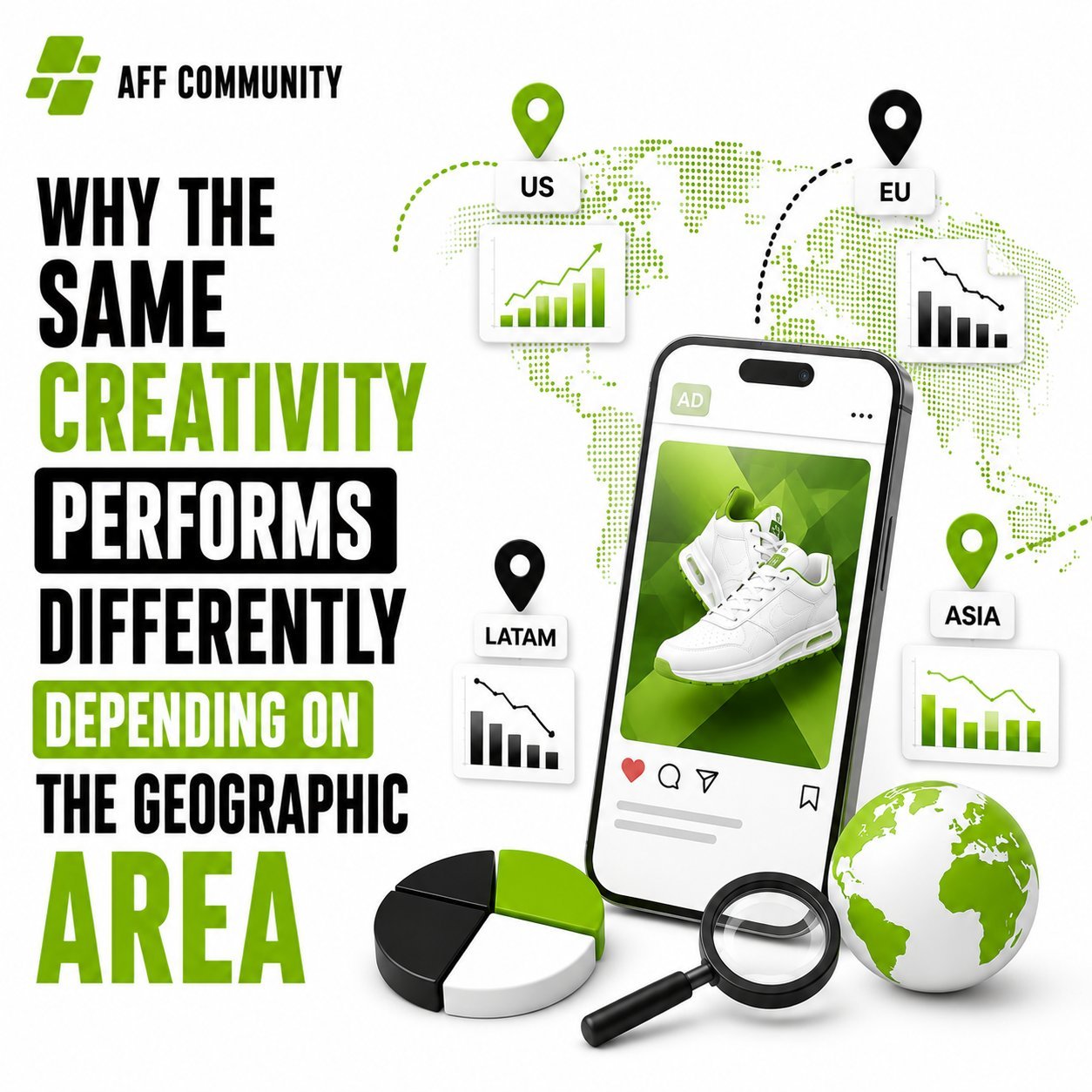
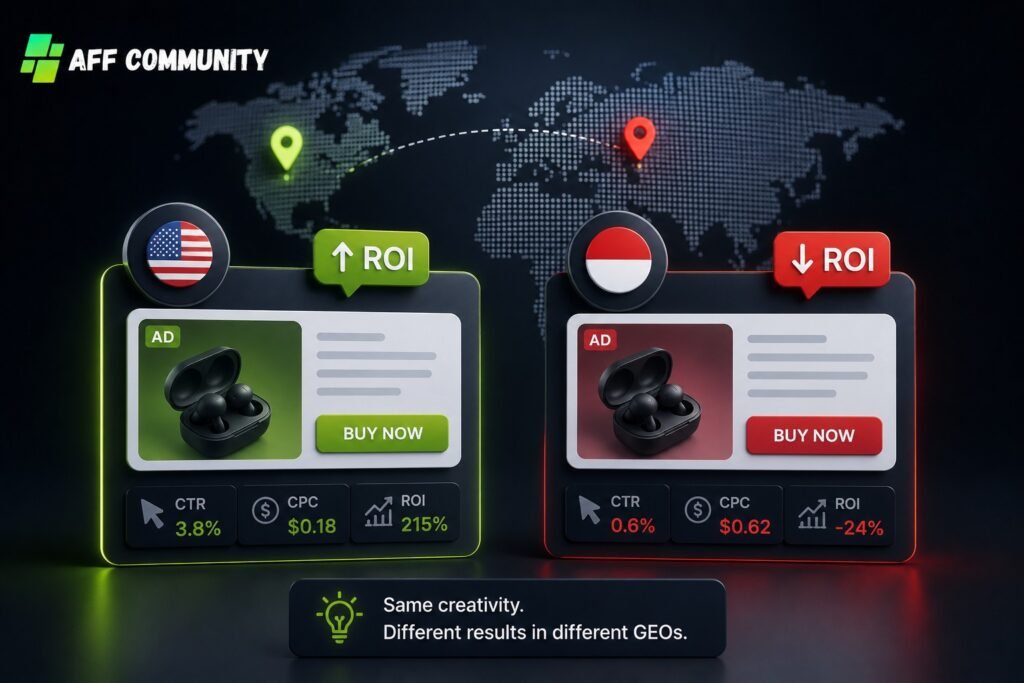
One of the most common questions we hear is: Why does the same creativity deliver an excellent ROI in one country but completely fail in another? It would seem that the ad platform is the same, the offer is the same, and the landing page hasn’t changed, yet the results differ dramatically.
In practice, this is a completely normal situation. Geography influences virtually every element of an ad campaign: user behavior, traffic cost, the level of competition, perception of design, and even attitudes toward certain colors or wording. That’s why a successful buyer adapts not only the targeting but also the creativity itself.
Different Mindsets – Different Reactions
The first factor influencing ad effectiveness is the audience’s characteristics. For example, aggressive ads with bold promises may work well in some countries but be met with skepticism in others.
In some places, users respond better to emotional stories, while in others they prefer hard facts, figures, and expert arguments.
Therefore, creativity that consistently generates leads in Latin America won’t necessarily yield the same results in European countries. Before launching a campaign, it’s always worth studying the specifics of a particular market and the habits of the local audience.
Even if users behave the same way, ad auctions operate differently. Competition is significantly higher in popular GEOs. Consequently, the following metrics increase:
CPM;
CPC;
and the cost per lead.
Because of this, the same CTR can result in completely different final ROIs. That’s why, when choosing a country, it’s important to evaluate not only the potential payout per offer but also the cost of acquiring a user.
We’ve analyzed a detailed comparison of different country groups here in this article.
Localization Is More Than Just Translation
A common mistake among beginners is to run ad copy through an automatic translator and consider the localization complete. In practice, you need to take into account:
local expressions;
cultural nuances;
popular images;
the typical communication style;
the audience’s local pain points.
Even small changes to the headline can significantly increase the CTR. That’s why top-performing teams rarely use a single, one-size-fits-all creativity across dozens of countries at once.
Different algorithms learn differently
Meta, Google, TikTok, and other advertising platforms analyze user behavior within each market separately. The algorithms evaluate:
click-through probability;
engagement;
view time;
conversion;
and the quality of interaction with the ad.
If the audience in a specific GEO responds less favorably to an ad, the algorithm gradually reduces the number of impressions or increases the cost per click. Therefore, a successful launch in one country does not guarantee the same result in another.
Another factor is market saturation. In some countries, users see dozens of similar ads every day. Over time, this leads to “banner blindness.”
Even high-quality creativity begins to show weaker results simply because the audience has grown tired of repetitive ads.
That’s exactly why advertisers regularly update their ad materials, test new combinations, and adapt their visual style to each specific country.
One Offer – Different Approaches
We regularly see situations where the same offer is scaled across several countries at once. In these cases, completely different elements are used:
Images.
Headlines.
Calls to action.
Color schemes.
Ad formats.
The reason is simple—users make decisions differently. Therefore, it’s more effective to test several variations for each country than to try to find a single universal creativity.
We discussed in detail how to properly adapt ad creativity for modern advertising platforms in the article at this link.
Analytics helps identify the cause
If your creativity stops working after changing the geographic targeting, don’t rush to create a new one. First, you need to figure out exactly what has changed. We recommend analyzing:
CTR;
CPM;
CPC;
CR;
cost per lead;
user retention.
Very often, the problem lies not with the creativity itself, but with the specifics of the auction or audience behavior.
The same level of creativity almost never yields the same results in different countries. Ad effectiveness is influenced by the audience’s cultural characteristics, the level of competition, auction costs, ad platform algorithms, and local user habits.
We recommend treating each new GEO as a separate market. The better your creativity is tailored to a specific audience, the higher the likelihood of achieving a stable CTR, a good ROI, and the potential to scale your campaign further.
Most webmasters associate high payouts with gambling, nutra, or finance. However, there is one vertical that has been growing steadily for many years and is virtually unaffected by seasonality: HR offers.
We believe that the recruitment sector remains one of the most underrated in affiliate marketing. Companies around the world continue to seek employees, recruitment agencies are expanding their candidate pools, and employers are willing to pay for high-quality applications.
With the right approach, the HR vertical can generate a stable income for both newcomers and experienced webmasters.
What Are HR Offers
HR offers are affiliate programs in which the advertiser pays for actions related to recruiting employees.
The most common actions that are paid for include:
a completed candidate application;
a job seeker’s registration;
a response to a job posting;
confirmed employment;
completion of an interview.
The payment model depends on the specific employer and country. In some cases, the affiliate receives payment simply for a user’s registration, while in others, compensation is paid only after the candidate starts working.
That is why it is important to carefully review the terms of the affiliate program before getting started.
Many countries continue to face a labor shortage in virtually all sectors. Employers are actively investing in attracting new professionals, and HR services are increasing their marketing budgets.
This creates favorable conditions for buyers. An additional advantage is the relatively lenient moderation of advertising platforms.
Unlike gambling, crypto, or finance, job listings are much easier to promote through Google Ads, Meta Ads, TikTok Ads, and other traffic sources.
That’s precisely why many teams use the HR vertical as a stable channel for long-term work.
Which traffic sources work best
There’s no one-size-fits-all solution here. It all depends on the specific offer and geographic region. Most often, the following deliver good results:
Google Ads;
Facebook Ads;
TikTok Ads;
SEO;
Telegram;
native advertising.
Informational articles on job hunting, career growth, resume writing, and interviewing are particularly effective.
The highest demand is usually seen in Europe, North America, and Australia. That said, emerging markets where employers are facing labor shortages also yield good results.
When choosing a country, it’s important to consider:
the level of competition;
cost per click;
average payout;
advertiser requirements;
and the characteristics of the local labor market.
Sometimes, a less popular GEO can yield a significantly higher ROI than overheated Tier-1 countries.
What to Look for When Choosing an Offer
A high bid doesn’t always mean high earnings. Before launching, you need to evaluate:
Candidate requirements;
Application confirmation rate;
Geographic restrictions;
Available traffic sources;
Payment terms.
Additionally, it’s worth clarifying in advance how the advertiser verifies the quality of applications. The more transparent the operating rules are, the easier it is to scale campaigns.
Why analytics are particularly important
In the HR vertical, lead quality plays a huge role. Even a large number of registrations doesn’t guarantee high revenue if most candidates don’t meet the employer’s requirements.
Therefore, you need to constantly analyze:
cost per application;
approval rate;
cost of hire;
quality of different traffic sources;
effectiveness of individual creativity.
It is precisely by working with analytics that you can gradually increase profits without a significant increase in advertising costs.
We discussed using data for decision-making in more detail in this article.
Scaling requires a systematic approach
After seeing the first successful results, many people start to drastically increase their budgets. But the HR vertical requires gradual scaling.
It’s better to systematically expand the number of GEOs, test new job openings, create additional landing pages, and regularly update ad creatives.
This approach allows you to maintain stable conversion rates even as traffic volumes grow.
HR offers remain one of the most stable verticals in affiliate marketing. Constant demand for employees, a wide range of traffic sources, and relatively lenient moderation make this niche attractive for both beginners and experienced webmasters.
Our team and I recommend not limiting yourself to just the popular verticals. Sometimes it’s the less competitive niches that allow you to reach a stable profit faster, obtain high-quality statistics, and build a long-term growth strategy without constantly fighting for a saturated market.
Many people believe that to succeed in affiliate marketing, you need to immediately purchase dozens of paid services. Anti-detection browsers, trackers, spy tools, creativity generators, analytics platforms—the list of expenses quickly becomes substantial.
We believe it doesn’t always make sense to start with expensive solutions—especially if you’re just testing your first ad combinations or want to explore a new niche. Today, there are plenty of free tools that help you analyze the market, create content, find ideas, and improve the effectiveness of your ad campaigns.
Let’s take a look at the services that are truly worth using.
Google Trends
Google Trends remains one of the most underrated tools among beginners. The service lets you track changes in search interest for virtually any country in the world—for free.
With it, you can:
identify seasonal trends;
compare the popularity of different topics;
analyze interest by region;
find new areas to launch advertising campaigns.
Before entering a new geographic market, we almost always check interest trends using Google Trends. Sometimes it’s exactly this tool that helps us abandon an irrelevant idea in time or, conversely, spot a promising trend before our competitors do.
Google Keyword Planner
Even if you don’t do SEO, Google Keyword Planner remains a useful tool. It helps you understand what search queries real users are using.
This is especially useful when creating white pages, writing articles, structuring landing pages, and preparing ad campaigns.
In addition, this is where you can find dozens of additional related search queries that can then be used to create high-quality content. We discussed working with semantics in more detail in this article.
ChatGPT and Other AI Tools
Artificial intelligence has long been a part of webmasters’ daily work. Today, AI helps with:
generating ideas for creativity;
writing copy;
finding headline options;
analyzing ads;
structuring information.
However, it’s important to remember that pre-generated responses are rarely suitable for publication without further refinement. We recommend using AI as an assistant, not as a complete replacement for your own analysis.
This approach is precisely what allows you to produce high-quality, unique content.
Virtually every paid tool once had a free alternative. For a beginner, it’s much more important to learn how to use analytics correctly, understand how ad platforms work, and regularly test new hypotheses.
Only after you’ve established a stable volume of traffic does it make sense to switch to professional solutions.
If you’re just starting out in affiliate marketing, we also recommend checking out our article on starting budgets and proper expense allocation via the link in the article.
Conclusion
There are more than enough free tools to take your first successful steps in affiliate marketing. Google Trends will help you find promising niches, Keyword Planner will help you select keywords, AI will speed up your content creation, Analytics will show you real user behavior, and the Meta Ad Library will let you study your competitors’ best advertising approaches.
Our team and I are convinced that a publisher’s success is determined not by the number of expensive services they use, but by their ability to use available tools as effectively as possible.
Most webmasters believe that to grow profits, you need to constantly increase your advertising budget. The logic seems obvious: more investment = more traffic = higher revenue.
But my team and I regularly see cases that prove the opposite. Some teams spend thousands of dollars a day and barely break even, while others, with the same expenses, gradually increase their ROI by optimizing existing campaigns.
In practice, profit growth is far from always linked to a budget increase. More often than not, it starts with improving the quality of the ad-link combination.
Don’t Scale a Loss-Making Campaign
The most common mistake is trying to compensate for a low ROI with additional spending.
If a campaign is already showing weak results, increasing the budget almost never fixes the situation. First, you need to figure out which element is performing worse than the rest. It could be:
creativity;
the audience;
the offer;
the landing page;
or the traffic source.
Only after addressing the weak link does it make sense to consider scaling up. That’s exactly why skilled webmasters start by analyzing statistics, not by increasing the budget.
Focus on conversion
Even a small increase in the conversion rate (CR) can significantly boost the overall ROI—without changing your ad spend at all.
Conversion depends on many factors:
page load speed;
landing page quality;
how well the offer meets user expectations;
a clear call to action.
Sometimes changing just one element of the page is enough to increase total profit by tens of percent. That’s exactly why experienced teams regularly test different landing page variations.
Update your creativity before metrics start to drop
Many webmasters only start looking for new creativity after a noticeable drop in CTR. In practice, you need to act much sooner.
Any audience gradually gets tired of seeing the same ads. The longer the same creativity is shown, the higher the likelihood of CPM increasing and conversion rates decreasing.
That’s why strong teams prepare several new options in advance and regularly update their ad materials. This allows them to maintain high performance without increasing costs.
Analyze Your Audience
Another way to increase ROI is to eliminate ineffective traffic. Very often, one segment of the audience generates the bulk of the profit, while another simply drains the budget.
That’s why it’s important to regularly analyze:
age;
gender;
devices;
placements;
interests;
GEO.
After disabling underperforming segments, the overall effectiveness of the campaign can increase significantly even without additional investment.
This is precisely why segmentation remains one of the most underrated optimization tools. You can read more about this in the article at the link.
Monitor lead quality
A high number of conversions does not always mean high revenue. If an ad campaign attracts low-quality users, the advertiser may lower the rate at which it approves applications, reduce payouts, or even terminate the partnership altogether.
Therefore, it’s essential to analyze not only the cost per lead but also its quality. In many cases, reducing the volume of low-quality traffic boosts the final ROI much more significantly than attracting new users.
Another mistake is making decisions based on intuition. Any change to an ad campaign should be data-driven.
Before pausing a campaign or testing a new hypothesis, it’s worth answering a few questions:
Why has the CTR changed?
At what stage is the conversion rate dropping?
Which audience segment has stopped generating profit?
How has the EPC changed?
What changes occurred after the latest adjustments?
It is precisely this approach that allows you to gradually increase campaign effectiveness without increasing costs.
Useful recommendations for working with analytics and scaling can be found in this article.
Continuous optimization is more effective than constantly increasing the budget
Professional teams rarely rely solely on increasing spending. They are constantly looking for small improvements:
A 5% increase in conversion rate.
A 10% decrease in CPM.
A slightly higher CTR.
A slightly better approval rate.
Ultimately, it’s the sum of these small changes that leads to a significant increase in ROI. This approach requires more analytics but delivers much more stable results over the long term.
Conclusion
You can increase ROI without increasing your advertising budget. In many cases, optimizing creativity, audiences, landing pages, and analytics yields significantly greater results than simply scaling up spending.
That’s exactly why top webmasters focus not on spending more, but on ensuring that every dollar invested generates maximum profit.
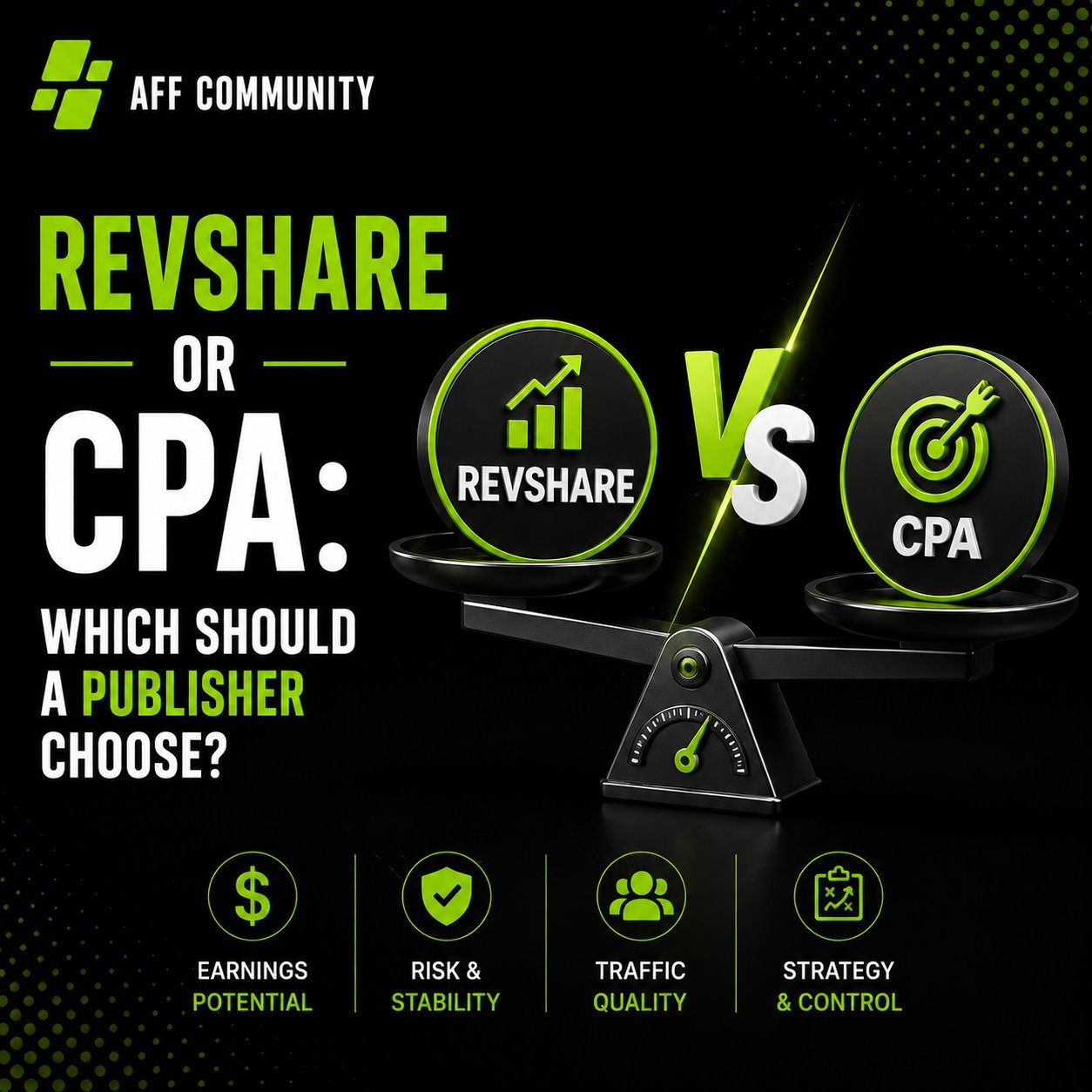
Virtually every beginner who enters the world of affiliate marketing faces the same question: Should they work under the CPA model or choose RevShare?
At first glance, the answer seems obvious. CPA allows you to quickly earn a fixed payment for a specific action, while RevShare promises a stable passive income based on the activity of the player or customer you’ve referred.
But our team and I constantly see that there’s no one-size-fits-all answer here. The choice of model depends on the traffic source, the vertical, the quality of the audience, and the buyer’s own strategy.
Therefore, before getting started, it’s worth understanding the strengths and weaknesses of each model.
When Is It Better to Choose CPA?
CPA (Cost Per Action) is a classic model in which a webmaster receives a fixed payment when a user completes a specific action.
For example:
registration;
first deposit;
submitting an application;
purchasing a product.
The main advantage of CPA is a quick return on investment. The advertiser understands the economics of the partnership almost immediately:
You can quickly test an offer.
Assess conversion rates.
Calculate ROI.
Scale the campaign if necessary.
That’s exactly why most beginners start with CPA. This model works especially well for paid traffic, where it’s important to recoup the advertising budget quickly.
If you’re just choosing your first affiliate program, we recommend researching the criteria for evaluating networks in advance.
RevShare works completely differently. The webmaster receives a percentage of the revenue generated by the user they refer.
The longer the customer remains active, the higher the webmaster’s total earnings. This is why RevShare is particularly popular in gambling, sports betting, and certain financial verticals.
If the traffic is high-quality, the final profit can significantly exceed a fixed CPA payout.
But there’s a downside. You have to wait for the revenue. Additionally, it depends directly on the user’s behavior. If a player stops making deposits, the payouts also stop.
Which Model Is More Profitable?
This is one of the most frequently asked questions. In practice, it all depends on the quality of the audience. If a webmaster works with short-term ad campaigns and is constantly testing new combinations, CPA usually comes out on top.
However, if you have your own media channels, an SEO project, a Telegram channel, or a steady source of loyal audience, RevShare can generate significantly more revenue in the long run.
That’s exactly why many experienced teams use both models simultaneously. Some offers are run on a CPA basis for quick budget turnover. The rest operate on a RevShare basis as a long-term source of income.
The vertical matters too
Not all niches are equally suited for RevShare. For example, in e-commerce, this model is much less common. In iGaming, however, it has long been considered the industry standard.
Therefore, when choosing an affiliate network, it’s important to consider the specifics of the vertical. For example, you can learn about the features of modern gambling affiliate networks in the review at this link.
And if you’re interested in programs with strong expertise in the financial sector, you should check out this article.
Don’t just look at the payout amount
Beginners often focus exclusively on RevShare percentages or CPA amounts. But these are far from the most important metrics.
It’s far more important to focus on:
the quality of support;
the speed of payouts;
the transparency of statistics;
the affiliate program’s reputation;
and player retention rates.
It is these factors that have the greatest impact on long-term profits.
Most professional affiliate marketing teams do exactly that. CPA is used when testing new traffic sources.
Once it becomes clear that the traffic is truly high-quality, some campaigns are switched to RevShare. This allows you to simultaneously generate a quick cash flow and gradually build a stable passive income.
This strategy works particularly well when working with consistent audience sources—SEO, Telegram, YouTube, and your own media channels.
Another example of a modern affiliate network that supports various partnership models is discussed in more detail in this review.
Conclusion
It’s impossible to say definitively that CPA is better than RevShare—or vice versa. If you need a quick return on investment and constant testing of traffic sources, it makes more sense to choose CPA.
However, if you’re building a long-term project and are able to attract a high-quality audience, RevShare often turns out to be significantly more profitable.
That’s exactly why successful publishers don’t limit themselves to a single model but use both depending on their goals, traffic source, and scaling strategy.
We use cookies to improve the site and analyze traffic.