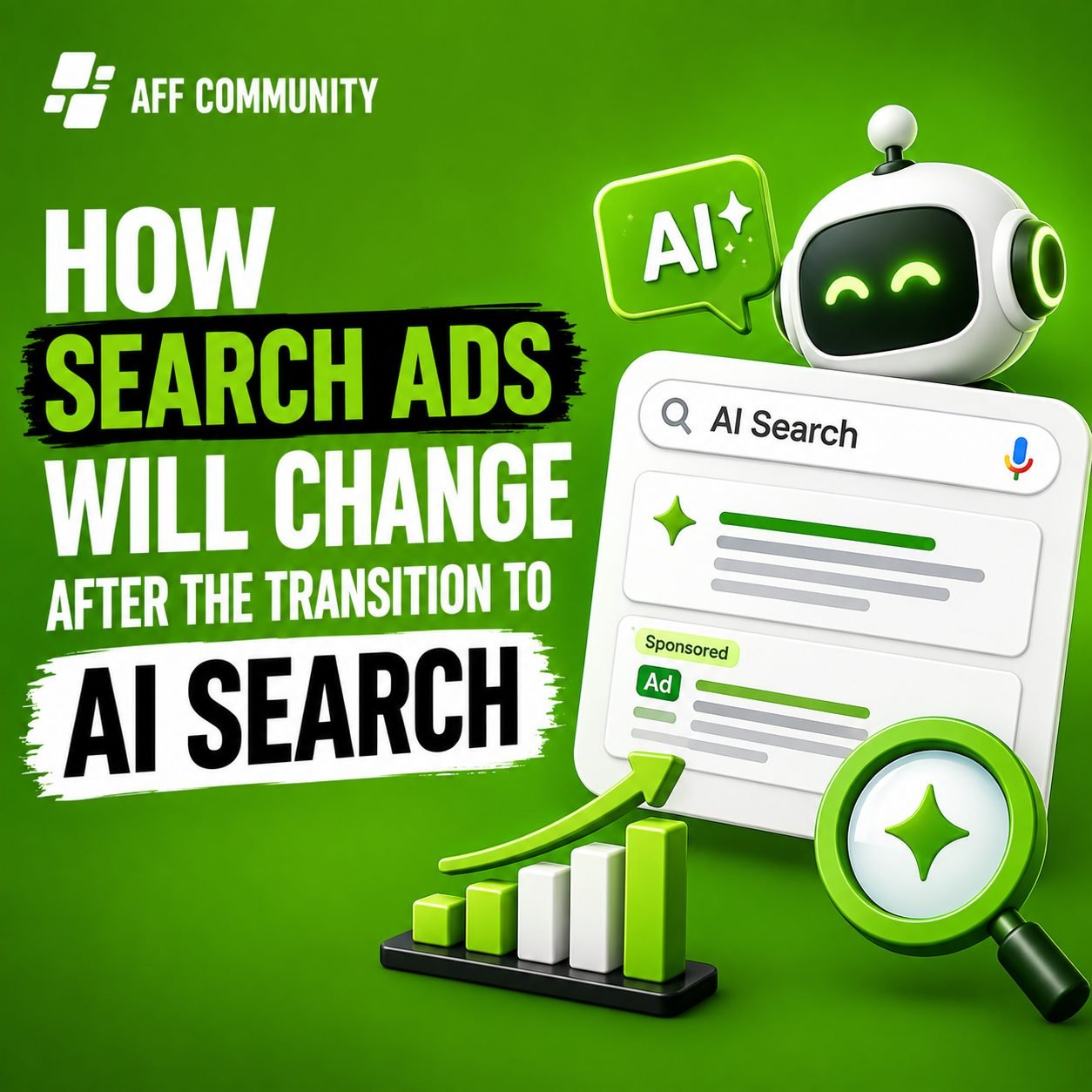
Will AI Search Steal Your Traffic or Boost Your Profits?

Everyone is talking about “AI Search” these days: AI SEO, GEO, AEO—the names vary, but the concept is the same. Opinions are divided, however. Some are convinced that traditional SEO no longer works and should be abandoned. Others believe that nothing has changed and that we can continue using the old methods. The truth, as usual, lies somewhere between these two positions.

The search landscape is changing rapidly. The core principles of SEO are still relevant, but new traffic sources are emerging—along with new ways to waste your budget if you don’t understand how the system works. You can read more about what AI search is in this article.

Let’s break down the key misconceptions and see what really influences traffic and conversions.

Myth 1: “GEO is just SEO under a different name”

Reality: The foundation is similar, but the mechanics differ—and this directly affects ROI.

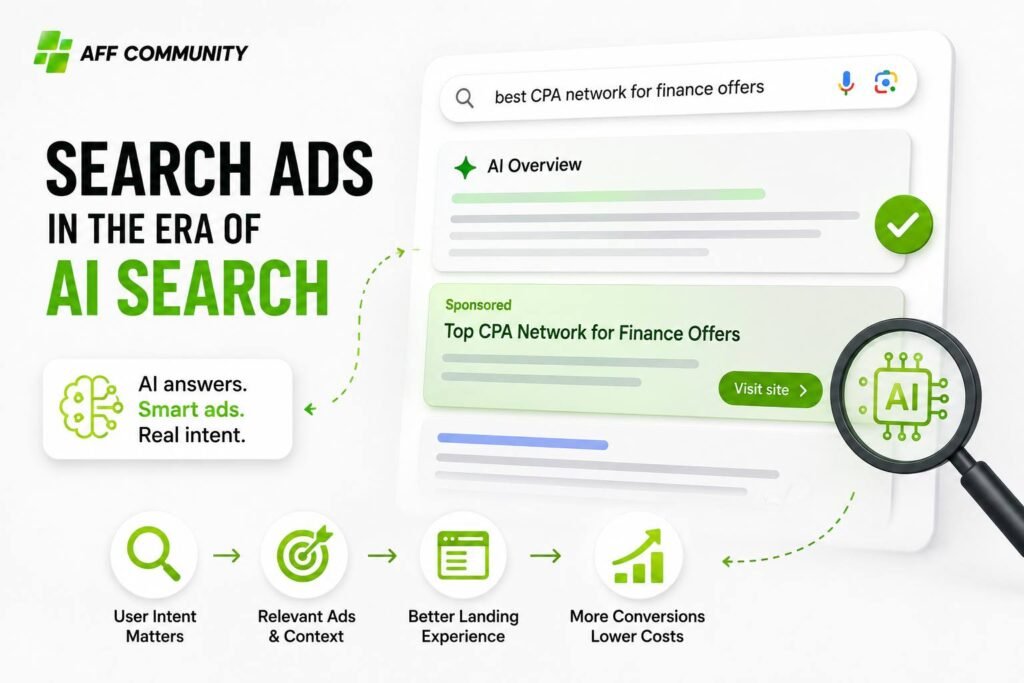
While classic SEO focuses on promoting pages in search results where the user clicks a link, AI search works differently. Here, it’s not about ranking on Google, but about appearing in the response generated by the neural network. The user may not even visit the site—they receive information directly within the ChatGPT interface or other AI services. Consequently, the goal changes. Now, the priority isn’t to rank at the top, but to ensure your offer appears in the AI’s response.

This requires a different approach:

  • a focus on information accuracy;
  • clear and understandable wording;
  • alignment with the user’s query;
  • trust in the source.

If your content makes it into the AI’s response, you gain access to a warm audience. If not, that traffic goes to your competitors.

Myth 2: “AI will figure it out on its own as it gets smarter”

Reality: AI depends on the quality of the data. If the data is poor, the result will be poor too.

Large language models do not possess “understanding” in the conventional sense. They operate on probabilities and utilize the sources available to them.

If information about an offer is scattered across different sites and contradicts itself, the system may:

  1. Display outdated terms and conditions.
  2. Confuse the product with another.
  3. Combine incompatible data.

This leads to a loss of traffic and a decrease in conversion rates. Even a single landing page with incorrect information or an outdated satellite site can influence the AI’s final response.

To avoid this, it is important to:

  • synchronize data across all platforms;
  • keep information up to date;
  • eliminate contradictions.

The cleaner the information field around the offer, the more accurately the AI will display it.

Myth 3: “Tools for analyzing AI visibility are useless”

Reality: They are still imperfect, but they provide a competitive advantage.

Services that track AI visibility help you understand:

  1. Which search queries trigger the offer.
  2. Which competitors appear most frequently in the results.
  3. Where reach is being lost.

While most continue to operate through familiar channels like Facebook and Google, there is an opportunity to test new approaches. Optimizing content for real user queries in AI provides access to low-cost traffic, as competition in this area is still low. Those who start using such tools before others will be able to secure advantageous positions before the market becomes oversaturated.

Myth 4: “External mentions are no longer important”

Reality: mentions have become even more significant than before.

AI systems rely on data from authoritative sources:

  • review sites;
  • directories and aggregators;
  • forums and discussions;
  • databases.

If information about an offer appears on such platforms and is consistent, trust in it increases. If the data is scattered or contradictory, AI gives preference to other sources. Today, a single high-quality mention on an authoritative platform can be more valuable than dozens of old-style links.

This directly impacts the results:

  1. Trust increases.
  2. The likelihood of appearing in search results grows.
  3. The cost of user acquisition decreases.

Myth 5: “Search engines will stay the same as before”

Reality: They will remain, but the way information is consumed is changing.

The classic model with link results is gradually being supplemented by new formats:

  • ready-made answers without redirecting to a website;
  • brief summaries of information;
  • automated actions without user involvement.

Now, users can get the information they need directly within the AI interface without visiting a website at all.

This changes the familiar funnel. Previously, the flow looked like this:

ad → click → landing page → action

Now it has transformed into:

query → AI response → possible click

It is no longer the click itself that matters, but the presence in the response.

Myth 6: “AI search is just a new form of spam”

Reality: Spam doesn’t last long, while high-quality content delivers consistent results.

Yes, you can quickly create a large number of template pages and temporarily drive traffic. But such approaches quickly lose their effectiveness. AI systems actively filter out low-quality content. Learn more about how AI content affects rankings: https://affcommunity.org/en/ai-content-and-google-ranking/

What works consistently:

  1. Accurate and verifiable data.
  2. Up-to-date information.
  3. Structured content (lists, tables, answers to questions).

It’s better to create fewer pages of high quality than to scale up low-quality content.

This approach delivers:

  • more stable traffic;
  • less competition;
  • better conversion rates.

Myth 7: “SEO and AI search are unrelated”

Reality: These are complementary tools.

SEO is responsible for basic visibility:

  1. Indexing.
  2. Site structure.
  3. Resource authority.

AI optimization is responsible for:

  • correct display of information;
  • citation in search results;
  • alignment with user queries.

In practice, an effective strategy includes:

  1. SEO for search engines.
  2. Optimization for AI.
  3. Monitoring all mentions of the offer.

This allows you to generate traffic from multiple sources simultaneously.

Conclusion

AI search does not replace SEO, but complements it. The core principles remain: high-quality content, clear structure, and reliable sources.

But new requirements are added:

  • data accuracy;
  • consistency of information;
  • presence in authoritative sources;
  • adaptation to AI responses.

For affiliate marketing, this means:

  • the emergence of a new traffic channel;
  • the opportunity to reduce acquisition costs;
  • the need to control information about the offer.

Those who adapt to the new conditions faster will gain an advantage. The rest will gradually begin to lose traffic and lose ground.

How TikTok’s New Standards Are Changing the Promotion of AI Content 

In recent years, TikTok has introduced strict rules for videos created or modified using artificial intelligence. Previously, neural networks were used freely; now, the platform requires full transparency. All videos created by AI or significantly altered by it must be marked with a special label. In addition, TikTok has learned to recognize such AI-generated content on its own, even if the creator tried to hide it. Finally, users can now customize how many AI videos they want to see in their feed, which directly impacts the reach of ad campaigns and conversion rates.

When a video must be labeled as “made by AI”

According to TikTok Support’s official guidelines, labeling is required in several cases.

First, it is necessary if the video is entirely generated by a neural network. For example, a video created in Midjourney, Runway, Pika, or Sora, or an animation entirely made by artificial intelligence. This also includes deepfakes, where the faces of real people are replaced with fictional ones.

Second, labeling is required if the video was filmed with a camera but then heavily modified using AI. This includes:

  • face swapping;
  • realistic filters that alter facial features, movements, or body type;
  • a voice entirely generated by a neural network and mimicking human speech;
  • a background or scene that is artificially created and looks real.

If artificial intelligence was used only for minor processing (stabilization, quality enhancement, color correction), labeling is not required. The main principle: if a viewer might be under the illusion that they are watching a real recording, when in fact it is the work of a neural network, the video must be labeled as AI content.

How TikTok identifies AI content

Recently, the platform has been implementing technologies that automatically detect synthetic videos, even if the creator has not labeled them. You can learn more about how the platform’s algorithms work in general here: https://affcommunity.org/en/how-tiktok-algorithms-work-in-2026-what-publishers-should-consider-before-launching-an-advertising-campaign/ 

One such technology is the C2PA (Content Credentials) standard. This is an international system that adds metadata to videos:

  • where the video came from;
  • what tools were used;
  • whether changes were made using AI.

TikTok has learned to read this data and automatically applies the “Made by AI” tag.

The second technology is watermarks. These can be invisible, embedded directly into the video’s pixels: they are invisible to the naked eye, but TikTok’s algorithms easily recognize such watermarks. This type of labeling is already being tested in the US and Europe, and will soon be rolled out worldwide. Thanks to it, it becomes nearly impossible to hide the fact that a video was created by a neural network.

Users decide for themselves how much AI content they want to see

TikTok has added a new feature to its settings. Now, every user can choose how often they want to see videos marked as AI content in their feed. You can set the “less AI” mode: in this case, the algorithm will show such videos less frequently. Or the “more AI” mode, and then the feed will be filled with synthetic and experimental content.

This decision has a significant impact on advertisers and creators. Previously, reach depended solely on how interesting the video was. Now, the “content type” factor is added to this. If the target audience has selected “Less AI” mode, then ads created by neural networks (or AI-generated creativity), will be shown less frequently. The cost per impression may rise, while the number of views will automatically decrease. If, on the other hand, the audience is open to new content, such ads may, conversely, receive more impressions and higher conversion rates.

What This Means for Creators and Businesses

TikTok is effectively establishing a three-tier system for controlling AI-generated content. First, videos are checked for watermarks and C2PA metadata. Then, if the content is fully generated or heavily modified by artificial intelligence, mandatory labeling is required. Finally, users can filter out such videos using new settings, and the algorithm takes their preferences into account when distributing views.

For creators, this means that hiding the use of AI will no longer be possible. However, labeling can serve as an honest signal to viewers, showing that the creator follows the platform’s rules. For advertisers, choosing AI-generated creativity becomes part of their media strategy: they must consider how the audience perceives synthetic content, or risk losing reach and reducing conversion rates. You can read more about creativity requirements on platforms here.

Transparency and compliance with TikTok’s new standards are shifting from a recommendation to a mandatory requirement for successful promotion. All creators who want to monetize their channel on the platform should take this into account.

AI content and Google ranking

Google does not block texts created by AI. The company has clearly stated its position: it is not the author of the text—whether human or neural network—that matters, but its quality. The main criteria remain usefulness, originality, accuracy, and focus on the needs of real readers.

This article explains how to safely use artificial intelligence in your content strategy while avoiding penalties, as well as how to optimize texts for effective ranking.

Why doesn’t Google penalize AI content if it is of high quality?

The common myth that “AI content = automatic penalties” still causes concern. However, the search giant’s position remains unchanged:

Google does not penalize AI, only low quality.

Therefore, the focus should shift from the question of the admissibility of the tool to the evaluation of the published content and its compliance with EEAT criteria. That is, superficial articles with no real value, texts mechanically filled with keywords, identical structures, factual errors, and AI “hallucinations” are guaranteed to lead to sanctions. But the following have every chance of achieving high rankings:

  • original texts with expert analysis and insights;
  • materials that solve user problems;
  • content where AI is only a tool under full human control;
  • hybrid texts: a draft from AI + in-depth editing and fact-checking by an expert.

Modern Google algorithms (Helpful Content Update) have learned to evaluate user satisfaction rather than the source of the text. If a visitor finds an answer, spends time on the page, and does not return to the search, this is the main signal of quality, regardless of how the material was created.

The main risk when working with AI is not sanctions, but an imperceptible slide towards average, unremarkable content that gets lost in the crowd. Such text may not be penalized, but it will never take a leading position, as it does not offer unique value.

How to use AI safely

The strategy for creating useful, high-quality, and Google-safe content includes several mandatory steps.

Adding human experience (E in the EEAT model)

Artificial intelligence does not have personal experience, stories, or practice. For text to gain authority, it must integrate:

  1. Real-life cases.
  2. Highly specialized nuances unknown to broad AI models.
  3. Conclusions from personal tests and experiments.
  4. Unique author’s vision or recommendations.

Such insights make the content unique and help avoid a faceless “AI style,” which is positively evaluated by algorithms. Pages enriched with personal experience demonstrate lower bounce rates and higher engagement, which directly affects ranking. Algorithms interpret these behavioral signals as signs of usefulness.

Fact checking and data updating

AI can operate with outdated information or make factual errors. Inaccuracies are one of the key reasons for losing positions. After generating a draft, the following must be checked:

  • statistics and numerical data;
  • dates of events and updates;
  • definitions of terms and concepts;
  • correctness of sequences and instructions.

Google rewards accurate and up-to-date content, especially when backed up by fresh data.

AI – for drafts

Neural networks are effective at the stage of creating the structure and the first draft. The final quality and depth are provided by humans. In simple terms, AI is suitable for quickly generating the first version of the text, paraphrasing, and building a logical structure. At the same time, the following must be revised by humans:

  1. Lively, natural tone.
  2. Detailing and deepening of topics.
  3. Adding relevant examples.
  4. Accurate correspondence to search intent (user intent).
  5. Natural integration of keywords and SEO optimization.

This balance creates content that meets Google’s expectations for AI-enhanced materials. The figure of the editor or subject matter expert becomes central to the production cycle. Their task is not just to correct commas, but to conduct a thorough audit of the draft for depth of coverage, identify gaps in logic that AI has filled, and add that “10% of unique insight” that turns good text into outstanding text.

Natural optimization for key queries

The integration of key phrases related to AI content should be organic. Keys fit logically into the text rather than being added artificially.

Avoiding a “machine” style and clichés

Algorithms do not identify the origin of the text, but rather its low quality: dryness, monotony, incoherence. Before publishing, it is worth evaluating:

  1. Does the text sound like the work of a real author?
  2. Are potentially complex points explained clearly enough?
  3. Are there any semantic repetitions?
  4. Is there any practical benefit for the reader?

Positive answers to these questions mean that the text has passed the basic filters. One effective method of combating clichés is to mentally translate the finished text into another language and then back into Russian, assessing how natural and idiomatic the wording sounds. This often helps to identify and rewrite cumbersome or lifeless constructions characteristic of AI.

Eliminating repetitions and “fluff”

A typical flaw in AI text is verbosity and duplication of ideas. After editing, the material should be concise, meaningful, and useful.

Creating an easy-to-understand structure

Modern SEO is unthinkable without readability. Both users and algorithms highly value:

  • short paragraphs;
  • clear subheadings (H2, H3);
  • bulleted and numbered lists;
  • step-by-step instructions.

This increases engagement and time on the page, which is a positive ranking signal.

Adding unique expert content

To stand out from the competition, the AI draft needs to be enriched with unique elements:

  • author’s case studies and practical examples;
  • self-created diagrams, graphs, infographics;
  • relevant screenshots and photos of processes;
  • local statistics or research data.

This significantly enhances the trust and authority of the material, having a direct positive impact on SEO results. Advanced practitioners no longer work with AI “out of the box.” They invest time in creating detailed briefs, examples of the desired style and tone, training the model on their best texts. This reduces the amount of subsequent editing and improves the quality of the draft, making it more relevant to the brand voice and expert position.

Conclusion

A successful content strategy for the future is built not on fear of tools, but on their competent use in conjunction with human expertise, thorough verification, and a focus on creating real value for the end reader. Soon, the division between “AI content” and “human content” will finally lose its meaning. The focus will remain solely on high-quality content created by an effective “human + AI” team.

What is AI search in 2026

Previously, everything on the internet was straightforward and predictable. A person would go to a search engine, enter their query, and see a page with blue links to various websites. Their task was to review the list, select the most suitable result, and click on it. The task of businesses and marketers was also clear: to make sure their website was as high as possible in this list, preferably in first place. For years, all optimization (SEO) revolved around this simple goal: to get to the top.

Now the picture is changing rapidly. When someone asks a question to a search engine today, they are less and less likely to see the familiar list. Instead, a neat frame with a ready-made, detailed answer often appears directly on the search results page. The search engine (both Google and Yandex) analyzed dozens of pages itself, collected key facts, quotes, or instructions, and presented them to the user. This is incredibly convenient for users: they get an answer in a second without having to open anything. But for those whose websites were previously the sources of these answers, it’s time for big changes.

What is the essence of the main change?

Previously, the logic was straightforward: high ranking = user attention = website traffic = potential customer. Marketers fought for the top spots, measured success in terms of traffic numbers, and rejoiced in growth. Now, this chain often breaks at the very beginning. Even if a website is in the honorable first place, the user may simply not see it — because their need is already met by the ready-made answer from artificial intelligence right in the search. This creates a paradox: the website is at the top, but there are no visitors from the search.

Therefore, the most important task has now shifted. It is not enough to simply be at the top. It is critically important to become the source that artificial intelligence relies on when compiling its answer. The algorithm needs to select information from your website as the most accurate, complete, and trustworthy. Now the battle is not so much for a position in the list as for a place in the “brain” of the search robot.

How does a search engine work?

In the past, an algorithm could be imagined as a very attentive librarian. Modern AI-based search is no longer a librarian, but an expert consultant. A person asks it a complex question. It doesn’t just carry a stack of books. It runs to the shelves itself, quickly leafs through dozens of the most authoritative sources, finds key ideas, data, and arguments in them, analyzes and compares them, and then returns to you and verbally presents a well-thought-out, structured answer. Sometimes he even names his sources: “As publication X writes…”, “According to a study by company Y…”. The task of the website owner is not just to be in the stack of books, but to become one of those most authoritative books that the consultant will definitely take off the shelf to prepare his brilliant answer.

Why are old indicators and metrics misleading?

Marketers are used to evaluating success based on specific and understandable figures: search ranking, number of visitors from search engines, number of target actions (conversions). These metrics are still important, but now they don’t show the whole picture.

There has been a huge increase in the number of queries that end in a so-called “zero click.” Statistics show that there was a query, there was a result, but no visits to the sites followed. This is because the user was satisfied with the answer directly in the search engine. For reporting purposes, this may look like a failure: traffic has not increased. But in reality, the brand or expert article may have been cited in this answer and seen by thousands of people!

That’s why smart specialists are now starting to look not only at clicks, but also at a new metric: AI visibility.” The point is to track:

  1. Is the name of a particular company or brand mentioned in these ready-made answers?
  2. Does the search engine use quotes or data from the relevant pages?
  3. Does it refer to a specific website as a source?

This is a direct indicator of influence and authority in the new digital reality of AEO.

How has the search behavior of ordinary people changed?

People quickly get used to good things. They used to think like computers and type short, abrupt phrases into the search bar: “phone repair,” “buy a sofa,” “flu symptoms.”

Now they communicate with the search engine as if it were a live assistant. Queries have become long and natural: “What should I do if my phone screen is broken and the warranty is still valid?”, “How do I choose a corner sofa for a small living room so that it is made of practical material?”, “How do the first symptoms of the flu differ from the common cold in adults?”

Search is becoming a dialogue. People are also actively using voice assistants (“Alice, find a recipe for borscht”), which also pushes systems to form clear verbal responses rather than listing links. All this means that content on websites should respond not to dry “keys” but to people’s real, complex questions.

So what should website owners and content specialists do?

Today, SEO specialists are advised to:

  1. Shift the focus from keywords to questions and topics. Think about what problems and “pain points” the audience is trying to solve. Create detailed materials that fully address these questions.
  2. Structure information as clearly as possible. Use clear headings, subheadings, bulleted and numbered lists, and comparison tables. It is much easier for an AI algorithm to extract a fact from a neat list than to search for it in continuous text.
  3. Provide a direct and comprehensive answer at the beginning of the text. Answer the main question of the article simply and clearly in the first few paragraphs. This increases the chance that this part will be used in the AI’s response.
  4. Work on authority and trust. Indicate data sources, refer to research, and involve experts. The more reliable and high-quality the content appears to people, the more likely it is that AI will consider it a credible source.
  5. Don’t forget about classic SEO; consider it as a basis. The technical soundness of the site, loading speed, and mobile adaptation are still important. This is the foundation on which the work of attracting the attention of intelligent search is already being built.

The evolution of search can be compared to the transition from street advertising (billboards) to the recommendations of a smart guide. Previously, you just had to be on the busiest street (at the top). Now it is important that a respected guide, listened to by thousands of tourists, mentions a cafe or shop as the best place in conversation with them.

SEO is not dead, it has become more complex and interesting. Now it is not only technical configuration, but also a strategy for packaging knowledge – AEO. The task is to make your expertise so clear, accessible, and valuable that it is chosen as a source by the most important “storyteller” on the internet — the artificial intelligence of search engines. Those who understand these new rules and adapt to them will gain a huge advantage in the form of recognition and trust, which is born right at the moment of search.

How does artificial intelligence affect search engine algorithms?

By 2027, online search will change because of AI. People will click on fewer links in search results because neural networks will immediately show the answer directly in the search engine or chat. Already today, 60% of queries do not require visiting websites, and this share will continue to grow.

What is happening?

The situation in internet promotion has changed dramatically. Previously, the main goal was to get into the top 10 on Google so that the user would click on the link, but now it is important to appeal not to people, but to the AI search engine algorithm itself.

You need to create content of such high quality that AI will choose your site as a source and cite it, giving the user an instant answer. This approach—AI SEO—is already yielding impressive results: some companies are seeing a nearly sixfold increase in traffic from AI, and such investments are paying off better than the old methods.

Why is this important?

Ignoring this trend could lead to real financial losses. Experts believe that up to 25% of potential traffic, which is now generated through smart assistants such as Perplexity or Google Gemini, could be irretrievably lost. The rating system itself is also changing: the main indicator of success is no longer the number of clicks, but the citation rate — how often and for what queries AI uses content from your resource as a source. This is the new currency of the digital world. Ranking algorithms have also evolved: they give clear priority to sites with live reviews, unique research (first-party data), and expert opinion, recognizing template and useless content.

What to do? A simple action plan

There is no need to panic, but you need to take systematic action. To adapt to the new realities, you just need to consistently follow a few key steps that will rebuild your website to meet the requirements of AI search.

  1. Check visibility. The very first step is diagnosis. You need to understand whether artificial intelligence can already see you. To do this, use special services that analyze whether Google AI Overviews or ChatGPT cite content from your pages and for which specific queries.
  2. Change your approach to content. The old tactic of “filling in keywords” is useless. You need to create content that provides a comprehensive answer to the user’s question. Write in simple language, structure the information using subheadings, lists, and question-and-answer blocks. Be sure to back up your statements with verified data, statistics, and examples.
  3. Test and monitor. The world of AI SEO is changing rapidly.
  4. You can’t find one perfect formula and use it for years. Experiment with formats and headlines that sound more natural and conversational. It’s important to set up analytics (for example, in Google Analytics 4) to track traffic from AI sources separately and understand what content works best, and then scale up the successful experience.

Many teams are already building processes where AI is not a source of ready-made text, but a tool for accelerating and expanding capabilities. But in order not to lose ground and stay at the top of search results, it is important to understand not only what the neural network does, but also how to work with AI texts so that they are useful to both people and search engines. Check out the practical recommendations in the article How to work with AI texts to stay at the top — they will help you build a competent editing and optimization process.

This plan is not a one-time action, but the basis of a new long-term strategy. Implementing it will allow you not only to stay afloat, but also to actively attract a new type of target audience that trusts the answers of smart assistants.

What to avoid? Common mistakes

On the path to adaptation, many people make similar mistakes that negate all their efforts. These often arise from the desire to use old, familiar methods in new conditions. Here is a list of the main pitfalls to watch out for:

  1. Publishing raw AI text. Posting content that is entirely generated by a neural network without thorough review and editing is the fastest way to failure. Search engines are learning to recognize such material and mark it as low-value, which leads to a loss of ranking.
  2. Ignoring structure. If a page is a solid block of text without clear semantic blocks, it will be extremely difficult for an AI algorithm to extract a clear answer from it. The absence of a structure (FAQ, How-to, tables) sharply reduces the likelihood of being cited.
  3. Spamming keywords. Smart algorithms, such as BERT, analyze meaning and context rather than word density. Meaningless repetition of the same phrases no longer works and can be perceived negatively.
  4. Writing without expertise. The most valuable asset right now is unique experience, data, and opinion. Content that contains nothing but a retelling of well-known facts is of no interest to either AI or the end user.

By avoiding these mistakes, you can significantly increase the chances of your site becoming a trusted source of information for artificial intelligence, and through it, for thousands of potential customers.

How to win in the new reality

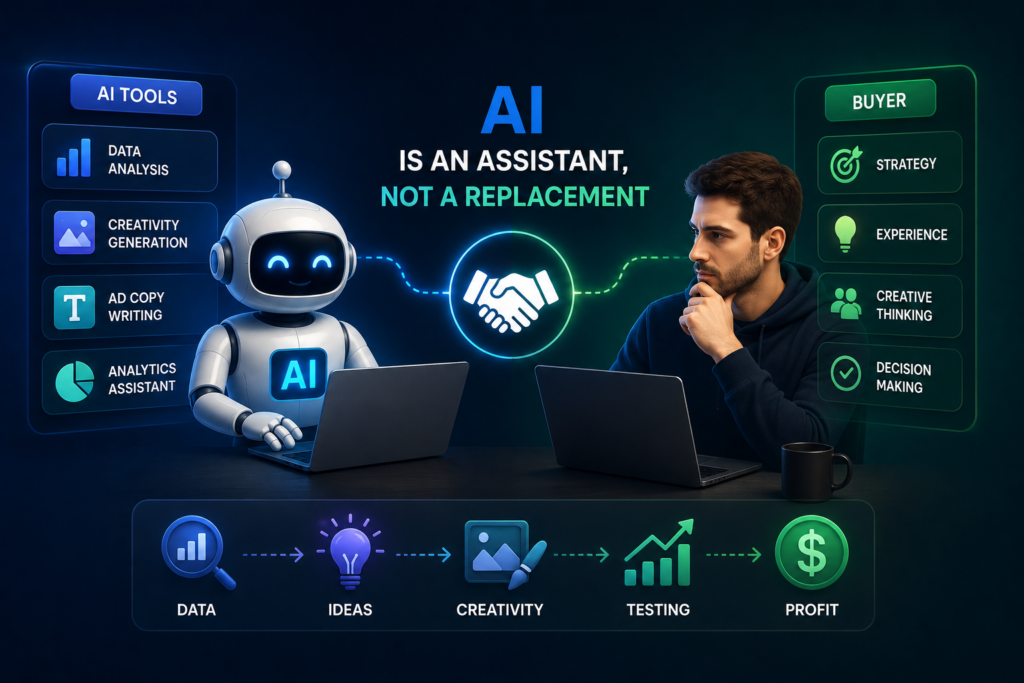
The era of passively waiting for clicks from search engines is coming to an end. The time has come for active participation in shaping the answers that AI assistants give to users – AEO. The winner is the one who thinks one step ahead and creates a content partnership with algorithms. The optimal strategy is a hybrid: use the speed and scalability of AI to create drafts and basic structure, but be sure to bring in human expertise to verify facts, add unique insights, and bring in real-world experience.

Thus, the key task for 2026 and beyond is to stop measuring success solely by the number of articles and positions. We need to start measuring it by the quality and usefulness of the information that artificial intelligence finds and approves. It is worth starting this transformation today, as it will help not only to adapt to change, but also to gain a significant competitive advantage in the new digital ecosystem, where traffic is controlled by algorithms.

AI in affiliate marketing: how artificial intelligence will change traffic in 2025

2025 has finally proven that artificial intelligence in affiliate marketing is not a temporary trend, but a key tool. Today, webmasters use AI to generate creativity, run accounts, combat bot traffic, optimize advertising campaigns, and even automatically manage link bundles. In essence, AI has become as basic a tool as proxy servers or anti-detection browsers.

AI in creativity development

Creativity remains the main factor in the success of an advertising campaign. With the help of neural networks, webmasters can now generate dozens of banner and video options in a matter of minutes.

AI helps to:

  1. Adapt visuals for different GEOs.
  2. Quickly test multiple versions of headlines.
  3. Create unique texts for landing pages.

AI in analytics and optimization

One of the most difficult tasks for webmasters is working with data. Classic analytics are often distorted due to bot traffic and the absence of cookies. Artificial intelligence allows you to more accurately predict user behavior and determine which combinations will work best.

AI is actively used for:

  • real-time CTR and CR assessment;
  • ROI forecasting at the start of a campaign;
  • automatic disabling of ineffective sites.

This accuracy of analysis makes AI an indispensable tool, especially when it comes to scaling campaigns. We wrote more about working with conversions here.

AI and the fight against fraud

Every webmaster is familiar with the problem of bot traffic and click fraud. With the help of neural networks, anti-fraud systems have become capable of recognizing up to 90% of suspicious clicks.

AI analyzes user behavior:

  • page scrolling speed;
  • depth of interaction with the site;
  • suspicious IPs and devices.

AI and account warming

Advertising accounts remain one of the most vulnerable areas in arbitrage. To reduce the risk of being banned, webmasters use AI to automate warming.

The neural network mimics the behavior of a real user: it likes posts, subscribes to accounts, and scrolls through the feed. As a result, the accounts look “alive” and pass moderation. We talked about why it’s so important to run in the article about farm Facebook accounts.

Automation of routine tasks

AI in affiliate marketing already performs tasks that used to take hours of manual work:

  1. Audience segmentation.
  2. Automatic creation of UTM tags

The future of AI in affiliate marketing

In the coming years, the role of AI will only grow. Systems are already emerging that can run a turnkey campaign: from creativity generation to budget reallocation between sources.

In essence, affiliate marketing in 2025 will no longer be just marketing, but a competition between algorithms. The winner will be the one who is quicker to implement new technologies and adapt them to specific offers.

Conclusion

AI is no longer a supporting tool but has become a key part of arbitrage. It helps webmasters reduce costs, combat fraud, optimize campaigns, and protect accounts from bans.

Artificial intelligence in affiliate marketing is not an “add-on” but already a basic standard. Those who continue to work according to old schemes are gradually losing their competitiveness.

What changes will ChatGPT bring to SEO in 2025?

Artificial intelligence, which has only recently appeared, is increasingly becoming a part of modern life. Its influence is most strongly felt in the areas of promotion, marketing, and affiliate marketing. AI has a direct impact on the rules and techniques of SEO – search engine optimization. ChatGPT is already actively involved in content automation and optimization. This saves a significant amount of time that specialists can spend on finding new, more effective ideas, optimizing existing strategies, and increasing content creativity.

What impact do AI and ChatGPT have on the SEO strategies used, what changes do they bring to content marketing, and what needs to be done to correctly and effectively adapt SEO methods to the new, changed realities?

seo

What impact does AI have on SEO?

AI is already capable of creating unique texts, making it a useful tool for marketing professionals. ChatGPT can be used to optimize the content creation process, making it more refined and effective.

Using AI SEO provides the following results:

  1. Increased amount of content generated. By automating routine processes, you can significantly speed up the process of creating and editing text materials.
  2. Reduced content preparation costs. Organizations now have the opportunity to invest their time and money in developing analytics and finding strategic solutions instead of spending it on manual text creation.
  3. Increased competitiveness. Creating high-quality content using artificial intelligence allows you to rank higher in search engine results thanks to good optimization of text material for currently used algorithms.

How does AI affect content creation?

The use of ChatGPT significantly expands the possibilities for content marketing, allowing you to optimize the process of creating relevant content and increase its volume. With its help, a skilled specialist can quickly fill blogs and websites with relevant, useful material, meeting the needs of ever-increasing demand. For this process to be as effective as possible, it is important to do everything correctly, making full use of all the possibilities offered by AI.

Saving money on content creation using this approach frees up budget for other important tasks: market analysis, advertising campaign optimization, etc.

However, it should be noted that the new opportunities available to all marketing specialists have also led to a massive increase in competition.

Therefore, to remain competitive, it is important to be able to make important decisions quickly and think more creatively than your competitors.

Will software SEO become the standard?

According to experts, in the near future, software SEO, in which tasks are automated using artificial intelligence, will become an essential part of marketing strategies.

Its use will solve the following tasks:

  • SEO automation. Tools used by artificial intelligence can analyze keywords, optimize metadata, adjust the structure of text materials, and generate targeted descriptions. All this helps simplify and significantly speed up the work of SEO specialists;
  • optimization of content. ChatGPT is capable of adapting content to changing search engine requirements, taking into account user preferences and updated ranking algorithms;
  • strategic software solutions. Using the capabilities of AI, it is possible to develop comprehensive SEO strategies that will allow artificial intelligence not only to create exclusive content, but also to make it more effective.

In the new reality, which requires higher demands on the speed and quality of information processing, the use of artificial intelligence will become critically important.

What changes will affect Google’s ranking algorithm?

The algorithms used by search engines are constantly being improved. This process has become even more intense with the advent of AI technologies. How has all this affected Google’s ranking algorithms?

  1. Content understanding. The development of semantic search methods will allow search engines to analyze both keywords and the meaning of text and its logic.
  2. Key ranking factors. Search engines will begin to attach importance to both technical parameters and the author’s expertise and depth of analysis.
  3. Google SEO. Improved algorithms will begin to monitor the quality of content, its relevance to user queries, its informational content, and other similar nuances.

What changes will occur with external SEO factors?

  • The importance of the quality of external links used will increase.
  • The significance of comments, reposts, and other social signals demonstrating the level of user trust in content and its popularity will increase.
  • Artificial intelligence systems will be able to evaluate the quality of external content, analyze its relevance and reliability, and influence ranking algorithms.

Google’s attitude towards content authorship

The authorship factor will become increasingly important in text content, especially in expert and thematic content. This will manifest itself in the following changes:

  1. Authoritative sources backed by expertise will gain an advantage in search results.
  2. Articles signed by authors contain more reliable information, so they will appear higher in search results.
  3. Due to the active use of artificial intelligence, priority will be given to materials that have been thoroughly checked by experts.

How will these changes affect SEO?

Search engines will establish new, modified standards that will determine the quality of content:

  • Priority to everything new. Search engine algorithms will give preference to original, fresh content.
  • Quality and originality of information. Against the backdrop of the huge amount of content generated by artificial intelligence, search engines will give preference to unique, expert texts. Such material is very difficult to generate automatically, so its use will become the key to success;
  • fragmentation of search results. Due to the increase in the amount of information, search results will be fragmented. Users will be able to find answers in different niche sources. As a result, competition will become fiercer in narrow topics, forcing marketers to change their strategies.