TikTok and Gambling in 2026: How to Adapt to New Filters

TikTok’s modern algorithms have learned to instantly recognize standard advertising videos. Old methods of driving massive traffic have stopped working. Webmasters have to become true magicians to create truly great content. Now, those who can portray gambling as part of everyday life rise to the top, so that the algorithms don’t distinguish such videos from everyday posts. Account reputation and content quality have become more important than bet size.

A meticulous approach to theory

Direct advertising of slots in 2026 instantly leads to account suspension. TikTok’s neural networks are trained to recognize casino interfaces and typical winning sounds, even if the video has been heavily edited. There’s only one way out: stop selling the game and start explaining it.

Instead of a video showing a big win, the publisher releases a video explaining how slot machine math works. Content discussing return-to-player (RTP) percentages, volatility, or verifying a casino’s license is considered useful educational content by the algorithms. Such content is perceived by the system as valuable and receives greater reach. In addition, it builds a higher-quality audience. You can read more about the changes in moderation in this article.

Storytelling in affiliate marketing

In 2026, the “Deposit” button only causes irritation among users and gets blocked by moderators. People come to TikTok for emotions and other people’s stories, not for promises of easy money. That’s why aggressive creativity has been replaced by storytelling.

Today’s winning formula looks like a regular lifestyle vlog: “How I spent the evening waiting for my flight” or “My way to de-stress after work.” These videos contain no shouting or flashy numbers. There’s a person, their phone, and a calm account of the process. When gaming is presented as a form of leisure rather than a get-rich-quick scheme, moderators don’t see it as deception or a promise of profit. The creator sells an atmosphere, not an offer—and that’s exactly what allows these videos to rack up millions of views.

UGC Features

If a video looks like an ad, it dies within 10 minutes of being uploaded. In 2026, TikTok’s neural networks flag professional editing and studio lighting as a threat. That’s exactly why content from ordinary people has become the only way to turn a profit.

A video shot on an old iPhone with shaky hands, in a dimly lit room, and full of genuine emotion appears in recommendations 10 times more often than a polished designer video. The algorithm considers this natural user behavior. When a person simply shares their evening or their emotions from a game, the system doesn’t see an attempt to sell something. In 2026, webmasters no longer buy creativity from designers: they hire real people who record reviews of their lives. It’s cheaper, more natural, and safer for accounts.

A Surprise from Google Ads

Google has prepared a major surprise for gambling teams. Starting March 23, 2026, new certification rules for gambling will take effect. The main change: the introduction of the concept of “healthy policy reputation.”

Now Google grants permission for gambling ads by evaluating the account’s past history.

Whereas previously it was possible to create a new account and immediately apply for certification, the system now checks the entire history of the managing account (MCC). If there are traces of banned accounts or revoked certifications for sub-accounts, the entire MCC is blacklisted. It becomes impossible to obtain a new certificate, and existing ones may be revoked “by association.”

Google states explicitly: “We look at the total number of violations within your manager.” If a team is accustomed to operating on a massive scale and using unethical methods, its infrastructure will collapse starting March 23.

Such changes require a complete overhaul of the infrastructure. More details on the impact of moderation on the market are discussed here: https://affcommunity.org/en/how-affiliate-marketing-changed-after-google-and-meta-tightened-their-moderation-in-2026/ 

Results of the Update

The main consequence of the March update is the end of the “disposable accounts” approach. Previously, it was possible to lose accounts in batches and open new ones within a single master account. Now Google is introducing collective liability.

The master account transforms from a convenient folder into an asset with its own reputation. A single inexperienced specialist on the team who makes a mistake with creativity and gets several certificate blocks can nullify the work of the entire agency. If an MCC has a bad reputation, Google simply blocks access to gambling traffic. Because of this, account farming and running the account to warm it up become much more expensive, and entering the niche for newcomers is practically impossible.

Checklist for changes

To prevent the infrastructure from collapsing, the approach to running traffic needs to change:

  1. Strict isolation. You cannot mix “dirty” tests of new ad groups with a stable traffic flow in a single MCC. Separate, unrelated management accounts are required for experiments.
  2. Forget about subdomains. Google has stated: sites on website builders and third-party hosting (e.g., casino.mysite.com) will no longer pass certification. You need to purchase clean second-level domains and verify ownership.
  3. Monitoring certificate revocations. Keep track of the percentage of revoked certificates within the network. As soon as it starts to rise, immediately suspend operations on that MCC until it receives a permanent black mark.
  4. Quality is more important than quantity. In 2026, it’s more profitable to launch 5 perfectly clean accounts with a good history than 50 “gray” profiles that will get banned within an hour and ruin the reputation of the entire structure.

Even with perfect content and a clean reputation, you can’t operate blindly. Webmasters are advised to maintain a separate spreadsheet or dashboard tracking each account: creation date, traffic sources, bounce rate, and link lifespan. This allows you to notice in time that a particular account has started to “limp” and disable it before it ruins the statistics of the entire MCC. Without such analytics, the team risks losing dozens of accounts in a single week without even understanding what the cause was.

Brief Conclusion

By 2026, affiliate marketing in the gambling sector will no longer be a quick way to make money. TikTok and Google want to see only high-quality market players.

Those who learn to create authentic content featuring real people, tell compelling stories, and maintain the health of their ad accounts will reap the greatest profits. Spring 2026 will act as a filter, leaving only professional teams with a clean reputation in the market. Those who master these rules now will take all the traffic away from those who continue to operate the old-fashioned way.

Affiliate marketing through Google Ads in 2026: working approaches and real risks

Working with Google Ads in affiliate marketing has always been more difficult than with most other sources. But that’s exactly why there’s still a lot of money to be made there. The traffic is high quality, the audience is solvent, and the scale can be very large with a successful combination.

The problem is that this source is not about quick tests and aggressive experiments. Mistakes here quickly result in account bans or complete advertising shutdowns.

The main change in recent years is that moderation has begun to look more deeply at the entire user journey. Previously, it was enough to write an ad carefully. Now the system analyzes both the landing page and the user’s behavior after clicking.

Search remains the most stable source

Classic search traffic still works best. The user is looking for a solution to their problem themselves, so the conversion rate is usually higher than in other types of advertising.

But competition has grown. Many niches are already occupied by large advertisers with big budgets. As a result, small teams have to look for narrower queries and non-standard approaches.

Long search phrases usually work better. They generate less traffic, but the audience is more targeted.

Content sites and landing pages are still used

In Google affiliate marketing, they rarely run straight to the offer. More often, an intermediate page with content is used. This can be a service review, a product comparison, or a regular informational article.

Such pages look more natural for moderation and inspire more trust in the user. Plus, there is an opportunity to run the audience before moving on to the offer.

But it is important that the content looks normal. Websites with template texts and aggressive promises are now quickly getting into trouble.

We recommend using proven services for creating White pages. The best results are achieved with manually assembled White pages from the Money Safe service. No templates, no auto-generation.

Domain and site reputation have become more important

Algorithms now pay close attention to domain history. A new domain without a reputation is more likely to be subject to additional checks.

If a site was created yesterday and advertising is launched immediately, the likelihood of rejection is higher. Therefore, many webmasters use domains with a history or gradually fill the site with content before launching advertising.

This increases the preparation time but reduces the risk of problems.

We would also like to note that the Money Safe service provides a domain with a history and high-quality hosting, with the entire setup on the service side. You will need to send the technical specifications and wait about 1 hour.

The most common problem is account blocking

In Google Ads, you can lose your account even without a clear violation. Sometimes the system considers an advertising model risky and simply suspends the account.

This happens especially often in the following niches:

  • finance;
  • crypto;
  • gambling;
  • certain nutra-products.

Once blocked, it can be difficult to restore an account. That’s why experienced teams always work through multiple advertising accounts and try not to run overly aggressive campaigns.

Find trusted services for buying/renting accounts in our “Services” section.

The price of a mistake is higher here

Google provides high-quality traffic, but the cost per click is high in most niches. If the campaign is not well-developed, the budget can be depleted very quickly.

Therefore, before scaling up, several options for landing pages, ads, and key queries are usually tested. Only after that do they begin to increase the budget.

Conclusion

Affiliate marketing through Google Ads has not become easier. On the contrary, it has become more difficult to enter this source, and the requirements for ad quality have increased.

However, the platform remains one of the strongest sources of paid traffic. Those who have learned to work with moderation, high-quality landing pages, and accurate advertising campaigns receive a steady stream of customers.

This source involves less chaos and more systematic work. That is why many experienced webmasters continue to actively use it, despite all the difficulties.

How affiliate marketing changed after Google and Meta tightened their moderation in 2026

2026 was the moment when “running in the dark” officially died. If before it was possible to get by with a combination of “aggressive creativity + padding + fast account rotation,” now it’s almost a guaranteed path to being banned in a couple of days.

The tightening of rules by Google and Meta is not just a matter of new wording in the rules. It is a systematic cleansing of the market. And those who are serious about affiliate marketing have had to rebuild.

Farming is no longer the solution

Previously, the logic was simple:

if an account was banned, we bought the next one and scaled up further.

Now the platform looks not only at the account, but also at:

  • behavioral patterns;
  • domain history;
  • creativity repetition;
  • network links between BM and advertisers;
  • even the similarity of landing pages in terms of structure.

If you run the same scheme across 20 accounts, the algorithm will see it.

Mass farming is no longer a “safety net.” It has become a consumable.

It’s not those with 200 accounts who survive, but those with a normal infrastructure.

Creativity is now filtered at the level of meaning

Previously, it was possible to play on the edge:

embellish a little, simplify a little, press a little on the pain.

Now algorithms read not only the text, but also the semantic model.

Especially in:

  1. nutra.
  2. financial offers.
  3. gambling.
  4. cryptocurrency.

Any hint of guaranteed income, pressure on fear, manipulation — hello, rejection.

And the most unpleasant thing is rejection without specifics.

“Policy violation” and that’s it.

As a result, creativity has become:

  • less aggressive;
  • more native;
  • more like regular content.

CTR is sometimes lower, but they live longer. And in 2026, that’s more important.

The White page has become not a formality, but a filter

Previously, many people did White pages “for the sake of it.”

Now, a bad White page is a minus for the credibility of the whole bundle.

The algorithm looks at:

  1. whether the message of the ad matches the landing page.
  2. whether there are real contacts.
  3. whether the site structure is normal.
  4. whether there are hidden redirects.

Any inconsistency = increased risk.

And yes, cloaking has become much more dangerous. Schemes from 2023–2024 simply don’t work anymore.

We advise you to use only proven services for creating White pages. We recommend using the Money Safe service. Only manual assembly, no templates, only domains with a history + hosting. Use the promo code AFFCOMMUNITY to get a 10% discount on all rates.

The entry threshold has increased

If earlier it was possible to enter with a minimal budget and “test the market,” now the test is more expensive.

Why:

  • more deviations;
  • slower acceleration;
  • more difficult to run an account;
  • higher domain requirements.

Affiliate marketing has become more capital-intensive.

Inexperienced beginners often simply disappear at the moderation stage.

Systematic approaches survive, not chaotic ones

In 2026, it’s not about “running 100 units of creativity,” but rather:

  • 5–10 well-thought-out hypotheses.
  • Normal analytics.
  • Server tracking.
  • Clean account structure.

Those who understand unit economics and the user journey feel much more at ease.

Now, LTV and repeat touches are more important than quick “run and exit.”

Diversification is not a buzzword, but a necessity

Depending on a single source is dangerous.

Many have started:

  1. downloading their Telegram channels.
  2. developing SEO projects.
  3. testing alternative networks.
  4. building their own bases.

Platforms are tightening their rules, which means you need to build assets outside their control.

What does this mean for webmasters?

  1. Affiliate marketing has become less “gray.”
  2. Scale is now based on infrastructure rather than the number of accounts.
  3. It is almost impossible to work without analytics.
  4. Long-term projects have become more profitable than quick shots.

Most importantly, the market has matured.

If affiliate marketing used to look like chaos and constant fire, now it’s more about strategy. Yes, entry is more difficult. Yes, margins are sometimes lower. But those who have adapted are earning more stable income than in the era of endless farming.

AI content and Google ranking

Google does not block texts created by AI. The company has clearly stated its position: it is not the author of the text—whether human or neural network—that matters, but its quality. The main criteria remain usefulness, originality, accuracy, and focus on the needs of real readers.

This article explains how to safely use artificial intelligence in your content strategy while avoiding penalties, as well as how to optimize texts for effective ranking.

Why doesn’t Google penalize AI content if it is of high quality?

The common myth that “AI content = automatic penalties” still causes concern. However, the search giant’s position remains unchanged:

Google does not penalize AI, only low quality.

Therefore, the focus should shift from the question of the admissibility of the tool to the evaluation of the published content and its compliance with EEAT criteria. That is, superficial articles with no real value, texts mechanically filled with keywords, identical structures, factual errors, and AI “hallucinations” are guaranteed to lead to sanctions. But the following have every chance of achieving high rankings:

  • original texts with expert analysis and insights;
  • materials that solve user problems;
  • content where AI is only a tool under full human control;
  • hybrid texts: a draft from AI + in-depth editing and fact-checking by an expert.

Modern Google algorithms (Helpful Content Update) have learned to evaluate user satisfaction rather than the source of the text. If a visitor finds an answer, spends time on the page, and does not return to the search, this is the main signal of quality, regardless of how the material was created.

The main risk when working with AI is not sanctions, but an imperceptible slide towards average, unremarkable content that gets lost in the crowd. Such text may not be penalized, but it will never take a leading position, as it does not offer unique value.

How to use AI safely

The strategy for creating useful, high-quality, and Google-safe content includes several mandatory steps.

Adding human experience (E in the EEAT model)

Artificial intelligence does not have personal experience, stories, or practice. For text to gain authority, it must integrate:

  1. Real-life cases.
  2. Highly specialized nuances unknown to broad AI models.
  3. Conclusions from personal tests and experiments.
  4. Unique author’s vision or recommendations.

Such insights make the content unique and help avoid a faceless “AI style,” which is positively evaluated by algorithms. Pages enriched with personal experience demonstrate lower bounce rates and higher engagement, which directly affects ranking. Algorithms interpret these behavioral signals as signs of usefulness.

Fact checking and data updating

AI can operate with outdated information or make factual errors. Inaccuracies are one of the key reasons for losing positions. After generating a draft, the following must be checked:

  • statistics and numerical data;
  • dates of events and updates;
  • definitions of terms and concepts;
  • correctness of sequences and instructions.

Google rewards accurate and up-to-date content, especially when backed up by fresh data.

AI – for drafts

Neural networks are effective at the stage of creating the structure and the first draft. The final quality and depth are provided by humans. In simple terms, AI is suitable for quickly generating the first version of the text, paraphrasing, and building a logical structure. At the same time, the following must be revised by humans:

  1. Lively, natural tone.
  2. Detailing and deepening of topics.
  3. Adding relevant examples.
  4. Accurate correspondence to search intent (user intent).
  5. Natural integration of keywords and SEO optimization.

This balance creates content that meets Google’s expectations for AI-enhanced materials. The figure of the editor or subject matter expert becomes central to the production cycle. Their task is not just to correct commas, but to conduct a thorough audit of the draft for depth of coverage, identify gaps in logic that AI has filled, and add that “10% of unique insight” that turns good text into outstanding text.

Natural optimization for key queries

The integration of key phrases related to AI content should be organic. Keys fit logically into the text rather than being added artificially.

Avoiding a “machine” style and clichés

Algorithms do not identify the origin of the text, but rather its low quality: dryness, monotony, incoherence. Before publishing, it is worth evaluating:

  1. Does the text sound like the work of a real author?
  2. Are potentially complex points explained clearly enough?
  3. Are there any semantic repetitions?
  4. Is there any practical benefit for the reader?

Positive answers to these questions mean that the text has passed the basic filters. One effective method of combating clichés is to mentally translate the finished text into another language and then back into Russian, assessing how natural and idiomatic the wording sounds. This often helps to identify and rewrite cumbersome or lifeless constructions characteristic of AI.

Eliminating repetitions and “fluff”

A typical flaw in AI text is verbosity and duplication of ideas. After editing, the material should be concise, meaningful, and useful.

Creating an easy-to-understand structure

Modern SEO is unthinkable without readability. Both users and algorithms highly value:

  • short paragraphs;
  • clear subheadings (H2, H3);
  • bulleted and numbered lists;
  • step-by-step instructions.

This increases engagement and time on the page, which is a positive ranking signal.

Adding unique expert content

To stand out from the competition, the AI draft needs to be enriched with unique elements:

  • author’s case studies and practical examples;
  • self-created diagrams, graphs, infographics;
  • relevant screenshots and photos of processes;
  • local statistics or research data.

This significantly enhances the trust and authority of the material, having a direct positive impact on SEO results. Advanced practitioners no longer work with AI “out of the box.” They invest time in creating detailed briefs, examples of the desired style and tone, training the model on their best texts. This reduces the amount of subsequent editing and improves the quality of the draft, making it more relevant to the brand voice and expert position.

Conclusion

A successful content strategy for the future is built not on fear of tools, but on their competent use in conjunction with human expertise, thorough verification, and a focus on creating real value for the end reader. Soon, the division between “AI content” and “human content” will finally lose its meaning. The focus will remain solely on high-quality content created by an effective “human + AI” team.

What to do if an iGaming website loses Google’s trust

Working in the iGaming industry in 2026 is like playing a game with a giant who constantly changes the rules. That giant is Google. Its algorithms are updated at lightning speed, and websites that were at the top of the rankings just a short time ago can disappear from search results without a trace. In such an environment, the key skill for a specialist is not just speed, but the ability to recognize the subtle signals of their project that warn of impending problems several weeks in advance.

In professional circles, there is a widespread opinion about seven key signs. These signs indicate that the search engine has lost trust in the resource. The presence of even three of them is considered a serious cause for concern.

How to determine that a project has lost Google’s trust

As a rule, all visibility issues form a whole set of symptoms that together paint an alarming picture. Here’s what an owner or optimizer should pay attention to first:

  1. Content in a vacuum. A new article or page on the project seems to fall into a black hole: it is not indexed for weeks or appears in search results with a month-long delay. Google simply ignores fresh content. As experts note, this is a direct signal of a decline in interest in the domain.
  2. A fall without brakes. Small fluctuations in positions are considered normal. But when the graph in Search Console stubbornly and continuously creeps down, and no measures help, this is a bad sign. It seems that the algorithm has “remembered” the resource in a negative light.
  3. The resource is losing its leading role. If, when you enter the name of your own company or brand, third-party pages, partner materials, or competitors’ sites appear at the top of the search results, this is critical. Trust is completely lost when Google stops considering the domain as the main source of information about itself.
  4. A wall of misunderstanding. The owner puts effort into improving the site: rewrites texts, adds multimedia. However, the positions remain unchanged. This means that Google has stopped noticing the efforts, as if building a deaf wall around the resource.
  5. Dead night. The iGaming niche is characterized by nightly updates to search results. If the resource’s nighttime search traffic drops to zero, this is an alarming sign. The search robot has stopped actively scanning and reevaluating it, removing it from its field of attention.
  6. Visitors are fleeing. A sharp increase in the bounce rate and a decrease in behavioral metrics (view depth, time on site) are instantly recorded by Google. For the algorithm, this means that users have found better answers elsewhere, and the project’s content no longer retains them.
  7. Breakage of one detail. Sometimes it is not the entire site that disappears from the search, but a certain type of page, for example, all game reviews. This indicates that the algorithm has recognized and blocked a specific template, considering it to be of poor quality. The problem is localized in a specific segment.

Ignoring these signals is like doing nothing when smoke starts coming out from under the hood. The longer a specialist delays their response, the more expensive and difficult the “repair” becomes. It is necessary to take preventive action: otherwise, very soon, affiliate marketing from this resource will cease to yield any results.

In many ways, such signals have begun to appear because search engines are increasingly using machine learning and neural networks to evaluate the quality of websites. Algorithms analyze not only links and texts, but also user behavior, content structure, and the overall expertise of the resource. You can learn more about how artificial intelligence affects search engine algorithms by looking at real examples of recent updates.

How to regain Google’s favor without investing in links

The traditional scheme of “create a website – buy links – get traffic” practically does not work in 2026. Google has learned to recognize artificiality. The new effective strategy is more subtle: first, you need to make the search engine believe in the audience’s natural interest in the topic, and only then present the main project to it.

The essence of the method is to create organic “buzz” around the target topic on the web. Instead of directly promoting the site, the specialist initiates discussions on various platforms. When Google is convinced of the liveliness of the topic, the main resource is brought in under this formed interest.

The issue of link profiles in gambling deserves special attention. Despite the fact that mass link buying is losing its effectiveness, external factors cannot be completely ignored. It is important to understand how closed site networks are built today and what measures can protect them from filters

Preparing the ground

At this stage, it is necessary to quickly create several simple points of presence on the network that will set the desired context. It is similar to preparing a field before planting:

  • creating draft pages. A specialist creates simple pages on free platforms (Google Sites, Medium). Their task is to be quickly indexed and to designate the semantic core of the future topic;
  • Launching organic discussions. Find thematic forums and communities where gambling is discussed. Initiate a conversation in them: ask questions, request advice, and exchange experiences. Mention the key terms of the future main site.
  • Forming a point of attraction. Create a Telegram channel or chat on the topic. Useful content is published there, occasionally referring to prepared draft pages. Activity in the form of answers to questions on Quora also gives resources real traffic from different sources, which is highly valued by the algorithm.

The goal of this stage is not direct advertising, but the formation of a natural information background.

When creating supporting pages, the quality of the texts is of particular importance. Over-optimized or template AI content is easily recognized and does not have the desired effect. Therefore, it is important to understand how to work with AI texts in order to stay at the top without causing distrust in algorithms and without reducing the value of the material for users.

Boosting activity

Now you need to show the search engine that there is a lot of activity around the topic. Since Google’s algorithms evaluate not words, but the actions and interest of users, the combination of the following factors is especially important:

  1. Ensuring modest live traffic. The goal is to ensure a total of 50-70 visits per day to all draft pages. Traffic should be distributed, coming from different sources: Telegram channels, forums, social networks. This serves as proof of real interest.
  2. Regular updates. Once every one or two days, minor edits are made to the auxiliary pages: typos are corrected, dates are updated, and new items are added. For Google, this is a signal that the resource is relevant and maintained.
  3. Imitation of natural chaos. Instead of spamming with the same type of links, activity should be varied: a reply on a forum one day, a post on a channel the next, a comment the third.

The more random and natural the movement around the resource looks, the higher the credibility for the algorithm.

The main character’s exit

Rushing is harmful here. The optimal time to launch the main site is in 3-5 weeks, subject to the following conditions:

  • 7-10 draft pages are consistently ranked for target queries;
  • organic transitions are recorded on them;
  • Google begins to offer suggestions in the search bar based on the content of these pages.

48 hours before the official launch of the main domain, a temporary mass migration is set up. For two days, all draft pages (from Medium, Google Sites) use a 301 redirect to redirect traffic to the new main site. Google records a sharp spike in transitions from familiar and trusted resources to the new address. For the algorithm, this becomes a signal: “It looks like this is the official platform for this topic!” After 48 hours, the redirect is disabled.

Instead of a conclusion

In 2026, promotion in iGaming is like staging a complex performance for a search algorithm. The specialist first works behind the scenes: preparing the scenery, spreading rumors, and stimulating discussion in the “auditorium.” And only then, when the interest of the audience (users) has been formed, does the main character—the target site—enter the stage.

Seeing the prepared ground and the interest shown by the audience, the algorithm welcomes the new “actor” with much greater trust. This path requires strategic patience, but it leads to stable traffic that will not collapse with the next algorithmic update. After all, it is not based on technical tricks, but on creating a picture of natural interest that is plausible in the eyes of Google.

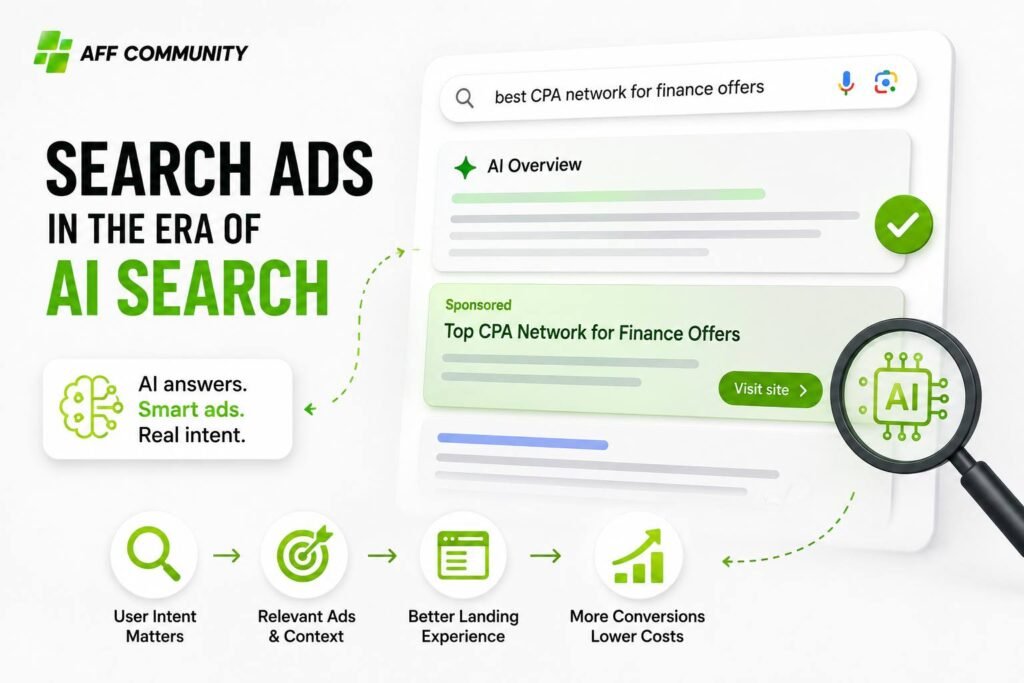
How AI has transformed search results: what is AEO, and can it replace SEO?

Classic SEO is undergoing a major transformation. Just a couple of years ago, getting to the top of search results required minimal effort: all you needed was an article with relevant keywords and a couple of links. Although this opportunity has partially remained, a new reality has emerged in parallel. In this reality, artificial intelligence independently decides what information to show first.

Today, users turn not only to Google Search, but also to AI Overviews, ChatGPT, Copilot, and Perplexity. This shifts the focus from SEO to AEO — a new approach to content creation. Its goal is not just to get into the search results, but to become part of the answer generated for the user.

SEO vs. AEO: the key difference

Classic SEO aims to get clicks from organic search through keywords, meta descriptions, links, and relevance. AEO optimizes content so that it becomes a source for the answer that the user sees directly in the AI assistant interface, bypassing the usual results. Examples: AI Overviews in Google (generative response + sources), Copilot in Bing (hybrid search and generation), ChatGPT with web access (answers with links). Research shows that today, about 65% of search queries end without clicks, as a brief AI response is sufficient for the user.

How AI selects sources

The success of AEO depends on the ease of processing AI content. Models use an approach that combines data from the internet with their own knowledge. The selection of sources for citation is not a random process; it is subject to specific criteria that developers build into algorithms. The most significant factors are:

  • clear structure: subheadings, formatting;
  • conciseness: preference for short answers (2-3 sentences);
  • relevance: new content has priority;
  • authority: AI more often cites sources with well-structured, understandable content.

Understanding these criteria is the first step towards creating content that AI systems will consider reliable and worthy of inclusion in their response.

New performance indicators

Whereas CTR (click-through rate) used to be the main factor, it is now critically important to get into the AI response itself. AI often does not show an explicit link, limiting itself to text and a source icon. Even being in the top 3 in organic search does not guarantee clicks. This requires a revision of success metrics. The focus is now on indicators directly related to how actively AI uses content as a source of useful information:

  • frequency of appearance in AI Overviews or Copilot responses;
  • mentions of the brand/domain in responses (even without a click);
  • position as a source.

These metrics are becoming the main indicators of visibility in the new paradigm. Specialized monitoring tools are already emerging that can analyze how successfully content is integrated into the ecosystem of generative AI responses, confirming their importance.

Creating content for AI output

Recommendations for adapting content are based on analysis of practice and research. A striking example is the work of Lauren Wells Medley (Director of Channels and SEO), who studied 3,000 citations in Google AI Overviews. Her analysis revealed key patterns to consider:

  1. 32% of citations are structured lists.
  2. AI prefers short paragraphs with clear answers.
  3. Including the year in the title increases the chances.
  4. The peak of citations is in the first 2-3 days after publication.
  5. Frequent sources: YouTube, Wikipedia, LinkedIn.

This data is not just interesting — it forms the basis for a practical strategy for creating content focused on AI citations.

Key optimization principles

Based on the identified patterns and understanding of how AI works, specific recommendations have been formulated for authors and optimizers:

  1. Answer at the very beginning. A clear, concise answer to the main query — right in the introduction, then details.
  2. Structure. Use subheadings (H2-H3), short paragraphs, clear formatting.
  3. Semantic markup. Add Schema.org for better AI understanding.
  4. Facts instead of slogans. Clear facts and examples are more valuable than marketing phrases.
  5. Relevance. Regular content updates are critical due to the peak in citations in the first few days and algorithms’ preference for fresh data.

Following these principles significantly increases the chances of content being selected by AI as an authoritative source that shapes the final answer to the user.

The symbiosis of AEO and SEO

It is important to emphasize that AEO is not a replacement, but an important addition to traditional SEO and the original concept of GEO (Generative Engine Optimization), which focuses on AI building answers based on specific content. Effectiveness depends on the type of query and the specifics of the topic. Choosing the right combination of methods is the key to maximum audience reach in modern search ecosystems.

Caution when implementing AEO

The transition to AI optimization requires a balanced approach to avoid common mistakes. Two key pitfalls are particularly dangerous:

  1. Don’t sacrifice quality. Content consisting of dry facts without depth, analysis, or unique value may be cited by AI, but it will not inspire confidence in users who decide to visit the site.
  2. Ignoring the technical foundation. Load speed, smartphone adaptation, and site security remain critical for both traditional SEO and the ability of AI crawlers to process content effectively.

Finding a balance between clarity for algorithms and genuine value for people is a new, complex, but necessary task for content marketers and SEO specialists.

Conclusion

Experts agree: AEO is not seen as a replacement for SEO, but as its natural evolution in the era of AI assistants. Content that is competently adapted to their requirements provides a unique opportunity to be noticed and cited even without direct user clicks. The battle for traffic and attention now begins not in the organic search results list, but in the text of the response generated by AI. Adapting web pages to this new reality, where AI is the main arbiter of information quality, is not a question for the future, but an urgent necessity today. The harmonious integration of AEO principles into existing SEO strategies is becoming a fundamental guarantee of online visibility.

Google’s marketing revolution is coming

Google Ads is planning a transformation in 2025 and making AI a mainstay in digital marketing. Brandon Craigham states that this transformation will change the way businesses interact with customers in a big way.

AI will change search engine marketing

Google officials have talked about a “seismic shift” in the areas of search and customer interaction with businesses. Advertisers need to quickly adapt to the new environment to retain their customer base and not lose their advantages.

The main options for change

Google is focusing on 3 main aspects. These are the use of AI tools, search for information not by keywords, improved measurement capabilities.

Content creation with AI tools

Marketers will be able to create compelling content by applying the functionality of modern tools. Marketers will have access to functional AI tools. This feature will allow specialists to quickly adjust to changes in customer requirements and preferences.

Searching for information beyond keywords

User behavior on search engines is gradually moving towards multimodality. Users are no longer willing to enter traditional keyword queries, but are gradually moving towards images, videos, and text descriptions. Artificial intelligence tools will make the search for information more engaging, intuitive.

Improved measurement capabilities

With AI, data will be more accurate and methods for analyzing campaign performance will be improved. AI will be used to optimize the effectiveness of marketing strategies.

What is the importance of AI revolution

The AI revolution is expected to positively impact the way users find the services and products they are looking for. Key changes for advertisers:

  • Need to take full advantage of the new AI tools.
  • Mastering new technologies will give advertisers a big advantage.
  • It is necessary to optimize and test advertising campaigns even when initial results are far from ideal.

If advertisers ignore important changes, it can be the main reason for losing competitiveness. You need to adjust to the new operating environment to compete with other businesses in the new digital environment.

Google’s new 2025 initiative

The CEO of Google has developed his own strategy. Part of Sundar Pichai’s strategy is to scale the popular Gemini platform. There is a good chance that the platform will integrate into some advertising products. These products are:

  • Demand Gen;
  • Opportunity Search;
  • Performance Max.

The main advertising products are created on the basis of artificial intelligence. The use of AI tools does not mean that user data privacy rules will be violated.

Features to prepare for the future

Artificial intelligence in 2025 enters different spheres, search marketing will be no exception. Businesses need to immediately start preparing for the introduction of new technologies in order to continue competing in their direction. Businesses can experiment with Google tools and adapt strategies to the new rules of operation.

The technological revolution gives brands a good chance to improve audience engagement. The digital world is changing rapidly, so businesses always need to keep up with the innovations.

Very soon we will see a promising future of digital marketing. Any business will work more efficiently if it can “make friends” with innovative AI technologies.

Google data leak reveals the ins and outs of search rankings

A document called API Content Warehouse has been leaked in Google’s search engine. This important document contained links to internal pages and private Google repositories. The voluminous document Google API (2500 pages) describes in detail the features and mechanisms of the search engine. The information obtained allowed SEO-specialists to learn a lot of interesting things.

The document contains data that the popular system uses about 14000 functions when ranking sites. Google pays special attention to the use of clicks, as well as behavioral factors. SEO-specialists claim that clicks are of great importance, and links and content are now in second place.

Basic ranking algorithms

Basic ranking algorithms

The data leak of an important document and some other factors have shown the peculiarities of ranking algorithms. As a result, the public statements of Google representatives raise a lot of doubts. It is necessary to pay attention to the key aspects that do not correspond to the company’s statements about ranking methods.

Chrome browser data

After the leak, it can be concluded that the company collects information about user behavior. The data obtained is used to evaluate website pages, domain resources. Through behavioral factors, Google can determine the most popular URL pages.

Features of user behavior

NavBoost is an important component of ranking. It is NavBoost that analyzes user clicks and takes into account several important factors. These are duration of clicks, “bad clicks” and more. Based on the results of the analysis, the search engine understands what users like and which pages of the site should be promoted.

NavBoost pays attention to the factor of Pogo-sticking, or quickly navigating to search results. Users who don’t find answers to their queries quickly return to the search. NavBoost also takes into account the length of time the visitor stays on the page. Such a parameter will help in determining the relevance and usefulness of a particular page.

Whitelisting sites

Google has whitelists dedicated to specific topics (e.g., travel). The company controls search results for problematic queries and counter-versions. Users will only see verified sources of information in their searches.

“Sandbox.”

Representatives of the company said that there is no “sandbox” and special restrictions for new resources. In the leak, experts found information about hostAge, which the search engine applies to “sandbox new spam”. The search engine uses the “sandbox” method for suspicious and new resources.

Domain authority

Google claimed that they do not apply Domain Authority in their algorithms. After the leaked document, it was revealed that the Q* system uses the siteAuthority metric. With the help of this multi-functional metric, the search engine determines the authority of a particular site.

Brand size

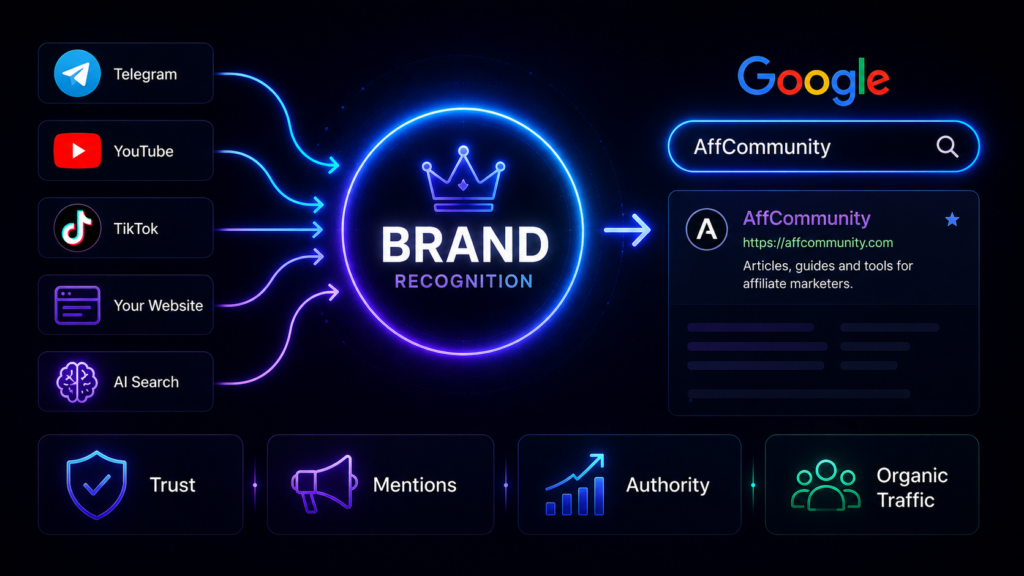
It is known that popular brands often occupy the first positions in ranking. To rank and identify the company, Google uses a variety of ways. The size of the brand is taken into account both by the official website and by the number of mentions of the company on the Internet.

EWOK data

The EWOK platform allows you to evaluate the quality of information search. Real users search for information, as a result of which their behavior is evaluated according to a number of criteria. The usefulness of the source and its relevance are necessarily taken into account. Google’s internal platform can directly influence the peculiarities of page ranking.

Additional nuances:

  • associating date with content. BylineDate is used to associate date and content. Additionally, Google uses semanticDate as well as syntacticDate (extracted from the title);
  • Font Size. The average font size of terms in links and documents is of particular importance when ranking sites;
  • use of keywords and original content. Search engine evaluates the originality of content, which is taken into account in ranking. Website positions improve when page titles are relevant to user queries;
  • Google skips small sites in the rendition. “Small personal sites” is one of the special flags of the popular search engine. In some cases, Google increases the ranking of sites, but more often resources are lowered in the output;
  • PageRank for all pages of the site. PageRank is necessarily displayed on the home page. PageRank of this page is taken into account for the rest of the pages until each of them gets a ranking system;
  • the value of links depends on the level of indexing. The sourceType metric will help determine the relationship between the value of a particular page and where it is indexed. Google’s index uses tiers according to which important and constantly updated content is stored in flash. For less valuable content, solid state drives are suitable. Standard hard disks store information that is not regularly updated. “Fresh” website pages are of higher quality compared to their older counterparts. Good ranking indicators are often received by news pages, as well as highly rated resources.

Lowering positions in ranking algorithms

Certain factors contribute to the lowering of page positions or demotion. Quality and relevance are strongly affected by negative factors. The latest data leak confirms that Google uses different algorithmic mechanisms to demote pages. The most popular mechanisms are:

  1. SERP Demotion – determines the potential dissatisfaction of visitors with a particular page.
  2. Anchor Mismatch – a mechanism that indicates the inconsistency of the link to the target site. In this case, the resource will be lowered in ranking.
  3. Porn Demotion – demonstration of pornography lowers positions.
  4. Nav Demotion – the tool works with pages characterized by poor user experience or inconvenient navigation.
  5. Product Review Demotion – a mechanism without specific information. The tool probably works given the recent update targeting product reviews.
  6. Other link demotions – deterioration of page positions due to links.
  7. Location Demotion – experts claim that “global” pages of a website can worsen their positions. Google starts associating web pages with location, and after that the ranking process is carried out.

The Google system ranks websites according to certain mechanisms. This should be taken into account by the professionals who are involved in page promotion. The leaked document shows the peculiarities and different ranking mechanisms of websites.

We have prepared useful recommendations for organic traffic growth in this article.

How to reduce your advertising costs in Google Ads

Reducing the cost of conversions and clicks is the most acceptable for advertisers. According to statistics, about 90% of advertisers do not optimize, which results in low efficiency of spending on online advertising. Among the main recommendations for optimizing Google Ads stand out:

  • using only effective and long keyword phrases;
  • separation of the search network for different types of sites;
  • application of targeting;
  • maintaining ad relevance to the landing page;
  • experimenting with time-based targeting;
  • improving landing pages;
  • implementing additional ad customizations;
  • using different bids for different types of devices;
  • enabling dynamic ads.

Keywords

To reduce the cost of clicks in the Ads system, it is necessary to use only relevant keywords to avoid showing ads to people who have absolutely no need for the promoted and offered products. An example is the word “free”, which should not be shown on commercial sites. As a result, applying the right and relevant keywords in Google Ads will reduce the cost per click. The ads will only be shown to potential customers interested in the product.

The effectiveness of advertising activities will also depend on the volume and length of keywords. For different types of keys, the price per click varies, for example, high frequency queries have high competitiveness and higher cost. Large companies mainly use high frequency queries. It is recommended to focus on medium to low frequency queries. The competition is much lower and the cost per click is much lower. Despite the more affordable price of medium frequency queries, the effectiveness of attracting interested users is better. The probability of successful conversions and click-throughs on medium frequency queries is quite high.

Target audience google ads

Target Audience

In order for the effectiveness of the promotion to be targeted to a specific set of individuals when including Google Ads, it is necessary to separate the search networks. Each target audience differs in the type of content the ads attract. It is necessary to create separate types of campaigns for search networks. It is necessary to show ads in places where the audience and potential consumers are most concentrated.

Target Page

The ad text should be tailored to the way the landing page is designed. You should also select the unique keywords for each ad group. Ideally, the keyword phrase should be repeated in headlines, landing pages, and in the ad text itself. This results in a better quality score and lower ad costs. To improve the landing page, you should:

  1. Conduct optimization for different devices.
  2. Eliminate promotion methods with questionable results.
  3. Fix errors in the codes.
  4. Add interesting content to the page. Useful for users, search engines.

Time targeting

Analyzing time intervals allows you to clearly determine the effectiveness of transitions in a certain period of time. In the future, you can set up displays in the future exactly by the hour, so will increase conversion and quality of advertising.

You can also use the reverse strategy, when you need to place ads in periods with low traffic. At this point in time, you can attract the audience that was missed by competitors. Such time targeting will reduce overall advertising costs. In large cities it is advisable to use retargeting when in certain areas concentrates the flow of conversions. Today you can set up targeting by country and region, neighborhoods, it is easy to set a radius around the exact area on the map.

CTR

The CTR ratio will increase if you supplement ad extensions. Through additional extensions in the form of links, contact details, structured information and other elements. The approach of augmenting extensions helps in improving the position against the competitors. Steps should be taken that ensure high ranking and getting better positions in the rankings by elaborating the site.

Conversion

User conversion will vary with the type of device used. The use of mobile internet and traffic has led to an increase in the cost of clicks from gadgets, smartphones. To optimize costs, it is necessary to create advertising campaigns for different types of devices. If you use dynamic ads for a specific target audience, the relevancy will increase. The cost per click is reduced by increasing the number of conversions on the basis of improving the quality of content.

Changing all the basic parameters, improving conversion, dynamic ads, careful work with the target audience increase the overall evaluation of advertising actions. As a result of improving every parameter, the offer for the client becomes attractive. New visitors will increase the company’s profitability.

Updated Google Ads requirements for casino advertising in Brazil

The introduction of new requirements by Google has caused some significant adjustments to the way Google Ads treats gambling and sports betting in Brazil.

What’s changed

Google Ads now permits online gambling advertising in Brazil. The permission applies to those operators who have obtained a license from the Brazilian Ministry of Finance and have been officially certified by Google Ads. A similar license is now required to advertise sports betting.

The following types of content are allowed to be advertised:

  • horse racing;
  • lotteries;
  • sites with comparisons of gambling services and links to them;
  • online gambling;
  • online sports betting.

In order to be able to advertise, advertisers will have to certify that they have sent a request to the Brazilian Ministry of Finance for authorization to provide internet gambling or online betting services. Advertisers should obtain the certification by applying through a special online Google form. Already existing lottery and horse racing operators should apply for certification in order to retain the ability to advertise. Gambling aggregators, regardless of their type, will no longer be able to advertise.

How to run ads on a casino in brazil

How do I get the opportunity to advertise?

To do so, the advertiser needs to follow the following steps:

  1. Submit a request to the Ministry of Finance of Brazil to confirm authorization.
  2. Complete Google’s application form for gambling-related activities.
  3. If necessary, have applications and sites reviewed for compliance with Google’s policies and Brazilian law.

Stages of implementation of the adopted law in the country

Only those companies that are already carrying out this activity and have requested the appropriate authorization before 30.09.2024 can wait until the end of this year. After 01.01.2025 only those companies that fully comply with the established requirements can continue to work.

From the beginning of 2025, only licensed operators will be able to operate in Brazil. They will need to use the Brazilian Internet domain with the extension “bet.br”.

Those organizations that have not requested permission will not be able to offer services related to the acceptance of bets from 1.10.2024. However, they will have to maintain their Internet resources in proper working order to allow users to withdraw money deposited earlier.

Licensed organizations will have to pay a licensing fee of six million dollars to start operating.

From the beginning of next year, all licensed operators will have to strictly adhere to the rules governing measures to combat fraud, money laundering and non-compliance with established advertising regulations.

Changes for advertisers

Advertisers will face the following changes:

  • reduced competition. The ban on aggregators and stricter requirements are likely to reduce the number of advertisers in this area, resulting in changes in advertising costs and reach;
  • making it more difficult to prove compliance. All advertisers will have to undergo Google certification and authorization procedures by the Brazilian government;
  • risk of exiting the market. Small operators and those companies that do not meet the requirements will have to stop advertising or leave the Brazilian market;
  • change in marketing strategies. The restrictions that have been imposed on Google Ads will force some operators to start looking for other marketing channels to help them attract Brazilian customers.

What’s going on with Google?

The giant company Google is constantly updating and improving. Site owners are forced to adjust to such updates in order to be “afloat”. In March of this year, google announced important innovations that affected the work of all sites. Innovations and changes in search engine algorithms are an additional reason to improve your site promotion strategy.

After reading this article, you will understand the latest Google updates and get useful tips on how to improve your SEO strategy. You will learn what ways to attract even more targeted traffic to your website.

You can find more useful content on our blog.

What's going on with Google?

Major changes in Google 2024

The Core Update algorithm has been changed. Spam Update has also received a massive update. Making updates affected the fact that Google changed the “rules of the game” on web resources of different topics.

After the Core Update, the top positions began to be occupied by sites that offer high quality content to visitors. The Spam Update affected the fact that users no longer view “trash” content.

What is the purpose of Google’s changes?

After the updates, the search engine has reduced the amount of spam and low-quality content. Users get useful, reliable, most relevant information. Sites with “junk” content are at risk because they are filled with information that is not useful.

Google’s updates started back in 2022. In 2024, Google developers said that the new changes would drastically affect SEO promotion. As a result, sites with low-quality texts will be blacklisted. The use of “black” SEO methods will also not lead the site to good results.

Owners of web resources should improve the SEO-promotion strategy. Sites with quality content and a well-thought-out strategy will be more successful than other web resources. “The SEO game” is becoming more and more interesting and complicated, and the first to get hit are sites with ‘garbage’ content.

What's going on with Google?

All the peculiarities of working with SEO

In search engines, social networks and online advertising platforms appear more and more restrictions. The “scope” of bans is shrinking, the amount of spammy content is minimized. Webmasters who want to stay competitive face these new changes. When working with SEO, specific techniques should not be neglected.

  • Useful, not empty text. In the past, texts used to contain many keywords that helped promote the page. Now the Google system likes texts not with promoted keywords, but with quality and useful information;
  • advertising on other people’s sites. In the past, all successful websites had ads placed by webmasters. In this way, webmasters promoted their web resources. In 2024, Google severely penalizes webmasters and owners of resources with inappropriate advertising for such actions;
  • use of “fake” sites. A few years ago, promoted sites were very popular. Now, the theme of the site must correspond to the posted content. If the topics of the pages are different, Google will simply block the resource.

Methods to stay afloat

The quality of content is an important parameter when ranking sites in Google. If the webmaster does not get into the “blacklist”, then the site takes high positions when ranking. Three main ways will help you always stay afloat when promoting a web resource.

  1. The right choice of drop-domains. Pay attention to the subject of the previous content. Look for domains on the Internet that have been used for resources of similar topics. This way, you will be able to keep the connection between the new content and the domain. When reconfiguring content, refuse to use domains with a different theme from the site.
  2. Any methods of “black” SEO are prohibited. This is unfair placement of information, link spoofing and other methods. To place advertising it is better to use thematic sites, which is sure to please the search engine.
  3. The use of quality content. Informative and unique content improves the position of the site. There is no point in using AI materials and in copying created texts. The right solution will be the independent writing of materials or finalization of generated texts.

Conclusion

High quality content is the main requirement of Google. This search engine is focused on useful and unique content. Site owners are increasingly refusing to use “black” SEO-methods and unscrupulous ways of promotion.

Following simple principles will improve not only the position of the site, but also improve the strategy of web resource promotion on the Internet.

How to competently launch in plus cryptocurrency with Google Ads

Launching the campaign itself is not a difficult task. It is difficult to ensure stability without draining most of the money on consumables.

In this article, we will share valuable tips that will not only reduce the price of a lead, but also to last in the market, without resorting to the help of schoolboys and freeloaders.

Working with advertisements

Working with advertisements

Before you start creating ads for the main crypto offer, you need to run your Google account (this topic is described in another article on our site). This process should be secured as much as possible.

To promote the broker, we use the same campaign as for the run. There we start actively spamming promotional materials with advertising descriptions and headlines.

After getting approval through the cloaca, we can link the final offer. For this is suitable Hoax.Tech, Cloaking.house or others. How to use them you will find on the pages of the respective services.

Immediately, you can make changes to the black ads – enter GEO and / or add a language.

Thus, we already have two ads. The black one will be displayed very soon. Our next goal will be to increase the daily budget with a period of 8–12 hours by 20-30%, but it is always better to play with time intervals.

Working with keys

After the first twenty-four hours of black ads we move on to adding thematic keys for our offer – if you promote Forex, it can be “start investing, ‘platform for profitable investments’, ‘investments’, etc.

Here it is worth paying attention to the keywords that have an exact match. The word “investment”, in turn, has a wide range of values, which can lead to queries like “free investment” / “investment without investment”, thus attracting unwanted customers. Therefore, it becomes crucial to customize the display.

You don’t need to completely remove the keys used during run – just pause them.

Every day create 5-10 new keys (how to do it read here), and untargeted or irrelevant stop.

When all the words are set and black starts working without a hitch, you can turn off the first ad that was created to run.

Then continue to raise the budget to the desired amount.

Managing an advertising campaign

Managing an advertising campaign

But there’s more to it than that. If you relax, be prepared for stop words to simply eat up your entire budget. What it’s about:

Google Ads has an option to track queries by keyword. If you find phrases like “internet earnings without investment” or “free Tesla shares”, throw them on the stop list – you can’t hope to get a deposit from such traffic.

Without testing and adjusting costs, it is almost impossible to reach the right audience. Although there are exceptions, it’s rather rare.

If you have done everything correctly, then in 5–7 days you will have a fully adjusted campaign in your hands with a packed list of keys and stop words, which will allow you to work effectively and for a long time.

Conclusion

Once you have a Google account, don’t run out to launch with “made $200 million out of $200” creativity.

Run your ad account first and follow our recommendations.