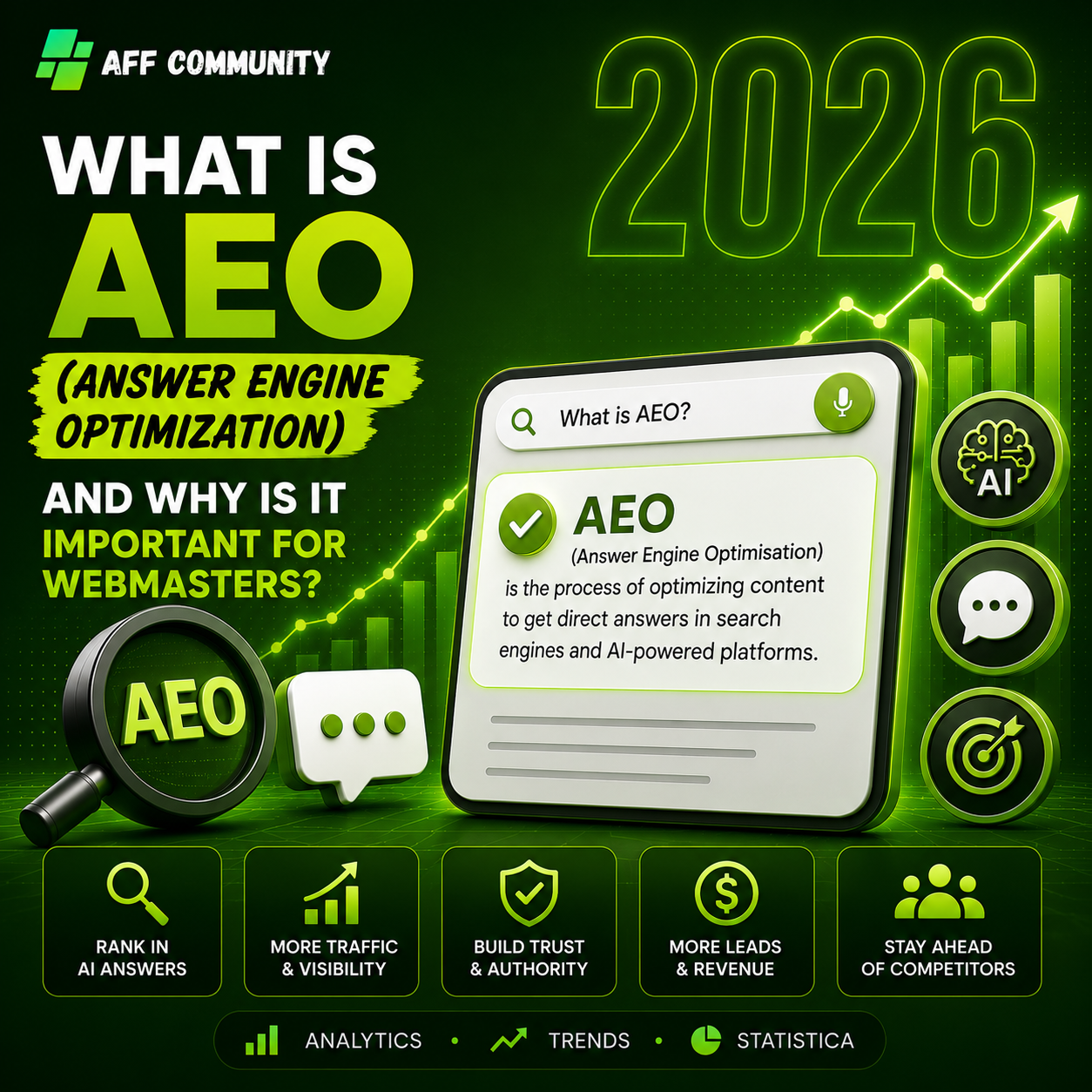
What is AEO (Answer Engine Optimisation) and why is it important for webmasters?

For the past 20 years, internet marketing has been heavily reliant on search engines. If someone needed an answer to a question, they would open Google, type in a query and select one of the websites from the results. But in 2026, the situation began to change rapidly.

More and more users are asking for information directly from ChatGPT, Gemini, Claude and other AI systems. Instead of a list of links, people receive a ready-made answer. It is against this backdrop that a new term has emerged – AEO (Answer Engine Optimisation).

Many believe this is just another buzzword. But we can see that changes are already taking place right now.

For website owners, affiliate marketing and content projects, understanding AEO is gradually becoming just as important as understanding SEO once was.

What is AEO in simple terms

If SEO helps a website appear in search results, then AEO helps it become a source of answers for artificial intelligence.

AEO for affiliates

When a user asks a question to a neural network, the model analyses a vast amount of material and generates a final answer. The higher the quality, the more structured and useful the content, the greater the likelihood that it will be used as a source of information.

Essentially, the battle is no longer just for a place in search results. Now we have to fight for a place within the neural network’s response. And this fundamentally changes the approach to content creation.

Why webmasters should pay attention to AEO

At first glance, it might seem that this is a story exclusively for SEO specialists. In practice, it’s much more interesting. Most affiliate marketing media relies on informational traffic.

Users regularly search for:

  • how to run TikTok campaigns; 
  • which offers are currently relevant;
  • which anti-detection tools to use;
  • which GEOs work best;
  • how to run ads under the new conditions.

If neural networks start providing answers to these questions, it means that a new audience is gradually emerging there. And the sooner content adapts to such changes, the greater the chances of retaining traffic in the future.

How AEO differs from classic SEO

Many people try to view AEO as a replacement for SEO. In reality, this is a mistake. We believe that in the coming years, both approaches will operate in parallel.

SEO still helps to generate search traffic. AEO helps content appear in AI-generated answers. But the requirements for content are indeed changing.

Whereas previously it was possible to rank highly by using a large number of keywords, today the quality of the answer plays an increasingly important role.

Incidentally, the impact of artificial intelligence on search results and the changes already taking place in SEO are discussed in detail in this article.

What kind of content is best suited for AEO

Practice shows that neural networks favour content that helps users find an answer to a question quickly. The following work best:

  1. step-by-step instructions;
  2. error analyses;
  3. tool comparisons;
  4. service reviews;
  5. expert guides.

At the same time, superficial texts are gradually losing their value.

The more specifics, examples and practical experience the material contains, the higher the likelihood of it being used as a source. This is precisely why in-depth expert articles gain an additional advantage.

Why websites remain important

Some experts are already predicting the death of SEO. We consider such statements to be premature. In practice, neural networks still need data sources. They do not create information out of thin air.

They need high-quality articles, research, reviews and expert materials. That is why strong content projects remain in demand.

What’s more, high-quality content gains added value because it starts working across several audience acquisition channels at once.

What this means for affiliate marketing media

New opportunities are opening up for affiliate marketing websites. Whereas previously the battle was solely for rankings on Google, now there is another avenue for growth. Content is beginning to compete for inclusion in AI system responses.

Content that addresses specific audience queries and offers practical value works particularly well.

In essence, many principles of high-quality content marketing are becoming even more relevant.

Incidentally, the importance of creating expert content and the impact of content quality on a project’s long-term growth are discussed in detail at this link.

How to prepare for the AEO era

In our view, strong projects should already be doing several things:

  1. Publish expert content. 
  2. Regularly update old content.
  3. Include more practical advice and real-world experience.
  4. Build the site structure around the audience’s questions.
  5. Improve internal linking between articles.

The last point is particularly important, as a logical structure helps both users and algorithms to better understand the project’s content.

Conclusion

AEO is not a replacement for SEO, but its logical evolution. Users are increasingly getting answers via artificial intelligence, which means content projects have to adapt to the new rules.

But the good news is that the fundamentals remain the same. The sites that succeed are those that create high-quality content, help their audience solve real-world problems, and become an authoritative source of information in their niche.

It is precisely these projects that will receive traffic from both search engines and new AI platforms in the coming years.

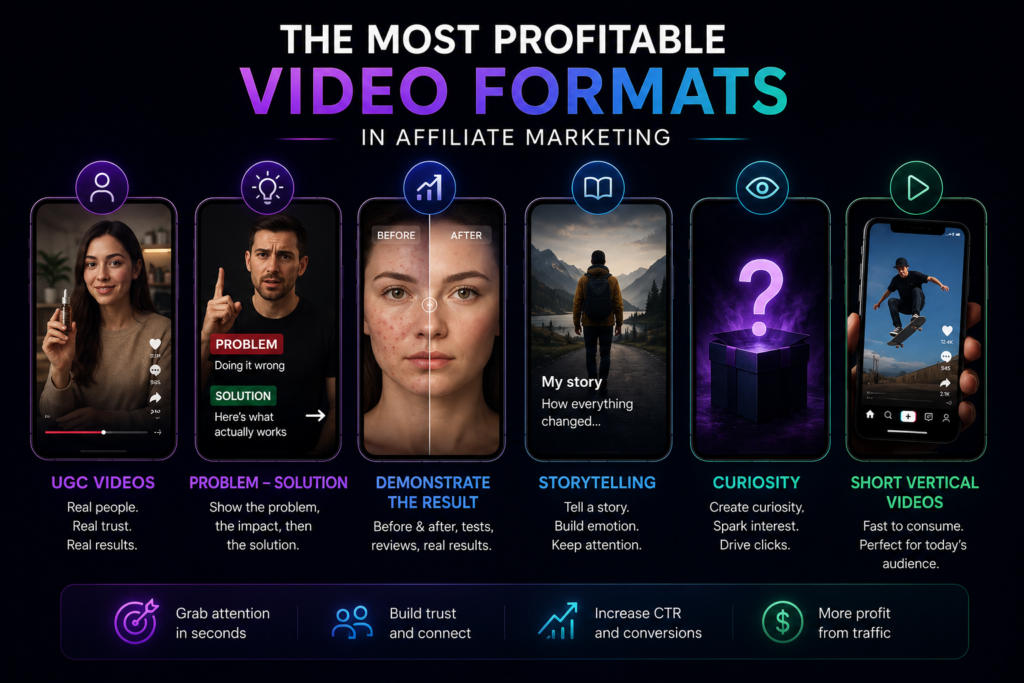
The most profitable video formats in affiliate marketing

Looking at the affiliate marketing market in 2026, it becomes clear that video has firmly captured the majority of the audience’s attention.

TikTok, Reels, Shorts, Telegram Video, referral networks and even traditional landing pages are increasingly using video content as their primary sales tool. But there is an important caveat here. Not all video formats deliver the same results.

We regularly analyse case studies from webmasters and see that some approaches work consistently for years, whilst others quickly burn out and cease to deliver results.

Therefore, the question has long since shifted from ‘should we use video?’ to ‘which video formats actually make money?’.

UGC videos remain market leaders

Despite the development of neural networks and professional production, ordinary user-generated videos continue to deliver some of the best results. The reason is simple. The audience trusts people far more than they trust adverts.

When a user sees a video that looks like a standard review, a personal experience or an everyday recommendation, their resistance drops significantly.

This is precisely why UGC remains one of the most popular formats in nutra, retail, finance and crypto.

Videos where a person highlights a problem, tells their story and demonstrates the result work particularly well.

Incidentally, approaches to creating effective advertising materials and the reasons why some levels of creativity deliver a high ROI whilst others quickly lose their appeal are discussed in detail in this article.

The ‘problem – solution’ format

Profitable video formats

One of the strongest scripts of recent years. The video begins with a common mistake made by the audience. The consequences are then shown. After that, the solution to the problem appears.

This approach works brilliantly in virtually all sectors. People instantly recognise themselves in the situation and continue watching the video.

Moreover, this format often yields a higher CTR than classic sales videos.

Demonstrating the result

If a product can be shown visually, this format is almost always effective:

  1. before and after;
  2. comparison;
  3. testing;
  4. real-world testing.

All of this helps to quickly convey the product’s value to the user. These videos work particularly well in the retail, beauty, fitness and various household goods sectors.

The main rule here is simple. The user must see the result as quickly as possible.

Video through storytelling

Storytelling remains one of the most underrated tools in affiliate marketing. Many webmasters try to sell straight away.

In practice, videos that tell a story first work much better. People start watching the narrative, not the advert.

This is precisely why many successful campaigns are built around personal experience, an unusual situation or a conflict. The user watches the video to the end because they want to know the outcome.

This approach is particularly effective on TikTok and other recommendation-based platforms.

Videos driven by curiosity

This format can be found in almost any industry. The user is shown an unusual situation, a strange object or an unexpected outcome.

This sparks a desire to find out what happens next. Such videos often achieve a high CTR and good retention. But it’s important to strike a balance here.

If a video promises too much and fails to deliver an answer, the audience quickly loses trust. That’s precisely why strong teams use curiosity as a tool for engagement, rather than as a way to deceive the user.

Short vertical videos continue to dominate

Despite the popularity of long reviews and educational content, the bulk of traffic in affiliate marketing continues to be generated through short vertical videos.

The reason is obvious. They better suit modern audience behaviour. The user receives information quickly and without unnecessary steps. At the same time, the platforms themselves continue to actively promote this format.

We have already analysed in detail how the short-form video market has changed and which approaches continue to deliver results on TikTok – you can find out more by following the link.

Why format is more important than editing

Many beginners spend weeks on editing and visual effects. In practice, a video’s profitability often depends on the script. You can shoot a video on a standard smartphone and get excellent results.

Or you can spend thousands of dollars on production and not make a single sale. That is why strong webmasters test ideas first and foremost, and only then focus on improving content quality.

This principle has long been effective across all traffic sources.

What will work in the future

Judging by market trends, the following will remain popular in the coming years:

  1. UGC videos;
  2. short vertical videos;
  3. demonstration of results;
  4. personal stories;
  5. educational content.

At the same time, the creativity itself will become increasingly personalised thanks to the development of artificial intelligence and platform algorithms.

It is no coincidence that many teams are already actively testing new approaches to working with content and automating its creation. 

Conclusion

In 2026, the most profitable videos in affiliate marketing will share one common feature. They don’t look like adverts. They look like content that people actually want to watch.

That is precisely why, today, it is not those who make the most visually stunning videos who come out on top, but those who best understand their audience, their pain points, and the reasons why a user pauses their feed and starts watching a video.

How to Use Data for Scaling in Arbitrage

One of the most costly mistakes in arbitrage is scaling based on gut feelings. A campaign delivers a few profitable days, the first positive numbers appear, and the team starts drastically increasing budgets. A week later, the metrics collapse, the cost per lead rises, and profit turns into a loss.

We see situations like this all the time. And almost always, the problem is the same: scaling was based not on data, but on gut feelings. In 2026, this approach is working less and less effectively.

Competition is growing, ad platform algorithms are getting more complex, and the cost of testing continues to rise. That’s why today you shouldn’t scale up when “it seems like the campaign is working,” but when the numbers confirm growth potential.

Data reveals what the naked eye can’t see

Very often, an arbitrageur evaluates a campaign based on a single metric. For example, they look only at ROI. But a profitable campaign can hide serious problems: CTR is falling, CPC is rising, audience retention is deteriorating, and traffic quality is declining.

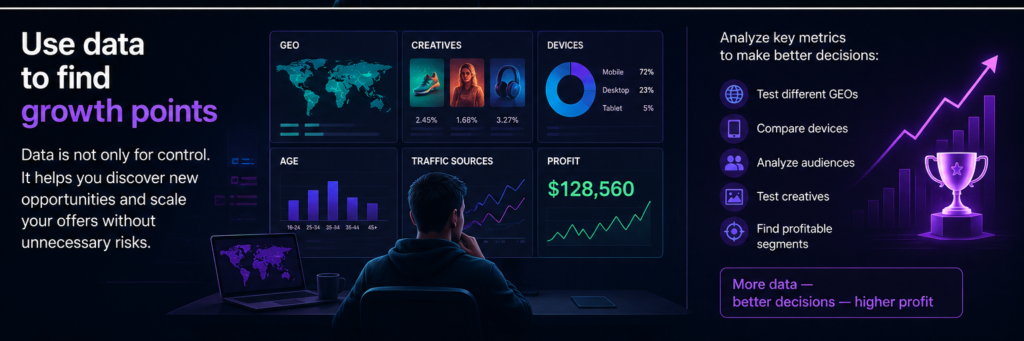
use data to find growth points

With a small volume, this may go unnoticed. But after scaling up, such problems quickly start turning into losses.

That is exactly why, before increasing budgets, it is important to look not at a single metric, but at the whole picture.

You should scale what you can explain

There is a simple rule. If you don’t understand why a campaign works, scaling it is risky. Let’s imagine a scenario. A campaign is showing excellent ROI. But at the same time, it’s unclear which specific creative is driving results. It’s unclear which audience converts better. There’s no understanding of which funnel elements impact the final profit.

In this case, any budget increase turns into a lottery. Strong teams first identify the reason for success, and only then begin scaling.

Working with segments drives more growth than increasing the budget

Many people think that scaling is simply increasing the daily limit. In practice, things look different. Experienced media buyers start breaking down the data: They look at different GEOs.

  1. Analyze devices.
  2. Compare age groups.
  3. Test individual creatives.

Very often, it turns out that one segment of the audience generates the majority of the profit. That’s where the main budgets are then directed.

This approach allows for much more stable growth than simply increasing ad spend.

Use data to find growth opportunities

Data isn’t just for monitoring. It helps identify new opportunities. For example, a campaign is performing well in one GEO.

It makes sense to test neighboring countries with similar audience behavior. Or another example: one creative format is showing a high CTR. That means it’s worth testing new variations of this approach.

This is exactly how strong teams gradually expand their working combinations without sudden jumps or unnecessary risks.

We’ve already discussed the approach to finding new directions and working hypotheses in detail at the link.

Why scaling breaks down

In practice, most problems don’t start because of bad data. The problem is that it’s interpreted incorrectly.

For example, a combination shows positive results for three days in a row. This isn’t enough to draw serious conclusions. Or consider another scenario: a single creative accidentally performs well on a small traffic sample. After scaling up, the results deteriorate sharply.

That’s why it’s crucial to distinguish between statistical noise and genuine patterns. The more data is collected, the more accurate the decisions become.

Automation is becoming essential

When traffic volumes start to grow, manual analysis becomes too slow.

That is why teams are increasingly using trackers, CRMs, BI systems, and automated reports. The faster a team receives data, the faster it can respond to market changes.

The faster a team receives data, the faster it can respond to market changes. Many processes that were previously done manually in spreadsheets are now automated through trackers, reports, and internal analytics systems. It is especially important not just to collect statistics, but to be able to interpret them correctly and identify problem areas within the funnel. The approach to traffic quality control and data management is discussed in detail in this article – https://affcommunity.org/en/lead-tracking-how-to-avoid-overpaying-for-the-same-traffic/ 

Data helps you stop in time

This is one of the most underrated benefits of analytics. Most affiliate marketers use data only to identify growth opportunities.

But it’s just as important to notice a decline in performance in time. Often, the right decision isn’t to increase the budget, but rather to pause the campaign and figure out the reasons for the drop.

That’s exactly why analytics helps not only to earn more, but also to lose less.

Conclusion

In 2026, scaling will depend less and less on intuition and more and more on data. The better an arbitrage specialist understands their audience, creatives, funnel, and traffic sources, the safer and more effective growth becomes.

That’s why strong teams don’t scale budgets. They scale their understanding of why their campaigns work.

How to Become a Team Lead in Affiliate Marketing

Many people enter the world of affiliate marketing with a single goal: to learn how to consistently run campaigns at a profit. But over time, some webmasters reach the next stage of growth. It’s no longer just about running campaigns yourself, but about building processes and managing people.

This is usually how the path to becoming a Team Lead begins.

But here it’s important to understand one thing: a good buyer doesn’t automatically become a good Team Lead. That’s a different job.

Why the ability to run traffic alone isn’t enough

A strong Team Lead is responsible for more than just the numbers.

They must understand how to delegate tasks, identify the team’s weaknesses, and spot problems early on. While a buyer is responsible for their own team, a Team Lead is responsible for the overall result.

This becomes especially noticeable when scaling up. As long as the team consists of 2–3 people, a lot is kept together by verbal agreements. But when designers, farmers, several buyers, and a constant stream of tests come into play, everything starts to fall apart without processes.

We’ve already discussed why systematic work begins to influence results more than individual successful launches—we covered this in more detailin this articlehttps://affcommunity.org/kpi-i-metriki-kotorye-nuzhno-otslezhivat/

A Team Lead must know how to work with people

One of the most common mistakes made by novice Team Leads is trying to control absolutely everything:

  1. Reviewing every piece of creativity.
  2. Logging into every account.
  3. Monitoring every campaign.

As a result, the Team Lead simply gets bogged down in day-to-day operations. A good Team Lead builds processes so that the team can work consistently even without constant supervision.

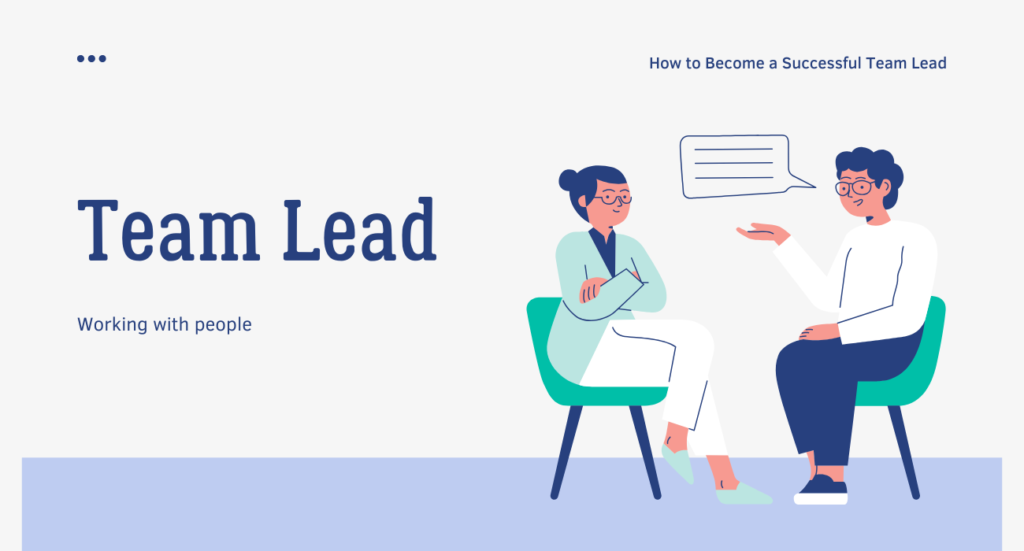
team lead of affiliates

Moreover, it is precisely transparency and a clear system within the team that often become the main drivers of growth.

Analytics is becoming more important than buying traffic

Many web specialists want to become team leads right after a few successful campaigns. But a high ROI doesn’t automatically make someone a leader.

The role of a Team Lead requires a deeper understanding:

  1. where the team is falling short;
  2. which campaigns scale worse than others;
  3. where the money is going;
  4. where weaknesses are emerging.

Continuous learning never goes away

A common mistake among new team leads is the belief that they can stop learning once they’ve reached a certain point. In practice, the opposite is true. The higher the level of responsibility, the more you need to understand the market:

  1. New traffic sources.
  2. New approaches.
  3. Changes in moderation.
  4. New campaign formats.

We’ve already discussed why finding new solutions is gradually becoming an essential part of growth in affiliate marketing—we covered this in more detail in the article at the link.

Conclusion

Becoming a Team Lead in affiliate marketing isn’t just about the title. It’s a transition from the “I know how to run campaigns” level to the “I know how to build a system” level. And more often than not, it’s not the strongest buyers who grow.

Those who grow are the ones who know how to combine people, processes, and analytics into a single working mechanism.

Loud Launches, Quiet Exits: Why Partner Culture Outlasts Partner Acquisition

London is a city built on institutions that never needed to announce themselves. The law firms on Chancery Lane, the private clubs in St. James’s they endure not through attention, but through trust accumulated over decades. Quietly. Consistently. Without a rebrand every two years. Which makes London an interesting backdrop for the affiliate industry’s annual conversation with itself. Because iGaming, by contrast, has mastered the art of attention.Conference floors are fluent in volume: oversized visuals, stacked merchandise, account managers with pitch decks and a practiced sense of urgency. Every programme is premium. Every stand is exclusive. What it rarely produces is what the spreadsheet actually needs: long-term ROI, partner retention, relationships worth more in year three than month one.

The Market Learned to Perform Premium. It Forgot to Practice It.

When an entire market adopts the same vocabulary premium, VIP, exclusive, top-tier the signal stops carrying information. The gifting mechanics follow the same logic: items chosen for the photograph rather than the relationship. With this approach the partner is the audience, not the counterpart.

The structural problem is this: markets that compete on noise attract partners who respond to noise, and lose them the moment a louder offer comes along. Attention is not loyalty. Activation is not retention.

High-performing affiliate partnerships share a different architecture: predictability over promises, honest communication over promotional language, consistency whether a relationship is new or years old. Strong partners don’t leave for marginal CPA improvements when the relationship itself has value they’d be giving up. That dynamic reduces churn, extends LTV, and compounds over time in ways no single activation can replicate.

Manor as Model: The Economics of Restraint

PlayamoPartners presence at iGB London stand H-60, 1–2 July  operates on this logic. The Manor concept takes the British manor as its central metaphor: not a venue, but a model of relationships. There is an etiquette, a code, standards that everyone inside understands. Membership implies alignment.

The aesthetic is restraint. The underlying logic is economic. Trust, in this industry, has a measurable ROI that most programmes never stop to calculate because they’re too busy announcing it.

The Code of Honor: Giving the Industry Its Memory Back

At the centre of the Manor experience is a physical book not a lookbook or catalogue, but a Code of Honor: partner feedback, written by partners themselves, accumulated across events and years. A physical record implies that what partners say is worth keeping in a form that persists that the relationship has a history worth preserving.

The iGaming industry has become extremely efficient at forgetting. Campaigns replace campaigns. Account managers cycle through. Programmes pivot quarterly. The Code of Honor is a deliberate counter to that tendency. It treats reputation not as a marketing asset but as something that grows through repeated honest interaction. An archive of trust, built over time.

Recognition Over Raffle

Partners who contribute to the Code of Honor become eligible for recognition items including a MacBook Neo 13, iPhone Air, and iPad Air. Come by on 02.07 at 14 o’clock and collect your prize.

The framing matters. These are not raffle prizes. Recognition is relational: you are who you are, and that is acknowledged. One is a CPA model applied to gifting. The other is how relationships between people who respect each other actually function.

The partners the Manor is designed for are not the ones who show up for a giveaway they’re the ones who show up to engage, to leave something of their own behind, to participate in the ongoing record of what this programme is.

Continuity of Standards

This approach isn’t new for PlayamoPartners. Past recognition has included Samsonite, Hugo Boss, TAG Heuer, Cartier, YSL. At iGB London, partners at H-60 will find Cartier wallets and MacBooks among the acknowledgements.

Premium gifting delivered consistently, to partners aligned with programme standards, across multiple years and conferences, reads differently from a one-time budget line. It signals a stable set of values with no particular need for an audience.

What Remains After the Conference Floor Clears

Rates, tools, tracking platforms are table stakes. Any serious programme can match them within a quarter. What cannot be quickly replicated is culture: honest communication, payments that arrive without chasing, account managers who know your business well enough to have an opinion about it.

Manor of PlayamoPartners arrives at iGB London not as an activation, but as a position. Behind it: a system, a reputation, a code of conduct that predates this event and will outlast it.

Stand H-60 | 1–2 July | iGB London

Spy services for affiliate marketing: a comprehensive analysis

Looking at the affiliate marketing market in 2026, one thing is clear: the days when affiliate marketing opportunities were stumbled upon by chance are long gone.

Competition has intensified across virtually all verticals. New offers appear daily, and the cost of testing continues to rise. That is precisely why, today, more and more teams are using Spy services not as an additional tool, but as a fully-fledged part of their working infrastructure.

We regularly see the same pattern. Newcomers try to find arbitrage opportunities manually, spend weeks on tests and ultimately reach the same conclusions that experienced teams arrive at in a matter of hours using a high-quality Spy service.

But it’s important to understand one thing here. A spy service doesn’t show a ‘make money’ button. It shows the direction where someone is already making that money.

What is a spy service in practice

Put simply, it’s a competitive intelligence tool.

The service collects adverts, creativity, landing pages, pre-landing pages, ad bundles and data from various traffic sources. The publisher gets the chance to see what other teams are launching right now, which approaches last longer than the rest, and which GEOs are starting to be flooded with traffic.

This is precisely why strong media buying teams use spy tools even before launching their adverts. First comes market analysis. Then hypotheses. And only after that, testing.

We’ve already covered in detail how to find working approaches before your competitors do, and why blindly copying rarely yields results – we discussed this further in this article.

Which spy services are currently used most often

There are dozens of solutions on the market, but far from all of them actually help in your work.

One of the best-known tools remains AdPlexity. Many use it to analyse native advertising, push traffic, mobile campaigns and specific verticals. The service allows you to view competitors’ active campaigns, study pre-lands and find connections for specific GEOs.

For Facebook and Instagram, many continue to use AdSpy. Its main strength lies in its vast database of adverts and the ability to analyse active approaches by interests, offers and regions.

Also popular are AdHeart, Spyteg, SpyOver and a whole range of specialised solutions for specific traffic sources. We have already compiled a selection of services and tools for competitor analysis — you can find out more HERE.

The main mistake made by beginners

Virtually all novice webmasters use spy tools in the same way. They find a competitor’s advert. They copy the creativity and launch it. They blow their budget. The problem is that spy tools show the market, not a ready-made campaign.

If an advert has been running for several weeks or months, this is a signal to pay attention to the mechanics, not a reason to create an exact clone.

What’s more, most advertising platforms have long since learned to rank blatant copies of popular creativities lower.

That’s why experienced buyers analyse not the video itself, but the structure:

  1. what pain point is being addressed;
  2. what offer is being promoted;
  3. what the funnel looks like;
  4. which audience is engaging with the content.

How to find new GEOs using spy

One of the most underrated features is the analysis of new markets. Very often, large teams start testing new countries long before they start being discussed en masse in chat rooms and Telegram channels.

If you regularly monitor advertising activity via spy tools, you can spot an increase in the number of launches in a specific region even before the niche becomes oversaturated. This is exactly how many publishers find promising areas before the mainstream market.

We have already shown how to evaluate new markets and which countries many teams are focusing on in 2026 – we discussed this in more detail in this article via the link.

Why a single Spy service isn’t enough

A very common mistake is hoping that a single tool will cover all your needs. In practice, strong teams use several solutions at once:

  1. Spy shows the adverts.
  2. The tracker shows the figures.
  3. Anti-detect helps manage the infrastructure.
  4. Proxies handle the technical side.
  5. Analytics helps with decision-making.

Only when used in combination do all these tools start to deliver real benefits.

What has changed in 2026

The spy service market itself has become significantly more complex. Whereas previously it was enough to look at a few competitors’ ads, today you have to analyse far more factors:

  • ad lifespan;
  • creativity variations;
  • changes in presentation;
  • localisation for different GEOs;
  • funnel structure.

Furthermore, many teams have started actively using AI to generate new creativity variations. As a result, the rate at which adverts are updated has increased significantly.

Therefore, spy services today are no longer just a tool for copying. They are a tool for analysing trends.

Conclusion

Spy services have long been an essential part of affiliate marketing. They help save budget, find working hypotheses more quickly, and understand where the market is heading. But it is important to remember the main point. It is not the Spy service itself that makes money. It is the ability to correctly interpret the data it displays that makes money.

This is precisely why strong teams use Spy services not to search for a ‘magic formula’, but to make more accurate decisions before launching traffic.

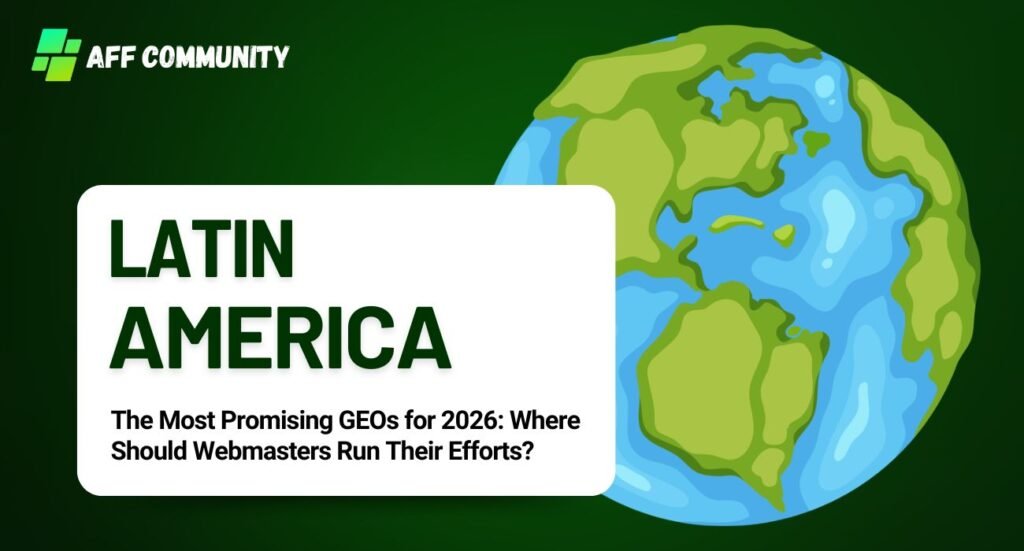
The Most Promising GEOs for 2026: Where Should Webmasters Focus?

Every year, the market follows the same pattern. Most teams flock to the most obvious countries, competition intensifies, and as a result, traffic costs rise and margins shrink.

In 2026, the situation became even more pronounced. The working GEOs remained, but the approach to selection changed significantly.

Whereas before many looked only at market size, now they have to consider competition, audience purchasing power, advertising restrictions, and acquisition costs.

That is precisely why more and more teams are looking for opportunities where the market is not yet overheated.

Asia continues to gain momentum

Southeast Asia remains one of the most interesting regions. The Philippines, Vietnam, Indonesia, and Thailand continue to show steady growth across several verticals simultaneously.

Gambling, crypto, finance, and some mobile offers are doing particularly well there. At the same time, competition in a number of sectors is still noticeably lower than in Tier-1 markets.

We’ve already covered separately how crypto traffic is developing and which approaches work best for these verticals—we discussed this in more detail in the article at the link.

Latin America still offers opportunities

Latin America continues to hold its ground. Brazil has long ceased to be a “hidden gem,” but there are still countries nearby that teams enter much less frequently.

Latam in 2026

Chile, Peru, Colombia, and Mexico continue to deliver good results in e-commerce, nutra, and some financial offers.

The region’s main advantage is its massive audience and relatively affordable traffic costs.

MENA is becoming increasingly interesting

Webmasters are increasingly expanding into the Middle East. The UAE, Saudi Arabia, and some North African countries are gradually attracting more and more attention.

The reason is simple: high purchasing power and competition that hasn’t yet reached its peak. But you won’t succeed there without adaptation.

Localization, understanding the audience, and effective presentation have a greater impact on results than usual.

We’ve already discussed separately how creativity affects the final effectiveness of ads and why you often have to completely change your approach for different GEOs—we covered this in more detail here.

The CIS and Tier-3 markets shouldn’t be overlooked either

Many continue to search for the “magic” GEO, ignoring markets that are literally right next door. But in 2026, some Tier-3 markets still continue to deliver good results with the right approach.

Especially where competition is lower and the cost of entry remains affordable. The key is not to choose a GEO based on other people’s revenue screenshots.

Conclusion

A promising GEO in 2026 is no longer just “where traffic is cheaper.” Now, those who can look deeper are the ones who win:

  • at competition;
  • local specifics;
  • audience quality;
  • scaling opportunities.

Because a good market isn’t always the most obvious one.

TikTok → Telegram → Offer Funnel: How It Works in 2026

In 2026, direct traffic from TikTok to an offer is becoming increasingly difficult. Moderation has gotten stricter, the audience burns out faster, and “hard-sell” approaches get shut down in literally just a couple of days.

That’s exactly why many webmasters have started directing users to Telegram first, and only then to the offer.

Essentially, Telegram has become an intermediate “warm-up” step between TikTok and the sale.

Why this strategy works at all

TikTok is great at grabbing attention, but it’s bad at retaining users. A person watches a video, clicks, closes the page, and that’s it.

Telegram works differently. The audience there is already more engaged: they read posts, click on links, and return to the channel. This creates an opportunity to run the user before the offer.

This works especially well in niche markets, crypto, and gambling, where a single click is rarely enough for the user. We’ve already discussed why multi-step funnels work better than direct traffic right now—we covered it in more detail here.

What the workflow looks like

It usually starts with a short TikTok ad of creativity. Its goal isn’t to sell, but to spark interest or evoke an emotion. After that, the user is directed to a Telegram channel, where the main running process begins.

There you might find:

  1. case studies;
  2. reviews;
  3. screenshots;
  4. analyses;
  5. or simply content tailored to the target audience.

And only then does the transition to the actual offer take place.

BUTTON – We recommend reading the article “Ad Creativity in Affiliate Marketing: Secrets of Creation and Testing

Why Telegram Has Become So Important

The main advantage of Telegram is audience control. On TikTok, an account can get banned, reach can drop, and a campaign can die within a day. Telegram allows you to retain part of your audience and continue working with them.

That’s exactly why many webmasters are now building entire networks of channels for different offers and verticals. We’ve already discussed which traffic sources work best with Telegram and why this approach continues to grow—you can find more details at the link.

Where the most common mistakes happen

The main mistake is trying to sell directly on Telegram right away. If the channel looks like nothing but a showcase of offers, the user quickly loses interest. A normal channel should feel like it has live content, not endless ads.

The second problem is weak TikTok creativity. If the video doesn’t grab attention in the first few seconds, people simply won’t make it to the Telegram channel.

And the third mistake is the lack of a system. Many run chaotically, without analyzing exactly where they’re losing their audience. We’ve noted time and again that without proper analytics, even a good funnel quickly starts to falter—we wrote about this HERE.

Conclusion

The TikTok → Telegram → offer funnel in 2026 is no longer a “clever scheme,” but a standard working model.

TikTok generates attention. Telegram runs and nurtures it. The offer drives conversions.

And it is precisely because of this approach that many are now achieving more stable results than when running the offer directly on a landing page.

Secure and Scale Your Affiliate Campaigns in 2026

Introduction: The Critical Infrastructure Bottleneck in Modern Media Buying

The landscape of affiliate marketing has experienced a massive paradigm shift. The days of setting up a generic landing page, buying a cheap domain, and driving low-cost traffic through basic advertising networks are gone. Today, major traffic networks—including Meta, Google, TikTok, and high-tier native platforms—invest millions annually to build predictive, machine-learning-driven anti-fraud surveillance systems. These platforms continuously monitor hundreds of hardware, behavioral, and cryptographic data points to detect multi-accounting, automated management, and coordinated inauthentic activity.

In this strict environment, media buyers face unprecedented account mortality rates. When accounts are linked and terminated, operational revenue hits zero instantly, tracking links fracture, and pixel optimization history is wiped away permanently. The primary root cause behind chain-bans and blocked profiles is rarely the landing page text or creative angle—it is poor proxy hygiene. Standard datacenter IPs lease publicly registered ranges owned by massive cloud providers (like AWS or DigitalOcean) , which instantly trigger maximum risk scores because real consumer traffic does not originate from corporate server racks.

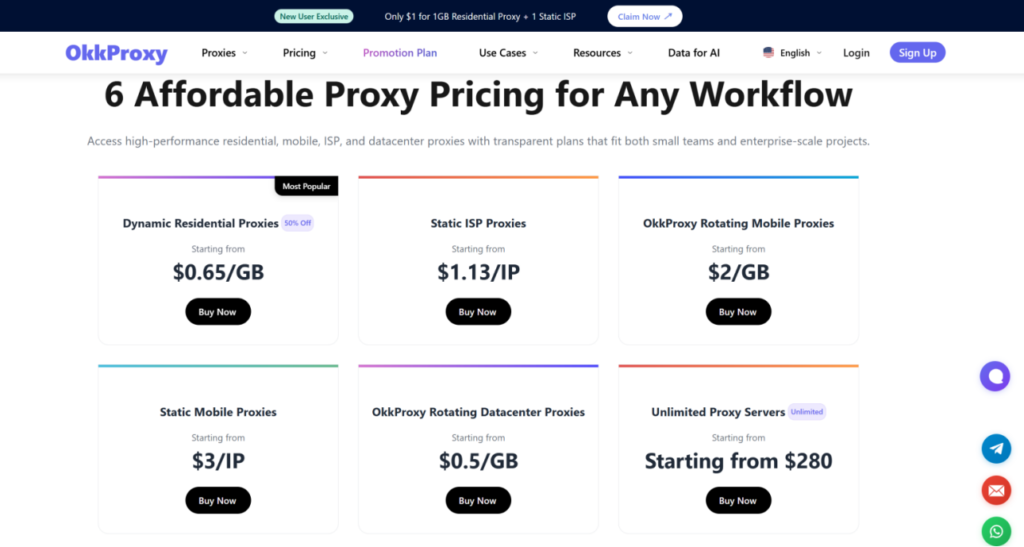
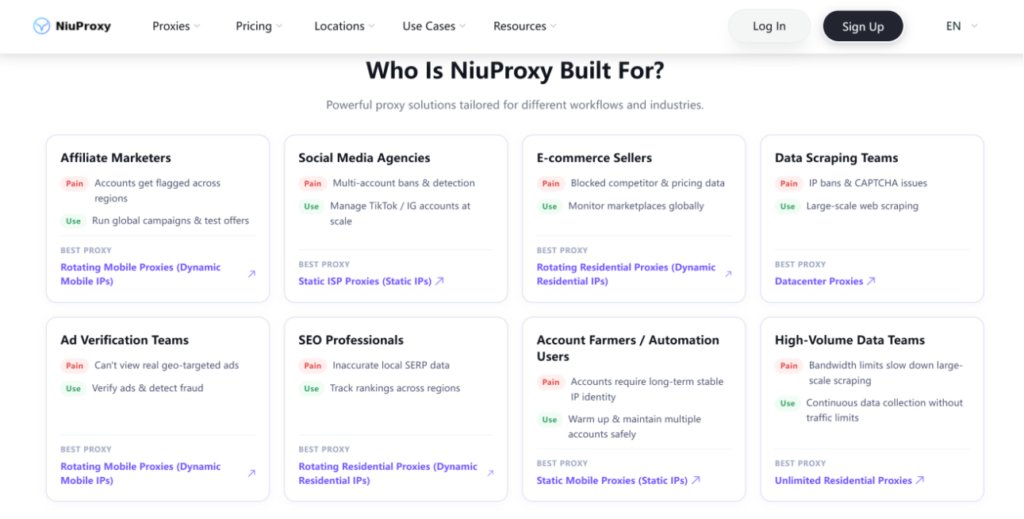
To achieve enterprise-grade scale and absolute digital invisibility, elite marketing teams require sophisticated, high-anonymity network infrastructure. To help you maximize your return on investment (ROI), this comprehensive guide highlights the tactical advantages, specialized proxy layers, and deployment strategies of two market-leading infrastructure solutions: OkkProxy and NiuProxy.

Part 1: OkkProxy – The Global Enterprise Pool for Dynamic Precision and Rotation

OkkProxy stands out as an enterprise-grade solution engineered explicitly for high-performance marketing environments, web scraping, and hyper-targeted campaign deployment. By sourcing an elite pool of millions of ethically gathered residential IP addresses assigned by local ISPs to real residential households , OkkProxy ensures your automation tools and browser profiles mirror the digital signatures of organic local consumers.

Key Operational Advantages of OkkProxy

· Hyper-Granular Geo-Targeting Capabilities: OkkProxy gives media buyers the ability to drill down and filter IP configurations by country, region, city, and specific ISP. This granular level of detail allows teams to execute hyper-local offer validation for geo-specific verticals (such as insurance, pay-per-call, or localized e-commerce) that only convert within strict regional parameters.

· Massive Scale and Automated Rotation Engine: Automation is foundational to scaling affiliate operations. OkkProxy houses a massive global pool, preventing IP exhaustion even during intense scraping or farming sessions. Its rotation software allows users to either define a precise sticky session duration or pull a brand-new, completely clean IP address with every single HTTP/HTTPS API request. This effectively eliminates rate-limiting, CAPTCHAs, and cumulative footprint tracking.

· Competitor Spy Analysis & Ad Verification: With city-level matching, your automated systems can bypass localized defenses designed by competitors to block spy software. You can view hidden landing pages, verify creative funnels, and audit your traffic placements in real time to prevent click fraud and fraudulent publisher impressions.

Part 2: NiuProxy – The High-Anonymity Armor for Asset Longevity and Bulk Workflows

NiuProxy focuses heavily on robust end-to-end cryptographic encapsulation and enterprise network security. Built specifically for advanced, high-volume affiliate agencies, NiuProxy is engineered to act as a resilient technical shield connecting your profiles to the internet without leaving a single traceable cryptographic footprint.

Key Operational Advantages of NiuProxy

· Eliminating IP Leaks & DNS Mismatches: Cheap or poorly maintained proxies frequently leak WebRTC data or suffer from DNS server country mismatches. If an anti-fraud engine scans your profile and discovers a French IP address routing queries through a US datacenter DNS server, it flags the account for an immediate security checkpoint. NiuProxy eliminates this risk through complete protocol encapsulation, ensuring perfect cryptographic alignment across all routing layers.

· Rigorous Subnet Curation: To prevent the risks associated with shared subnets—where a bad actor running aggressive black-hat automation can pollute an entire IP block and ruin your account’s trust score—NiuProxy enforces a strict curation and auditing process. This guarantees that media buyers operate on pristine, low-spam-score connections.

· High-Speed, Low-Latency Backbone: A common downside of peer-to-peer residential networks is sluggish transmission and frequent timeouts, which stall productivity. NiuProxy runs on a premium, high-bandwidth server backbone designed to process large media files, multi-threaded scraping operations, and massive bulk campaign creative uploads to TikTok or Facebook Ads Manager at lightning speeds.

Part 3: Deep-Dive Product Comparison

To build an efficient operational setup, it is helpful to look at how these providers structure their core architectures side by side:

Technical FeatureOkkProxy CapabilitiesNiuProxy Capabilities
Primary Structural FocusHyper-granular global targeting, mass scraping automation, and rapid IP rotation.High-anonymity protocol encapsulation, low-latency backbones, and clean subnet insulation.
Supported ProtocolsSeamless HTTP, HTTPS, and high-speed SOCKS5 encryption integrations.Complete HTTP, HTTPS, and SOCKS5 integrations with robust end-to-end encryption.
Rotation ProfilesFlexible custom intervals, request-based rotation, and long-form sticky sessions (up to 30–60 mins).Advanced sticky session management to keep locations solid and prevent velocity violations.
Targeting PrecisionIn-depth breakdown by Country, Region, City, and Internet Service Provider (ISP).Broad international coverage with specialized clean residential and mobile allocations.

Part 4: Advanced Architectural Strategy – Implementing a Dual-Layer Proxy Framework

To reach maximum asset survival and structural scaling, top media buying teams avoid relying on a single, uniform configuration. Instead, they deploy a segregated, Dual-Layer Proxy Architecture combining the strengths of static ISP configurations with dynamic rotating pools:

1. The Static Layer (Core Assets): Deploy dedicated, pristine Static Residential (ISP) connections for your critical business infrastructure —such as primary Business Managers, verified personal ad accounts, and banking or payment dashboard profiles. These profiles must remain locked to unchanging network footprints over months to cultivate solid trust equity within ad network security databases.

2. The Rotating Layer (Exploratory Operations): Concurrently run high-frequency Rotating Residential configurations for aggressive data gathering, crawling competitor landing pages, and mass account registration/farming workflows. This insulates your core assets from structural risks while providing your team with wide-reaching data-gathering capabilities.

Part 5: Step-by-Step Integration with Anti-Detect Browsers

To ensure a flawless technical profile that glides past modern fraud detection barriers, use this operational configuration checklist when integrating proxies with anti-detect browsers like Dolphin{anty}, AdsPower, Multilogin, or GoLogin:

· Step 1: Protocol Selection When generating your proxy credentials inside your dashboard, prioritize the SOCKS5 protocol. SOCKS5 provides optimized data transmission speeds, superior encryption handling, and accurate system-level handshake mapping.

· Step 2: Establish Contextual and Fingerprint Harmony Never allow discrepancies between your software fingerprint and network coordinates. Extract the precise latitude, longitude, and zip code metrics from your proxy dashboard and manually match or inject them directly into your anti-detect browser’s profile location settings.

· Step 3: Synchronize System Variables If your proxy node routes from a household network in Munich, Germany, ensure your browser profile’s timezone is strictly mapped to Europe/Berlin, match the system languages to German (de), and configure the WebRTC parameters to “Forward” or “Hide” properly. This alignment prevents security platforms from detecting architectural inconsistencies.

Conclusion: Securing Your Business Edge

In the highly competitive landscape of modern media buying, your choice of network infrastructure directly impacts your bottom line. Relying on basic datacenter solutions or poorly curated IP ranges will eventually lead to banned accounts, lost capital, and operational friction.

Whether your team requires the massive global footprint and hyper-granular target rotation of OkkProxy or the dedicated technical encapsulation and low-latency performance of NiuProxy, investing in premium network security is essential for keeping your campaigns running smoothly. Move away from chasing anti-fraud blocks and start executing your campaigns with absolute anonymity and scale.

Fraud Protection in Affiliate Marketing: What Actually Works in 2026

In 2026, fraud has become one of the main challenges facing affiliate marketing. And it’s not just advertisers who are suffering – webmasters themselves are affected as well.

While many used to turn a blind eye to junk traffic, platforms and affiliate networks have now started to scrutinize lead quality more closely. And the problem is no longer limited to simple bots.

Today, everything falls under the umbrella of fraud:

  • motivated traffic;
  • click fraud;
  • fake registrations;
  • duplicates;
  • low-quality leads.

And if you don’t control this from the start, you can quickly lose your accounts, payouts, and good relationships with affiliate networks.

Why fraud has increased

The main reason is market overheating.

Traffic is getting more expensive, competition is growing, and many are trying to “pad the numbers” to stay in the black. Because of this, advertisers have started paying closer attention not to the quantity of leads, but to their quality.

This is especially noticeable in nutra, crypto, and gambling sectors. There, they’re now checking practically everything: depth of engagement, repeat visits, user behavior, and even the time between a click and registration.

We’ve already discussed how traffic behavior is analyzed and why some campaigns start to drop off even with normal volume – we covered this in more detail here.

How fraud is detected today

In the past, it was enough to filter out obvious bots. Now, systems look much deeper. The following are analyzed: user behavior on the page, repetition of actions, device, location, time of activity, and even movement patterns within the funnel.

If the traffic looks “inactive”, it’s quickly spotted. Moreover, the problem is often not outright fraud, but poor audience quality. We’ve already written that many webmasters lose money precisely because of improper handling of the link chain and traffic source – we discussed this point in detail in the article at the link.

What Really Helps Protect You

In 2026, fraud protection is no longer just a single service, but an entire system.

Professional teams use anti-detection browsers, proxies, trackers, filtering of suspicious clicks, and dedicated analytics on user behavior. It’s especially important to track where junk traffic comes from and at what stage the anomaly begins.

Where people most often go wrong

The main mistake is thinking that fraud only affects the advertiser. In practice, the website itself is the first to suffer. If an affiliate network detects suspicious activity, they may: cut payments, send the traffic for re-verification, or completely close the account.

The second mistake is a lack of analytics. Many focus only on ROI and fail to notice that lead quality is gradually declining.

And the third problem is blind scaling. When a campaign is ramped up rapidly without verifying traffic quality, the risk of fraud increases exponentially.

By the way, we’ve also already discussed typical mistakes in working with ads and traffic in detail in this article.

What’s Next

Anti-fraud systems will continue to become more sophisticated, especially on the part of major platforms and advertisers. In the coming years, the market will shift even more toward traffic quality, behavioral analytics, and long-term engagement with users.

That is precisely why the winners right now aren’t those who run the most traffic, but those who can maintain consistent quality.

We have noted more than once that affiliate marketing is gradually shifting from “running traffic” to full-fledged work with analytics and audience behavior. We also wrote about this in the article – https://affcommunity.org/en/affiliate-marketing-through-google-ads-in-2026-working-approaches-and-real-risks/ 

Conclusion

Fraud protection in 2026 is already a fundamental part of affiliate marketing. If you don’t monitor traffic quality, you can lose everything much faster than you think.

These days, the winner isn’t the one who found a “gray-area scheme,” but the one who knows how to work carefully, analyze the numbers, and understand what a normal user looks like inside the funnel.

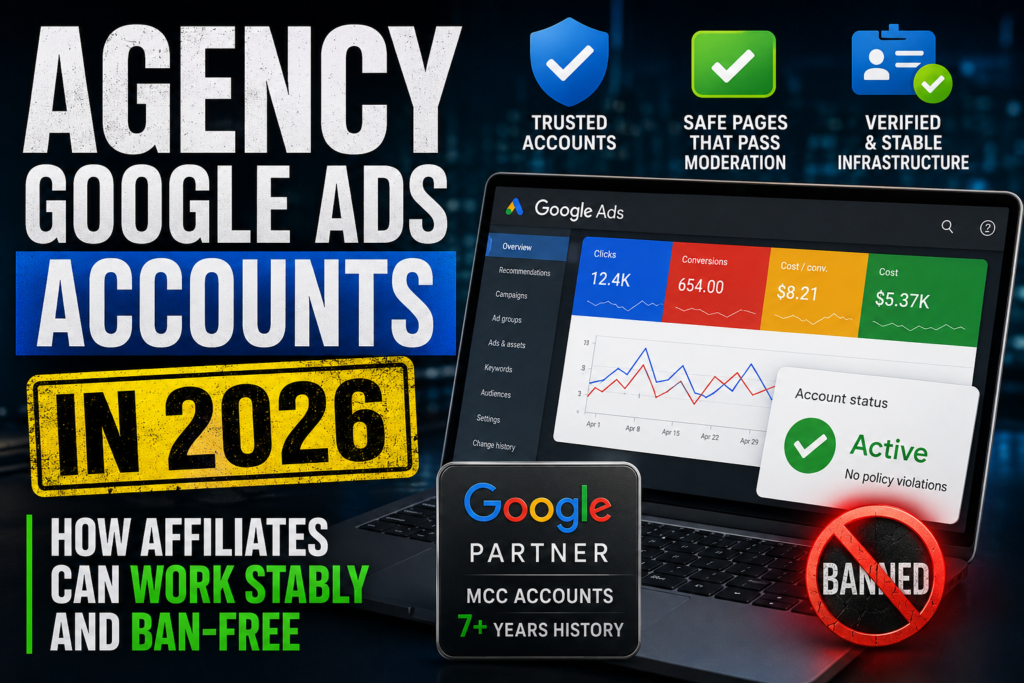
Agency Google Ads Accounts in 2026: How Affiliates Can Work Stably and Ban-Free

Google Ads remains one of the most powerful traffic sources for affiliates and media buyers. But in 2026, the rules have changed: moderation algorithms have grown smarter, simple ban-bypass schemes no longer work, and the cost of a mistake is a drained budget and frozen campaigns. Scaling without losses requires a well-built infrastructure. This article breaks down what it consists of, what to watch out for, and which tools actually get the job done.

Why Google Ads Remains a Priority Traffic Source in 2026

Despite growing competition from TikTok Ads and programmatic platforms, Google holds its position as the leader in reach and traffic quality. Search engine audiences are people with a clear intent — to buy, learn, or solve a problem right now. That’s why CPL and ROI on Google Ads remain competitive across most verticals, from nutra to finance.

There’s a catch, though: Google has been systematically tightening moderation. In 2025–2026, the platform introduced enhanced AI screening of landing pages, stricter business verification requirements, and began applying bans more aggressively at the domain and payment account level. Running campaigns “straight out of the box” with a fresh account and no prepared infrastructure has become increasingly difficult.

The Main Challenges for Affiliates Working with Google Ads

Moderation and Bans

The most common pain point for media buyers: a campaign goes into review, then gets rejected — or the account gets banned outright. The reasons vary: a landing page that doesn’t meet platform requirements, a suspicious domain, IP history, an unverified business account. Importantly, Google increasingly bans not just a single campaign, but the entire account — along with its accumulated history, Quality Score, and credit balance.

The Cost of a New Account and Loss of Trust

A new Google Ads account is essentially a blank slate — no history, no trust, minimal limits. The platform’s algorithms treat such accounts with suspicion by default: higher CPCs, lower reach, more frequent reviews. That’s exactly why working with trusted agency accounts has become the standard for professional affiliates.

Business Verification

Since 2024, Google has been steadily expanding its advertiser verification requirements. By 2026, certain niches — finance, healthcare, legal services — are effectively off-limits without proof of a registered legal entity. Without verification, an account faces serious restrictions on ad formats and budgets.

What Is an Agency Google Ads Account and Why Do You Need One

An agency account is an ad account created and managed by an official Google partner (an agency with a direct agreement). These accounts have their own MCC (Manager Account), an accumulated history of interaction with the platform, higher budget limits, and — critically — priority support during moderation.

Renting an agency account solves several problems at once: you get a “warmed-up” account with history, skip the lengthy trust-building phase, and can launch campaigns the same day. For affiliates working in grey verticals or highly competitive niches, this is a decisive advantage.

The Infrastructure for Stable Operations: Three Key Elements

1. A Trusted Agency Account

The foundation is the account itself. What matters here: the MCC domain history, a clean record with no prior warnings, a credit line (to avoid prepayment dependency), and fast access. A good provider connects the account on the same day you apply — not after a week of back-and-forth.

2. A Safe Page (White Page)

A Safe Page is the interstitial page that a Google moderator sees when reviewing an ad. Its job is to comply with platform requirements, look credible, and raise no suspicion. The key requirement: uniqueness. Copied or AI-generated Safe Pages have long been in Google’s algorithm databases and don’t help — sometimes they even accelerate a ban.

3. Account Verification

If you’re working in niches that require business verification — get it done. You can do it yourself, or delegate to a service that handles end-to-end verification, including for both individuals and legal entities.

PPC Rebels and Money Safe: An Ecosystem for Professional Launches

An interesting partnership has formed in the affiliate tooling market, with two services covering different parts of the same infrastructure stack. PPC Rebels is an agency Google Ads account rental service with its own MCC, over seven years of platform history, and 24/7 support. The team handles both white and high-risk verticals, reviews each case individually, and ensures launch on the day of payment. Working in tandem with PPC Rebels is Money Safe — a service specializing in the creation of unique Safe Pages on WordPress and HTML with aged domains, built to pass moderation on Google Ads, Facebook, TikTok, and other traffic sources. While PPC Rebels handles the trusted account side, Money Safe closes the white page side — giving the affiliate a ready-made, end-to-end bundle instead of piecing together infrastructure from different vendors.

What a Proper Google Ads Campaign Launch Looks Like in 2026

Here’s a workflow that reduces the risk of bans and improves your chances of passing moderation:

  1. Choose an agency account. Ask your provider about the account’s history, the availability of a credit line, and support for your vertical.
  2. Prepare a Safe Page. Order a unique white page — not a template, not AI-generated. The domain should have history (at least a month of “warmup”).
  3. Get verified. If your niche requires business verification — complete it before launch, not after a ban.
  4. Structure your campaigns properly. Separate ad groups logically; don’t overload one account with unrelated offers from different verticals.
  5. Monitor and scale gradually. Don’t launch with a large budget from the start — let the account “warm up” on moderate spend, then scale.

Common Mistakes That Lead to Bans

Using someone else’s or copied landing pages Google has long indexed landing pages and can detect duplicates. If your offer has already been tested by dozens of other affiliates using the same landing page, the probability of a ban multiplies.

Sudden budget spikes A sudden jump in spend on a new or recently warmed-up account is a classic review trigger. Increase budgets gradually — 20–30% per day is considered a safe pace.

Mixing verticals Running gambling and children’s products from the same account is a bad idea. Algorithms track ad themes and may flag the account as suspicious due to incompatible topics.

Ignoring landing page quality Quality Score affects not just your CPC, but also how frequently your account gets reviewed. A slow page, missing privacy policy, or broken links all lower your score and draw more moderator attention.

Conclusion: Infrastructure Is Everything

In 2026, success with Google Ads isn’t a matter of “luck” or “the right offer.” It’s a matter of infrastructure: a trusted account, quality Safe Pages, completed verification, and a well-structured campaign setup. Affiliates who build this system in advance scale without losses, while competitors keep recreating accounts after each ban. The sooner you move from an ad-hoc approach to a systematic one — the higher your profit ceiling.

Micro-offers: How to Make Money from Low-Cost Leads in 2026

Micro-offers aren’t about “small money.” They’re about volume.

While in traditional verticals you try to squeeze the maximum out of a single lead, here the logic is reversed: simple action, low entry barriers, and scale. That’s how the profit is generated.

In 2026, this model is making a comeback because the market is overloaded with complex funnels, and users are no longer willing to spend time on long landing pages and running warm-up phases.

What micro-offers actually are

Essentially, these are offers that require minimal action from the user: registration, subscription, app installation, or phone number verification. No complicated decisions, no long deliberations – everything is as simple as possible.

This is precisely why they often convert where complex funnels fail to deliver results. We’ve already discussed how simplifying the user journey affects final conversion rates –we covered this in more detail in our article.

Why This Works Again

Audience behavior has changed. People are tired of information overload: long texts, complex offers, and aggressive promises.

Now, simple actions that can be completed in a couple of seconds work best. That’s exactly why micro-offers deliver consistent results –people don’t feel pressured and are more likely to agree to take action.

We’ve noted many times that the easier the entry into the funnel, the higher the chance of conversion – we explained this in detail here.

Where to get traffic

Micro-offers perform well on low-cost traffic sources. First and foremost, these are TikTok, push networks, in-app, and Telegram. Here, it’s not the ideal user that matters, but the traffic flow and cost per click.

But that doesn’t mean you can just run campaigns mindlessly. Even cheap traffic requires an understanding of which approaches work and where to find your audience.

How the funnel is built

It’s as simple as possible: creativity, quick transition, and action. Sometimes even without a landing page.

But at the same time, it’s the creativity that determines whether there will be a click at all. If it doesn’t grab attention, the user will simply scroll past.

That’s why it’s especially important to test approaches and formats here. We’ve shown in detail which creatives are actually working right now and how to test them properly – the breakdown is here.

Where money is most often lost

The main mistake is underestimating the numbers. It seems like a cheap lead is easy to scale, but in practice, it all comes down to math: a small payout requires a stable volume and control over metrics.

The second problem is poor traffic. If the audience isn’t interested at all, even the simplest offer won’t yield results.

And the third is a lack of optimization. Even with micro-offers, you need to understand where you’re losing money and at what stage the funnel is dropping off. We’ve already analyzed such situations and provided checklists—you can view them here.

Conclusion

Micro-offers are not a replacement for classic affiliate marketing, but a separate tool.

You don’t make money on a single user; you make money on the flow. And if you set up your traffic, creativity, and a simple funnel correctly, you can consistently turn a profit even with minimal payouts.